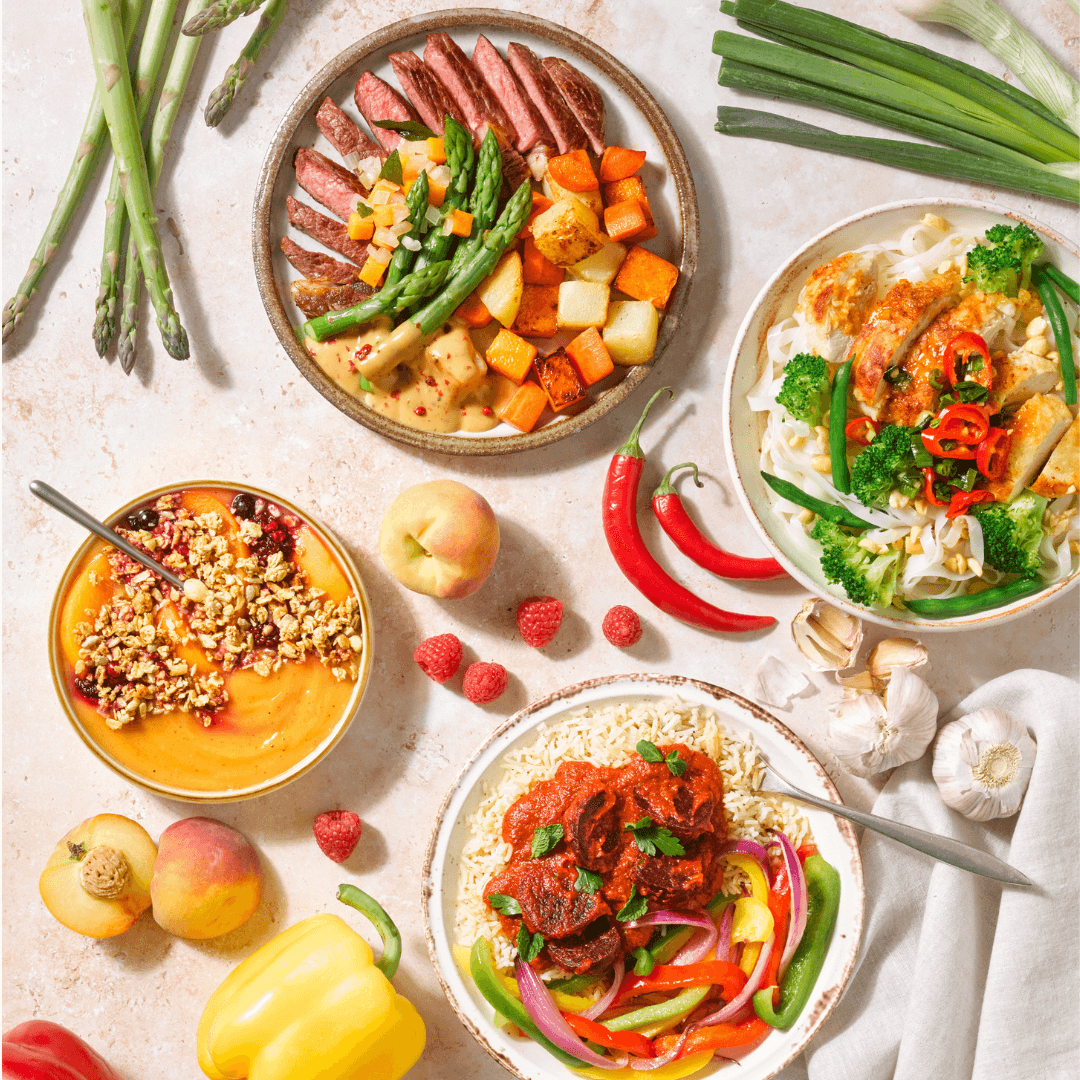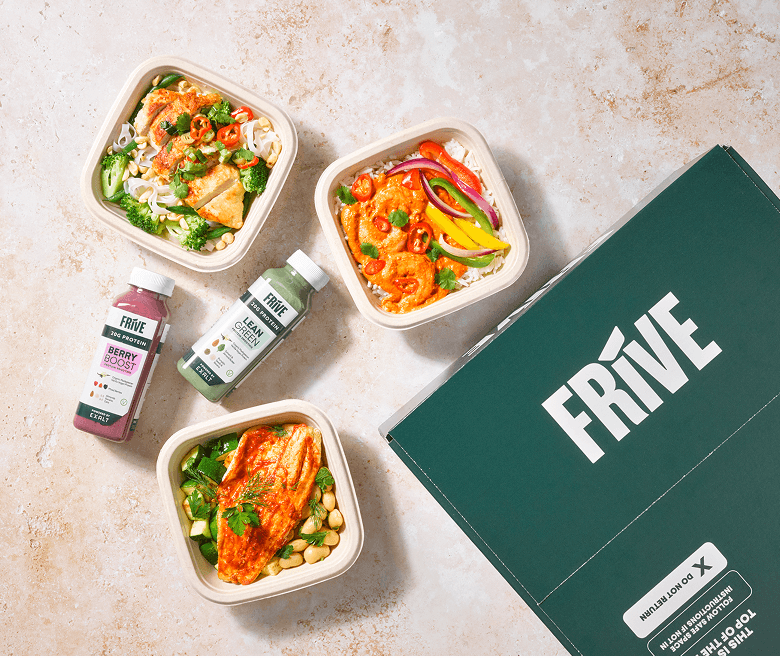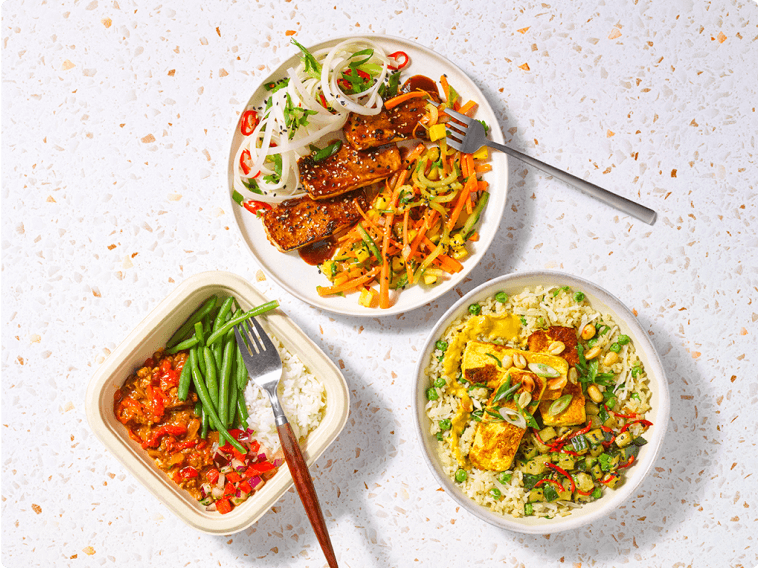
You stand at the fridge at half past seven, knowing you should eat, and absolutely nothing on the shelves appeals.
The chicken you batch-cooked on Sunday looks heavy. The yoghurt is too cold, the bread too dry, and the thought of putting anything substantial in front of you brings on a small wave of nausea. You close the door, half-promise yourself you will eat in an hour, and quietly suspect you will not.
This is the daily reality of the first months on a GLP-1, and it is the part of treatment that almost nobody warns you about properly.
If you are in the first few weeks of Mounjaro, Wegovy or Ozempic, the experience you are having is the textbook one, not a personal failing. The medication is doing exactly what it is designed to do: slowing gastric emptying, dampening hunger cues, and flattening the appetite signal that has nudged you toward food your entire adult life.
The weight is moving, which is the point. The trouble is that the practical question of what to put on the plate tonight rarely has a useful answer in the leaflet that came with the prescription, and that is the gap this guide is here to fill. The strategy, reassuringly, is not to eat more. It is to make every bite count.
| Eating on a GLP-1: at a glance | |
|---|---|
| The challenge | A significantly reduced appetite, particularly in the first 12 weeks of treatment. |
| The real risk | Persistent under-eating, not the calorie deficit itself. |
| The strategy | Nutrient density per calorie. Make every bite count. |
| The plate | Half soft vegetables, quarter palm-sized protein, quarter slow-release carb, a drizzle of healthy fat. |
| The per-meal target | Around 30g of natural protein, three times a day. |
| The structure | Three small structured meals beats constant grazing for most GLP-1 users. |
The real risk of persistently under-eating on a GLP-1
The clinical evidence on GLP-1 weight loss is unambiguous on one point: the deficit works. The landmark STEP 1 trial of semaglutide and the SURMOUNT-1 trial of tirzepatide both reported average weight losses well into double figures over 12 to 18 months, the largest pharmacological reductions in obesity medicine to date. The trouble is not the deficit. The trouble is how the body responds when the deficit is too steep for too long without enough food alongside it.
Persistent under-eating, rather than the medication itself, drives the downstream problems most users start to notice somewhere around month three: visible muscle loss, daytime fatigue that does not lift with sleep, hair shedding, nail thinning, a mood that runs flatter than it should, and the first quiet signs of micronutrient gaps in iron, B12 and magnesium.
Body-composition analyses across the major GLP-1 trials suggest that a meaningful share of the weight being lost can come from lean tissue when dietary intervention is absent. The point is not to be alarmed by this. It is to gently change the food side of the equation so that the deficit stays sensible and what does go in is properly nourishing. The phrase to hold in your head is a simple one: modestly under, deeply nourished.
The ideal GLP-1 plate
If you take only one framework from this article, take the plate. It works for GLP-1 physiology because it respects the two new constraints: a stomach that empties slowly, and a brain no longer pestering you to eat.
Half the plate: Soft, gently cooked non-starchy vegetables. Steamed, roasted or sauteed, not raw. Raw salad sits heavily on a slow-digesting stomach. Think courgette, spinach, peppers, green beans, butternut, broccoli softened past al dente.
A quarter of the plate: A palm-sized portion of high-quality protein, roughly 25 to 35g depending on the food. The most important quarter of the plate.
A quarter of the plate: A small portion of slow-release carbohydrate. Sweet potato, oats, basmati or wholegrain rice, sourdough, or lentils.
A drizzle of healthy fat: Olive oil, sliced avocado, a sprinkle of seeds, or a spoon of tahini. Comfortable in small amounts, unpleasant in large ones.
The structure looks unremarkable on paper. The point is that you have a default. When the brain is too tired to decide and the stomach too sceptical to enthuse, the plate framework removes the negotiation.
The best foods when you are not hungry
Some foods are objectively easier to get down on a GLP-1 than others. The shortlist below is the one most low-appetite users land on within a few weeks of trial and error.
Eggs in any form: Particularly soft-scrambled, poached, or a small omelette. High protein, soft texture, rarely trigger nausea.
Greek yoghurt and cottage cheese: Cold, smooth, and roughly 15 to 20g of protein per 200g serving. Add stewed fruit for a complete small meal.
Soft-cooked fish: Salmon, white fish, smoked mackerel, tinned tuna in olive oil. Easier than dense red meat on a slow-emptying stomach.
Chicken thighs or slow-cooked chicken: Almost always go down better than dry chicken breast. Moisture matters.
Soups and broths with a protein boost stirred in: Cooked chicken or a small tin of beans turns broth into a proper small meal.
Porridge: Made with milk, finished with Greek yoghurt or a measured serving of whey for a protein lift.
Sourdough toast with cottage cheese and tomato: Or with smashed avocado and a poached egg. Small, balanced, kind to the stomach.
Lentil-based small bowls: Dahl, lentil soup, or a warm lentil and roasted vegetable mix. Nourishing in tiny volumes.
A few things are worth gently stepping back from while your appetite finds its new normal: large steaks and dense slabs of red meat, big cold sandwiches, raw vegetable piles, strongly spiced or very acidic foods, citrus on an empty stomach, and any portion size that would have felt routine six months ago.
Many GLP-1 users also find their taste perception shifts in the early months, with meat in particular sometimes tasting metallic or off. If that is happening to you, you are not imagining it.
Lean into eggs, fish, dairy and pulses for the protein quarter of the plate until things normalise. And if your week has quietly become a cycle of fridge-staring followed by takeaway, our guide on how to eat healthy when you have no time to cook covers the move from reactive to default eating in more depth.
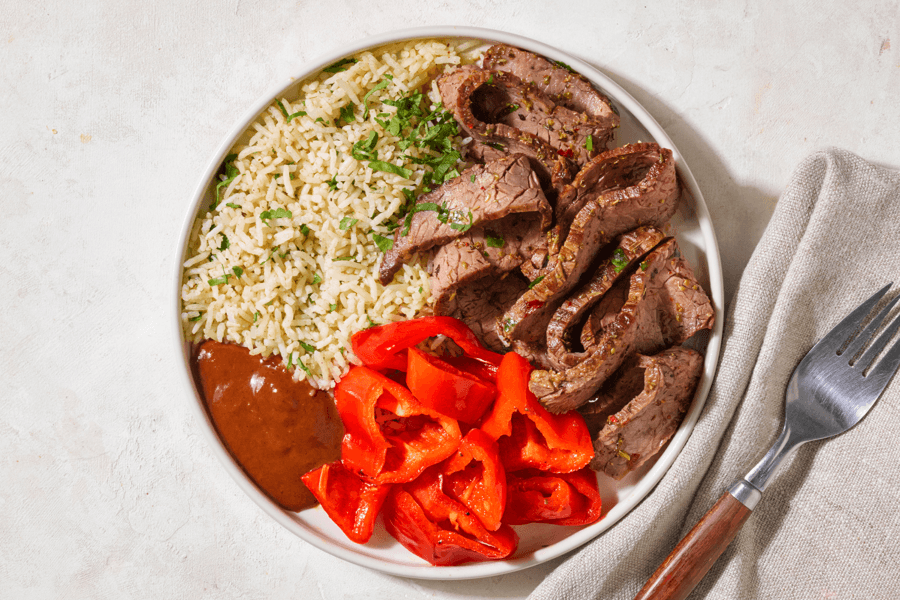
Try Frive's Smoky Mexican-Style Beef With Lime Rice
How to build a day when food has lost its appeal
When nothing on the menu appeals, the temptation is to give up on proper meals and graze through the day on whatever feels manageable in the moment. That instinct is completely understandable, and unfortunately it is the move that quietly makes everything else harder.
Constant small inputs never give a slow-emptying stomach a chance to clear, so the next bite feels heavier than the one before, the bloating builds, and by evening you feel less like eating than you did at lunchtime. Three small, structured meals work much better, even on days when none of them sounds particularly tempting.
The other reframe that helps is to eat to a clock rather than waiting to feel hungry. Hunger signalling on a GLP-1 is no longer telling you the truth, and waiting for an appetite that may never quite arrive is the most common route to a late-afternoon dizziness crash and an evening of nausea.
A simple pattern like 8am, 1pm and 7pm, give or take an hour, works for most people. If the gap between lunch and dinner is genuinely difficult, a small protein-led snack is fine: a boiled egg, a small pot of Greek yoghurt, a few slices of turkey, a handful of edamame.
Our best protein snacks list has plenty of other ideas if your usual go-to no longer appeals.
Hydration tends to need a small rethink, too. Small, regular sips through the day work much better than large glasses alongside meals. A pint of water with dinner will often crowd the food out of an already small stomach and leave you feeling fuller than you actually are, which is the last thing you need when getting the meal down was already the challenge.
To make it concrete, a tolerable day might look something like this:
200g of Greek yoghurt with stewed berries and a spoon of nut butter at 8am
A small bowl of dahl with a soft-boiled egg at 1pm
120g of salmon with soft-cooked greens and a small portion of sweet potato at 7pm.
That is roughly 95 to 110g of protein across the day, very little cooking, and almost nothing you have to force down.
Hitting your protein target without forcing it
If you take only one practical habit from this article alongside the plate framework, make it this one. The single most useful eating principle on a GLP-1 is the per-meal protein floor.
The classic research on muscle protein synthesis consistently shows that around 25 to 30g of high-quality protein in a single meal is the threshold needed to properly stimulate the muscle-building response. Spread across three meals, that comes to roughly 90g a day before any snacks, which is enough to substantially reduce lean tissue loss for most adults during active GLP-1 weight loss.
On a small appetite, three reliable ways to hit that floor without making yourself miserable.
First, eat the protein on the plate first; stomach space is the real constraint, and the protein deserves the priority.
Second, add a small protein side that gives you an automatic 10 to 15g lift, almost without effort: a boiled egg next to the toast, a spoon of cottage cheese on the porridge, a handful of edamame next to the soup.
Third, choose meals that are mostly protein by structure rather than by addition, so the target arrives without having to be negotiated: a salmon fillet, a chicken thigh, a small bowl of dahl, a Greek yoghurt bowl.
Our guide to getting 30g of protein at breakfast covers the first meal of the day specifically, which is almost always the hardest one for low-appetite users.
A protein shake is a perfectly reasonable backstop on the worst mornings, after a resistance-training session, or on travel days when life refuses to cooperate. It is just not the default. Natural protein keeps you fuller for longer, brings other nutrients along with it, and is usually better tolerated than a large cold shake when the stomach is feeling fragile.
Bland and gentle does not mean boring. The proper repertoire of small, satisfying, nutrient-dense GLP-1 meals is much bigger than the pharmacy leaflet suggests.
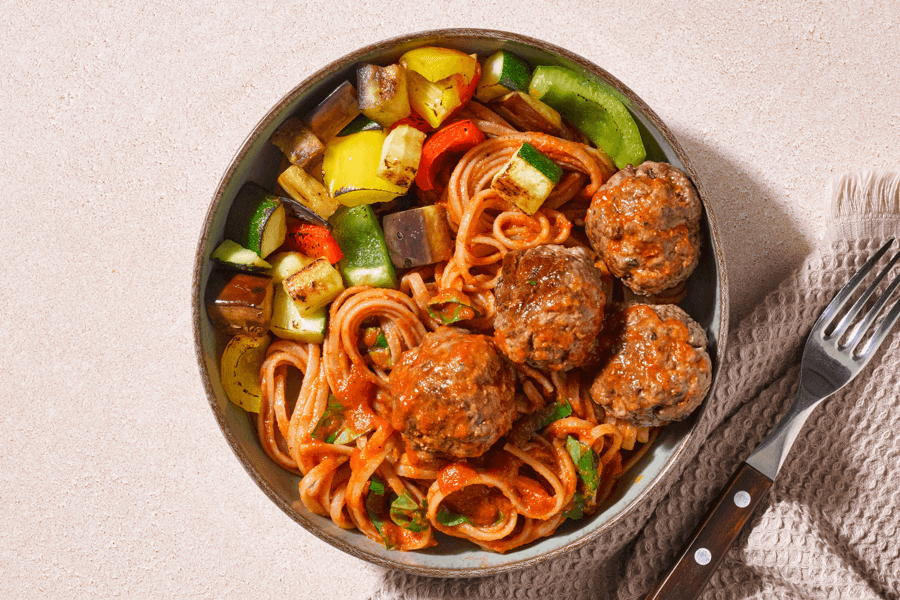
Try Frive's Spaghetti & Meatballs
The small habits that quietly make GLP-1 side effects worse
A handful of patterns will quietly amplify the nausea, bloating and low energy across the first few months, and being aware of them takes a surprising amount of the misery out of the experience. Strong spices and very acidic foods tend to sit poorly when digestion is slow.
Very large meals, even of the right foods, can do the same. Carbonated drinks feel uncomfortable on a stomach that already empties at half pace. Alcohol is a common nausea trigger on a GLP-1, particularly in the 24 hours after a dose, and most people find it does not feel the same as it used to anyway.
Heavy fried food can sit unmoved for hours. And skipping meals altogether sets up the worst pattern of the lot: a low blood sugar dip, a small wave of dizziness, then a reactive evening of feeling too queasy to eat anything sensible.
Constipation is also more common on a GLP-1 than most prescribing leaflets warn you about. Slowed transit time, lower food volume and the more protein-forward eating that helps you preserve muscle can all compound it if you do not actively make room for water and fibre. If your gut is grumbling, our guides to resetting gut health and improving the gut microbiome walk you through the food-led recovery moves. None of this is anything to feel embarrassed about; almost everyone on a GLP-1 deals with it at some point.
How Frive solves the low-appetite eating problem
Most of the principles in this article are easy to agree with in theory and frustrating in practice. Knowing what to eat is not the problem. Standing in the kitchen at 7pm with no appetite and no patience is the problem.
This is the part of the problem Frive was designed for. The product profile maps almost exactly onto the GLP-1 reader’s constraints: small, portion-controlled meals, built around natural protein, balanced by a UK-trained nutrition team, with no shopping, no chopping, and ready in roughly three minutes.
The per-meal protein floor is hit automatically. The vegetable half of the plate is already there. The carb portion is right-sized for a slow-digesting stomach. On a bad-nausea day there is a gentle option in the fridge that needs no decision and no effort. On a good day you can still cook from scratch if you want to. The floor is in place either way.
If you want to look properly, the high-protein ready-meals plan is the clearest fit for the per-meal protein logic, with the healthy ready meals range and the low-calorie meal delivery plan as softer entry points. The microwave question, which we get often, is covered in our piece on whether microwave ready meals are bad for you. Short answer: not the way Frive does them.
When to put down the recipe and ring your prescriber
This guide is about food, but it is worth knowing where the food conversation ends and the clinical one begins. Both the NICE guidance on tirzepatide and the NHS guidance on weight-loss medicines are clear on the warning signs.
Speak to your prescriber or GP if you are vomiting persistently, cannot keep fluids down for a day or more, feel severely dizzy or faint, are losing weight much faster than expected, develop severe upper-abdominal pain, or have any symptom that simply worries you.
A reduced appetite is part of the territory and rarely a reason to be alarmed. A persistent inability to eat or drink is not, and is exactly the situation a dose adjustment exists for. There is no medal for soldiering through it.
Frequently asked questions
How many calories should I eat on Mounjaro, Wegovy or Ozempic?
No fixed number works for everyone, and chasing one is usually counterproductive on a GLP-1. A modest deficit of 300 to 500 kcal below maintenance is sensible for most adults; the medication will often pull it deeper on its own. The risk is going much lower and triggering the under-eating cascade. Nutrient density per calorie matters more than the calorie figure.
How many meals a day on a GLP-1?
Three structured small meals is the default that works for most users, with one protein-led snack only if the gap between lunch and dinner is genuinely difficult. Constant grazing usually makes appetite and bloating worse, not better.
What is the best breakfast on a GLP-1?
Greek yoghurt with stewed fruit and a spoon of nut butter is the lowest-friction option: 25 to 30g of protein, gentle on a sensitive morning stomach, no cooking required. Soft scrambled eggs on a small piece of sourdough is the cooked equivalent.
Should I take a multivitamin on Mounjaro?
A basic multivitamin alongside a proper food strategy is a reasonable safety net, not a substitute for the strategy itself. Iron, B12, vitamin D and magnesium are the nutrients most likely to dip on a sustained small-volume diet.
Why does meat taste different on Ozempic?
Altered taste perception is one of the better-documented effects of GLP-1 treatment, particularly with red meat. The mechanism is not fully understood, but the experience is real and usually settles within the first few months. Lean into eggs, fish, dairy and pulses for the protein quarter of the plate while it lasts.
What if I just cannot face food at all?
Start with liquids that work as food: a protein-fortified yoghurt smoothie, a bowl of bone broth with a soft-boiled egg, a small portion of milky porridge. Tiny, frequent, gentle inputs. If you cannot manage that for more than 24 hours, that is the threshold to call the prescriber.