The box makes a clean promise: a price, and a number. “Ready in 30 minutes.” It reads like a fair deal, right up until the evening it actually lands on your counter and the real work begins. The cook time printed on the recipe card is true in the narrowest possible sense, and misleading in every way that matters to a tired professional at 7pm.
This is an honest audit, not a hit piece. We are going to price the invisible labour: the shopping admin, the unpacking, the prep, the cooking and the washing-up that no meal kit makes clear on the box. We will use Frive's own measured prep-time data for the comparison, concede the points where a meal kit genuinely wins, and let the verdict earn itself.
If you are reading this, you have probably already decided the recipe-box honeymoon is over. The first few weeks felt like a clever shortcut. Then it became another thing to manage: another menu to choose from on a Sunday, another box to break down on a Tuesday, another sink full of pans on a Wednesday you did not have the energy for. So let us count what that actually costs, properly.
| The verdict, up front | |
|---|---|
| In one line | Meal kits suit people who enjoy cooking. If your priority is the least effort and the highest food quality, a prep-delivery service like Frive is built for you. |
| The time gap | A meal-kit dinner takes roughly 35 to 45 minutes of active time once prep and clean-up are counted. A Frive meal is ready in under 5 minutes. |
| Over a week | Across a week of dinners, choosing Frive can hand back up to 7 hours of shopping, prep, cooking and cleaning. |
| Where a kit wins | The enjoyment of cooking, learning new recipes, and sometimes a lower price per meal. |
Why a meal kit takes longer than the box says
There is nothing dishonest about the time on a recipe card; it simply measures one stage of the evening. “Ready in 30 minutes” covers the stretch from everything-prepped to plated. It does not include gathering the ingredients, reading the card, or the washing-up afterwards, and that is exactly where recipe times and real life tend to part company.
Independent reviewers keep finding the same gap. Meals sold as 20-minute recipes are routinely clocked at closer to 30 minutes, and other long-running reviews report dishes taking at least double the advertised time once prep and clean-up are counted. Gousto tends to fare a little better, though even its own help pages note that a 10-minute meal assumes the ingredients are measured out and the pan is already hot. Food writers make the same structural point: standard recipe times leave out the gathering and the cleaning, so a 30-minute meal can quietly fill the better part of an hour. For a full side-by-side of the two big kits, we have a detailed HelloFresh vs Gousto guide.
Picture a midweek meal billed at thirty minutes. You read the card and find the pans. You wash and chop an onion, two peppers and a chicken breast. You start one pan, then a second, then a pot for the rice. You plate it, you eat, and then you face the part the box never mentions: a chopping board, a knife, two pans, a sieve and a sticky hob. The thirty-minute meal has quietly become an hour of your evening, and you made the same decision the night before, and you will make it again tomorrow.
Where your evening actually goes
Add up everything a recipe box asks of you and the cook time is only a slice of it. This is the invisible labour: the unpriced time and mental load around the cooking. For someone who loves the process, much of this list is a pleasure rather than a cost. For someone optimising for time, it is all friction:
- Choosing the recipes from the weekly menu, for every meal, every week
- Managing the subscription: skipping weeks, swapping meals and editing before the cut-off
- Receiving and unpacking the box, then sorting ingredients into the fridge
- Reading the recipe card and gathering the right pans and equipment
- Washing, peeling and chopping all the prep
- Cooking, often across two or three pans at once
- Plating up, and then the washing-up
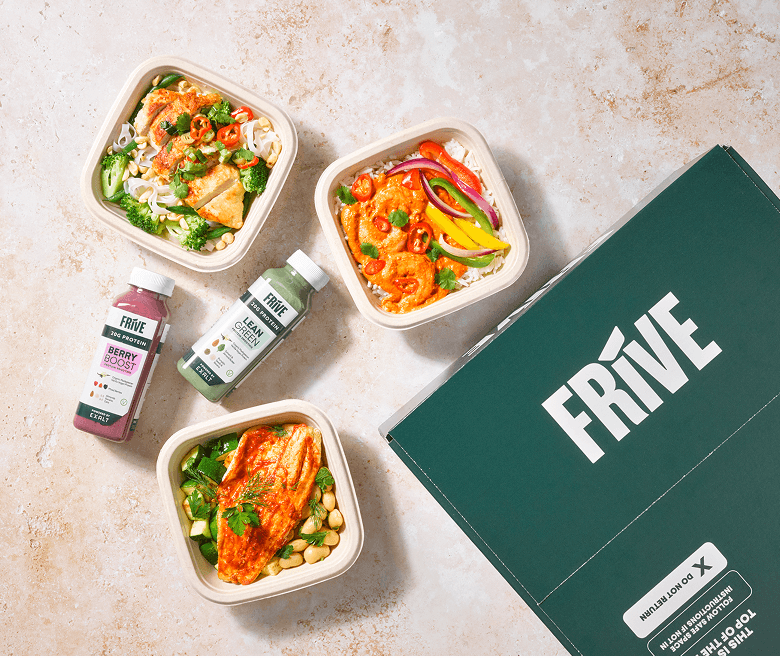
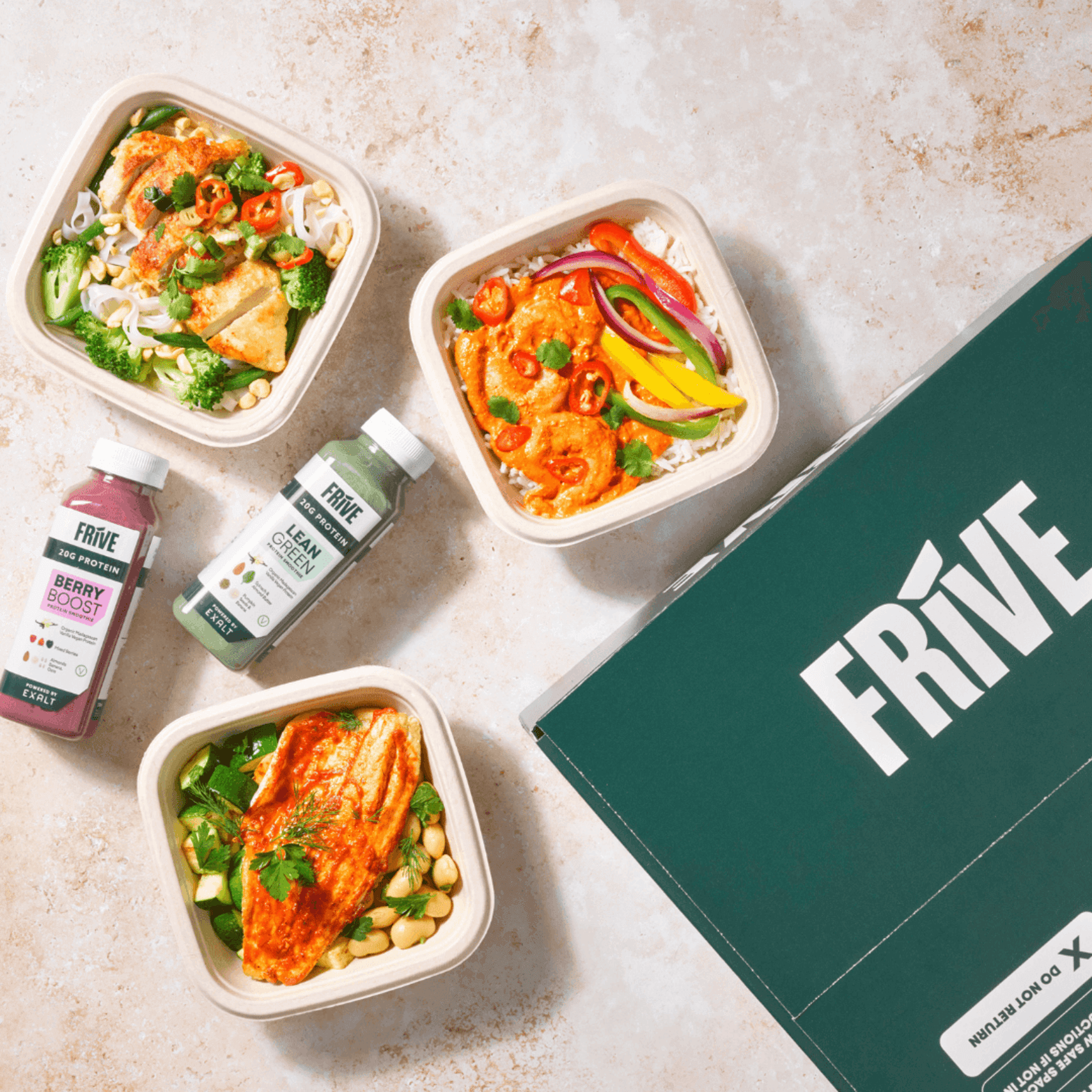
Then there is the mental load, which never shows up as “time” but still drains capacity: the deciding, the planning and the low-level admin of keeping a subscription on track. Frive's workflow, by contrast, is short enough to write in three words: choose once, heat, eat. There is no recipe to read, nothing to prep and almost nothing to wash. You can see exactly how Frive works in a couple of taps.
The mental load deserves its own line in the audit, because it is the part people underestimate most. Deciding what to eat, week after week, is a genuine tax on a busy mind, and the research on decision fatigue is clear that the small choices add up. A meal kit does not remove that load; it reschedules it to a weekly menu you still have to sit and pick from, with a cut-off you have to remember and a delivery you have to be home for. Frive collapses all of that into a single decision you make once.
The numbers (Frive's prep-time data)
Frive measured the real, end-to-end active time of its own meals and set it against the published times for a comparable meal-kit recipe. The Frive figures come from Frive's own prep-time study; the meal-kit ranges are drawn from independent reviews of HelloFresh and Gousto, not from our own guesses about a competitor.
| Stage of the meal | Typical meal kit | Frive |
|---|---|---|
| Active cooking time | 30 to 45 minutes | None; just heat |
| Hands-on prep (wash, peel, chop) | 10 to 15 minutes | None |
| Washing-up | 8 to 12 minutes | Rinse one tray or bowl |
| Total active time per meal | Around 40 minutes | Under 5 minutes |
Translate that per-meal gap across a week of dinners and it compounds fast. Reclaiming roughly 35 minutes a meal, several times a week, plus the shopping and admin around it, is how the switch adds up to up to seven hours a week handed back to you.
Do the arithmetic on a normal week. Cook five dinners from a kit at roughly forty minutes of active time each and that is more than three hours at the counter, before you add the Sunday menu-planning, the unpacking and the fridge-sorting. Swap those five evenings for meals ready in under five minutes and the week's active time drops to under half an hour. That difference is most of a working evening handed back to you, every single week.
| Up to 7 hours a week |
|---|
| the time the invisible-labour audit hands back, versus a full shop-prep-cook-clean cycle |
The honest comparison table
Set side by side on the things that actually decide it, the picture is clear, and it is not one-sided. A meal kit genuinely wins on a few counts, and the table says so plainly.
| What matters | Meal kit | Frive |
|---|---|---|
| Price per meal | About £3.20 to £7.25 per portion | £7.99 per meal (6-meal plan, £47.94) |
| Total active time | Around 40 minutes | Under 5 minutes |
| Mental load | Choose, manage, prep, then clean | Choose once, then none |
| Food quality | Fresh, and as good as your cooking | Natural, no UPF, no seed oils |
| Variety | A rotating weekly menu | 100+ meals rotating monthly |
| Best for | Cooks who enjoy the process | Anyone optimising for time and food quality |
On price, we will be straight with you. A Frive meal works out at £7.99 on a six-meal plan, which sits above a meal kit's cheapest portion, and pretending otherwise would undermine the whole audit. The value case is not that Frive is cheaper on the shelf; it is that once you price in the 40 minutes of labour per meal, the food quality and the mental load you no longer carry, the premium buys back something a cheaper box never can.
It is worth being just as fair about where a meal kit genuinely earns its place. If cooking is something you enjoy rather than endure, a recipe box is a lovely way to build a repertoire: it teaches technique, introduces ingredients you might not have bought, and turns dinner into an hour you actually want to spend. On food waste the two are level, too: a meal kit's pre-portioned ingredients and a Frive meal both avoid the half-used packs that cooking from scratch tends to leave behind. For a confident cook with a free evening, the active time is not a cost at all; it is the point. None of that is true for someone whose honest goal is to eat well with the least possible friction, and that is the reader this audit is written for.
Who should pick which
A fair verdict depends on what you are optimising for, so here it is by reader type:
Choose a meal kit if: you enjoy cooking, you have the evening to give it, and learning new recipes is part of the appeal rather than a chore.
Choose Frive if: you are optimising for the least possible labour and the highest food quality, and you would rather have your evenings back than spend them at the hob.
Once the invisible labour is priced in, the audit lands where the numbers point. Frive removes the choosing, the prep, the cooking and the cleaning, holds the food quality above what most kits deliver, and keeps it varied with more than a hundred meals rotating each month. If that is the trade you want, take a look at Frive's ready meal plans, or read the case for eating well when you have no time to cook, or browse the menu to see what a week without the invisible labour looks like.
Frequently asked questions
Is Frive cheaper than HelloFresh?
Not on the sticker. A Frive meal is £7.99 on a six-meal plan, while HelloFresh's cheapest portions can come in lower. The honest comparison is total cost, not headline cost: once you count the 40 minutes of labour per meal and the food quality you are getting, the value gap narrows.
How much time does a meal kit really take?
Independent reviews put real active time at 25 to 45 minutes for recipes sold as 20-minute meals, and that is before unpacking the box and washing up. Counting the full cycle, most meal-kit dinners cost around 40 minutes of your time.
Frive vs Gousto: which is less effort?
Gousto is a recipe box, so it still involves the full prep, cook and clean cycle, typically 30 to 40 minutes or more per meal. A Frive meal is ready in under 5 minutes with no prep and almost no washing-up, so if effort is what you are minimising, Frive comes out ahead. If you enjoy cooking, that effort is part of Gousto's appeal.
Is a ready-meal service better than a recipe box?
Neither is simply better; they suit different people. If cooking is a pleasure you protect, a recipe box is the better fit. If you are optimising for the least labour and the highest food quality, a natural ready-meal service like Frive is the stronger choice.
Does Frive use ultra-processed ingredients?
No. Frive meals are made from natural ingredients with no ultra-processed ingredients and no seed oils. That is a deliberate food-quality edge over both supermarket ready meals and the variable quality of cook-it-yourself kits.
How many meals does Frive offer?
More than 100 dietician-approved meals rotate through the menu each month, so variety holds up well against a recipe box's weekly menu without you having to plan any of it.
Will I really save money by switching to Frive?
Not necessarily on the sticker price, and we would not claim otherwise. Where you save is in time and mental load: up to seven hours a week of shopping, prep, cooking and cleaning that you no longer do.