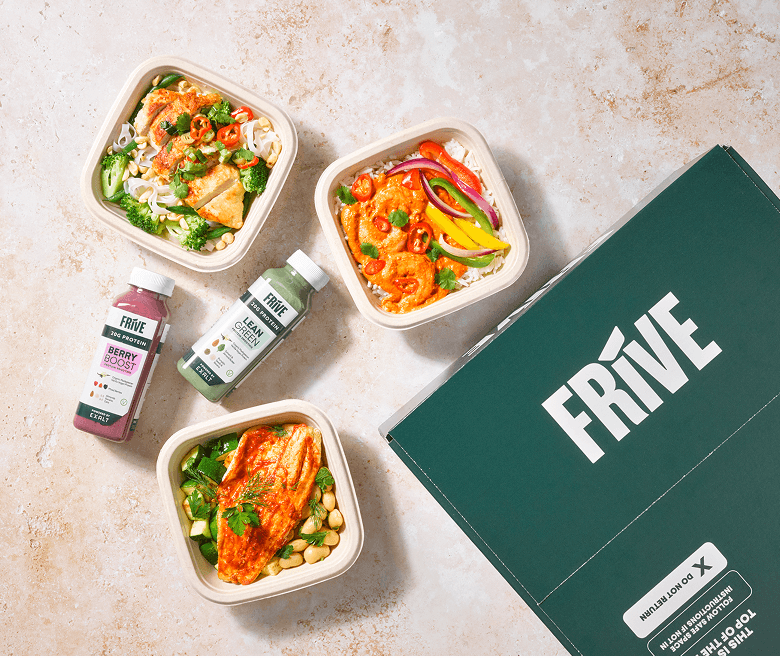
Every Sunday evening, thousands of UK professionals sit down with an optimistic grocery list and a Pinterest tab. The ritual feels productive, almost therapeutic. You map out a week of healthy dinners that align with the gym schedule, the project deadlines and the kids' bedtime. Monday holds. Then Tuesday afternoon arrives. A client emergency pushes a 4pm meeting back an hour. An urgent review eats into the evening. By 8.30pm you're staring into a fridge of half-prepped vegetables, and the bookmarked recipe is now a forty-minute negotiation you don't have the bandwidth for. You close the fridge. You open Just Eat.
Most professionals read that as a discipline failure. It isn't. Traditional Sunday meal planning fails for four structural reasons: decision fatigue, variety burnout, calendar volatility, and the hidden cognitive cost of the prep itself. The Sunday batch-cook was designed for a working week that no longer exists. Expecting a rigid schedule to survive a volatile corporate calendar is a recipe for the exact frustration you're feeling.
This article explains why meal planning is structurally broken for modern professional life, what high performers like Steve Jobs, Barack Obama and Jeff Bezos do instead, and what a system-led alternative actually looks like in 2026.
| Why meal planning fails: At a glance | |
|---|---|
| The old model | Sunday batch-cook for the working week ahead. Designed for a stable calendar that no longer exists. |
| The new model | Weekday dinners outsourced to a natural default. Weekend cooking kept as a leisure activity. |
| Why it breaks | Decision fatigue, variety burnout, calendar volatility, and the cognitive cost of the prep itself. |
| Time recovered | Typically 4 to 6 hours a week, plus the cognitive load of weekly planning. |
| Cognitive cost | Zero recurring micro-decisions about weekday food. |
| Right for you if | You've quietly abandoned a meal plan more than once this year. |
Why does Sunday meal prep fail for busy professionals?
Standard productivity advice frames meal planning as a basic organisational habit. Buy the containers, batch-cook on Sunday, follow the spreadsheet. The theory only works for a stable, predictable week. For most UK professionals it collapses by Tuesday, and for four structural reasons rather than one.
1. Decision fatigue borrows from tomorrow's budget
Pignatiello and colleagues' 2018 conceptual analysis in the Journal of Health Psychology describes the mechanism cleanly: humans have a finite daily capacity for self-regulation, and every choice draws down a shared cognitive reserve. The replication conversation since Hagger's 2016 multi-lab study has rightly questioned the strongest claims of ego depletion (the effect is smaller and more context-dependent than the early 2000s research suggested), but the working principle holds. Planning a week of meals is itself a cognitively expensive task. Doing it on Sunday borrows from Monday's executive function budget.
High performers operate on a limited cognitive budget each day. You're spending Sunday's bandwidth on a problem that Tuesday's calendar will overrule anyway.
2. Variety burnout triggers late-night takeaway orders
Classic meal prep often produces a mountain of identical chicken-and-rice portions. Monday is fine. Tuesday is tolerable. By Thursday the container looks completely unappealing, and a fast-food app becomes the easiest off-ramp. Dinner is one of the few daily decisions that should be intrinsically rewarding. Force yourself to white-knuckle a bland repeat-menu and your brain quietly rebels.
3. Calendar volatility wrecks strict prep schedules
Corporate calendars shift in an instant. Late client calls, surprise dinners, sick days, kids' fixtures. When you finish later than expected, the fresh meal plan becomes a burden. Perishable ingredients spoil in the crisper while the pre-cooked food expires unopened.
UK takeaway demand data tells the same story: Thursday and Wednesday consistently rank as the busiest delivery days of the working week, accounting for the largest share of total weekly orders. Those are precisely the evenings when most meal plans fall apart.
If you're tired of watching fresh groceries hit the bin every week, our practical guide on how to reduce food waste covers the recovery moves.
4. The hidden cognitive cost of weekend batch cooking
Three hours of Sunday afternoon over a hot stove is not free time. Productivity culture frames batch cooking as saving time, but it steals the exact window you need to recover from the working week. Your weekend should be for resting the brain and reconnecting with family. Sacrificing Sunday to domestic chores means you enter Monday already burnt out.

Try Frive's delicious Shoyu Chicken Thighs meal. Includes 41g of protein.
Why does standard productivity advice fail on weekday cooking?
The self-improvement playbook always says the same thing. If your routine is failing, optimise harder. Buy the better kitchen tools. Wake up earlier. Download a tracking app. Perfecting a broken setup is a trap. High performers know that some tasks don't need to be done better. They need to be removed.
From time-management to decision-management
You might not think Steve Jobs, Barack Obama and Jeff Bezos have much in common, but they share a habit that decides the rest of their day: they delete recurring micro-decisions about anything that isn't strategically important. Jobs wore the same black turtleneck and jeans for years. Obama told Michael Lewis in his 2012 Vanity Fair profile that he wore only blue or grey suits because, in his words, "I'm trying to pare down decisions. I don't want to make decisions about what I'm eating or wearing. Because I have too many other decisions to make." Bezos schedules his "high IQ" meetings before lunch and refuses to make major decisions after 5pm, on the principle that a senior executive "gets paid to make a small number of high-quality decisions", and tiredness is the cheapest way to lower their quality.
Weekday dinner is exactly the kind of recurring micro-decision the same logic applies to. Run your week through the lens of the Eisenhower matrix, the productivity framework that ranks tasks by urgency and importance, and weekday dinner becomes a textbook outsourcing candidate. It's incredibly high-frequency, has zero strategic value to your career, and the nightly friction drains the energy you need for the work that does. The shift from time-management to decision-management is the modern productivity frontier, and weekday dinner is its clearest application.
What forward thinking professionals actually do instead
The shift is already happening, quietly. Most high performers over 35 stopped trying to white-knuckle five days of weekday meal prep years ago. The new pattern splits the cooking decision in two: weekend cooking as a leisure activity, weekday dinner as an outsourced default.
Cooking a slow Saturday lunch with the family is one of the most rewarding parts of the week. The pressure of a ticking clock is gone, the kids are involved, the wine is open. Nobody who enjoys cooking should give that up. Weekday nutrition is the opposite. The constraints are tight, the time is short, the upside to your career is zero. Conflating the two activities is the underlying mistake that makes Sunday meal prep feel virtuous in theory and miserable in practice.
Mintel's 2025 UK Ready Meals research confirms the broader shift: chilled prepared meals have become a staple for the time-poor professional, and the quality bar consumers expect has risen sharply in the last five years. The traditional Sunday batch-cook is rarely defended by professionals who train regularly, lead teams or have young children. It's quietly replaced with a natural delivery default and weekend cooking-as-leisure, a far more honest answer to the question of what the modern week actually allows.
How do you know if outsourcing your weekday dinners is right for you?
Swapping home cooking for a ready-to-eat plan is a straightforward trade-off. You make a small financial investment to win back time and cognitive bandwidth. Whether it's worth it for you depends on what your current pattern actually looks like. If you've already started searching for ways to eat healthy when you have no time to cook, the diagnostic below will tell you whether the bigger reset is worth it.
Answer four questions honestly:
How many times did you abandon a pre-planned meal or let fresh ingredients go to waste this month?
How many weeknight dinners did you actively enjoy preparing from scratch after a long workday?
How many premium takeaways did you order simply because your brain lacked the capacity to cook?
What is your hourly professional rate compared with the time you spend on kitchen clean-up and grocery runs?
If late-night delivery fees, food waste and grocery-shop attrition are quietly piling up, the routine needs a reboot. If you genuinely enjoy weeknight cooking and the rhythm works, this article isn't for you, and that's fine. For a full breakdown of the financial side, our analysis of how much a meal-prep delivery saves you in both time and cash covers the numbers.
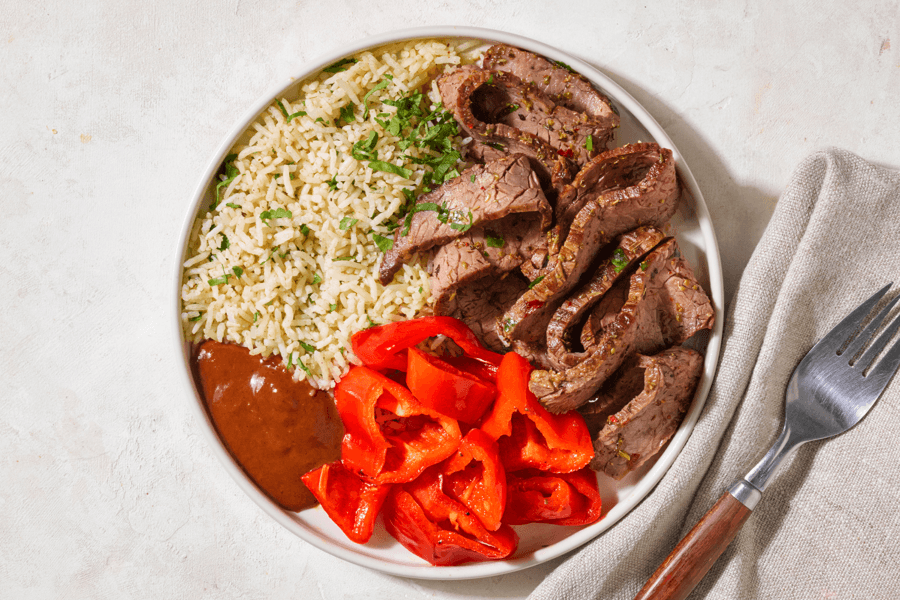
Try Frive's Smoky Mexican-Style Beef With Lime Rice
What should you look for in a ready-to-eat meal service?
Handing over weekday meals only works if the replacement matches the quality of a proper home-cooked dinner. Swapping Sunday meal prep for standard supermarket ready meals or commercial calorie-counters is a step backward. Most of those rely on industrial seed oils and synthetic emulsifiers to extend shelf life, and the convenience comes at a nutritional cost.
A genuine alternative needs to clear four lines:
Real, natural food. Lean protein, complex carbohydrates, vegetables and healthy fats, with no industrial seed oils, emulsifiers or hidden preservatives.
Zero cognitive burden. Macro-balancing, portion control and weekly variety handled for you in the background.
Genuine speed. Under five minutes from fridge to plate, with no active cooking, chopping or pan-watching.
No recipe-box traps. Services that ship raw ingredients and a recipe card don't solve the problem; they still demand forty minutes of active cooking at the exact moment your energy is lowest.
How Frive fully automates your weekday nutrition
Frive sits in the exact gap traditional prep can't fill. Removing the planning, shopping and cooking layers turns one daily decision into zero. You walk in from work, open the fridge, and dinner is three minutes away.
Every meal is built by Frive's nutrition team around real, natural food: never seed oils, never emulsifiers, never UPF. The 100+ rotating menu options each month mean your palate never lands on Thursday's chicken-and-broccoli fatigue. Macros are balanced for you in the background, so the easy weekday option is also the right one. And the format is built around the working professional's actual week, not a wellness-blog ideal.
"Meal planning isn't dead because we got lazier. It's dead because the modern professional finally noticed it wasn't worth the cost."
You don't need to become a better Sunday meal prepper to protect your health and focus. You need to stop fighting your calendar. Delete the cooking step. Protect the recovery. Wake up sharper. That's the whole trade.
Ready to stop fighting your calendar? See this week's menu, or start with a five-meal box to feel the difference by Thursday.
Frequently Asked Questions
Why doesn't meal planning work for busy professionals?
It collapses by Tuesday for four structural reasons: decision fatigue, variety burnout, calendar volatility, and the hidden cognitive cost of the Sunday batch-cook itself. Modern professional weeks are too unpredictable for a rigid plan to survive.
What's the best alternative to Sunday meal prep in the UK?
Fully outsourcing weekday dinners to a natural ready-meal service: no UPF, nutritionist-designed macros, under five minutes from fridge to plate, and a rotating menu wide enough to prevent boredom. Weekend cooking stays as leisure. Recipe boxes don't count, because they still demand 30 to 40 minutes of active cooking.
Is outsourcing your weekday dinners considered lazy?
No. It's systems thinking, the same logic CEOs apply to recurring micro-decisions. Steve Jobs wore the same outfit, Obama wore only blue or grey suits, Bezos protects high-quality decisions for the morning. Outsource the weekday dinner choice to free cognitive bandwidth for higher-value work.
How much does meal-prep delivery cost compared with cooking from scratch in the UK?
Once you include groceries, food waste, midweek takeaways and the four to six hours a week spent shopping, prepping and washing up, a quality ready-to-eat service is typically cost-neutral or modestly cheaper for UK professionals. The real return is reclaimed decision capacity, not pounds saved.
What should I look for in a healthy ready-to-eat meal service?
Four non-negotiables: real, natural food (no industrial seed oils or emulsifiers), nutritionist-balanced macros, under five minutes from fridge to plate, and a rotating menu of 50 to 100 dishes. Anything that still requires chopping or active cooking doesn't solve the underlying problem.
How long should a quality ready-to-eat dinner take to prepare?
Under five minutes from fridge to plate, with no active cooking, chopping or pan-watching. Anything longer reintroduces the friction the system is meant to remove. At 8.30pm, fifteen extra minutes is the difference between a proper dinner and a takeaway.
Do high-performing professionals actually outsource their weekday dinners?
Increasingly, yes. Surgeons standardise pre-op routines, athletes outsource meal timing to nutritionists, CEOs delete recurring choices from the day. The Sunday batch-cook is rarely defended by professionals over 35 who train, lead teams or have young children; it's quietly replaced by a natural delivery default.