It's 8.15pm. You've just unlaced your trainers, your post-session hunger is starting to bite, and the most realistic option in your kitchen is a scoop of whey in water. You know it's not enough. You also know that cooking a real meal from scratch tonight is not happening.
This is the dinner every working gym-goer faces three or four nights a week, and it's the biggest single reason most people leave recovery on the table. A shake is fast, but it solves one problem (protein) while ignoring four others: glycogen, micronutrients, satiety and sleep. The cost shows up the next morning as soreness, fatigue and a session that doesn't quite hit.
This article does three things. It tells you what modern science actually says about post-workout nutrition. It gives you the precise template of a recovery-grade dinner, with grams, examples and a worked plate. And it shows you how to deliver that dinner in three minutes flat on the nights when cooking isn't an option.
What the post-workout window really is in 2026
The anabolic-window panic was a useful piece of marketing. The reality is calmer. The 2013 meta-analysis by Schoenfeld and Aragon in the Journal of the International Society of Sports Nutrition showed that what drives muscle adaptation is total daily protein intake, not whether you drink a shake within thirty minutes of your last set. The ISSN's 2017 Position Stand on Nutrient Timing puts the practical window at several hours either side of training for most lifters.
That doesn't make the post-training meal optional. It's still your single biggest recovery lever for next-day performance, not because of a stopwatch but because it's the meal closest to your overnight repair window. Skip it, eat it poorly, or drink it instead, and the work you put in earlier in the evening is partially wasted.
Two practical implications. First, the urgency is overstated. Walking through your door at 8.30pm and eating at 8.45pm is fine; eating at 9.15pm is also fine. Second, the quality bar is the same whether you finish training at 7pm or 9pm, and the rest of this article is about that bar.
The three pillars of next-day muscle recovery
| Why your post-workout dinner matters: At a glance | |
|---|---|
| Muscle energy | Heavy training drains the glycogen stored inside your trained muscles. Replenishing it in the evening puts you in full-strength condition for tomorrow's session. |
| Tissue repair | A natural dinner provides a steady, hours-long stream of amino acids to mend the microscopic muscle damage caused by lifting. |
| Deeper sleep | Going to bed hungry elevates cortisol and fragments sleep. A complete dinner stabilises blood sugar and supports the deep, restorative sleep where most physical repair happens. |
For the foundation on how much protein your daily plate actually needs across the week, see our guide to building macro-balanced meal plans.
Why just having a shake falls short
Liquid protein is a useful insurance policy. Treating it as your dinner is a recovery error, and the science on why is clearer than fitness culture suggests.
Natural protein outperforms whey on the food-matrix effect
The seminal study here is van Vliet, Burd and colleagues' 2017 paper in the American Journal of Clinical Nutrition. They compared whole eggs versus an isonitrogenous (equal-protein) serving of egg whites after resistance exercise in young men. The whole-egg group showed a 40% greater muscle protein synthesis response, despite the equal protein dose. The mechanism is the food-matrix effect: natural foods co-deliver fats, micronutrients, phospholipids and cofactors that isolated protein doesn't, and that combination amplifies the anabolic response beyond what the protein number on the label predicts.
That's the structural reason salmon-and-sweet-potato beats whey-and-water for the evening meal. It's not just more protein. It's a better-quality anabolic signal per gram.
The satiety, glycogen and micronutrient gap
Satiety. Liquid calories pass through your system in 30–40 minutes and barely register on the satiety hormones (CCK, GLP-1, ghrelin) that tell your brain you've eaten. A shake at 8.30pm reliably becomes a snack-cupboard raid at 9.45pm.
Glycogen. A heavy session can deplete 30–50% of the glycogen stored in your trained muscles. Refilling it requires carbohydrate, which a standard protein shake doesn't contain. Skipping the carb half of recovery is the biggest hidden reason your second session of the week feels worse than your first.
Micronutrients. Whey isolate is what's left after stripping the rest of the milk away. Real recovery uses magnesium (for muscle relaxation and sleep onset), zinc (for testosterone synthesis), iron (for oxygen transport in red blood cells), and B12 (for energy metabolism). Natural protein delivers all four; whey delivers none of them in meaningful amounts.
| Recovery factor | Natural dinner | Protein shake |
|---|---|---|
| Protein dose | 30–40g, food-matrix amplified | 20–30g, isolated |
| Muscle protein synthesis | Higher per gram (van Vliet 2017) | Lower per gram |
| Glycogen replenishment | Yes (complex carbs included) | No |
| Micronutrients (Mg, Zn, Fe, B12) | Yes (naturally co-delivered) | Minimal |
| Satiety through to bedtime | High (protein, fat, fibre) | Low (passes in ~40 min) |
| Sleep impact | Stable blood sugar overnight | Often followed by a late snack |
If you do need quick fuel on the way home, see our breakdown of the best protein snacks for smart on-the-go fuel.
The anatomy of a recovery-grade dinner
A worked example. 200g grilled salmon fillet, 250g roasted sweet potato, 100g tenderstem broccoli, half an avocado, finished with a tablespoon of olive oil and a pinch of sea salt. Macros: roughly 42g protein, 55g carbohydrate, 22g fat. That single plate covers every recovery base in the list below. Once you understand why each pillar is there, you can build the same template from any cuisine.
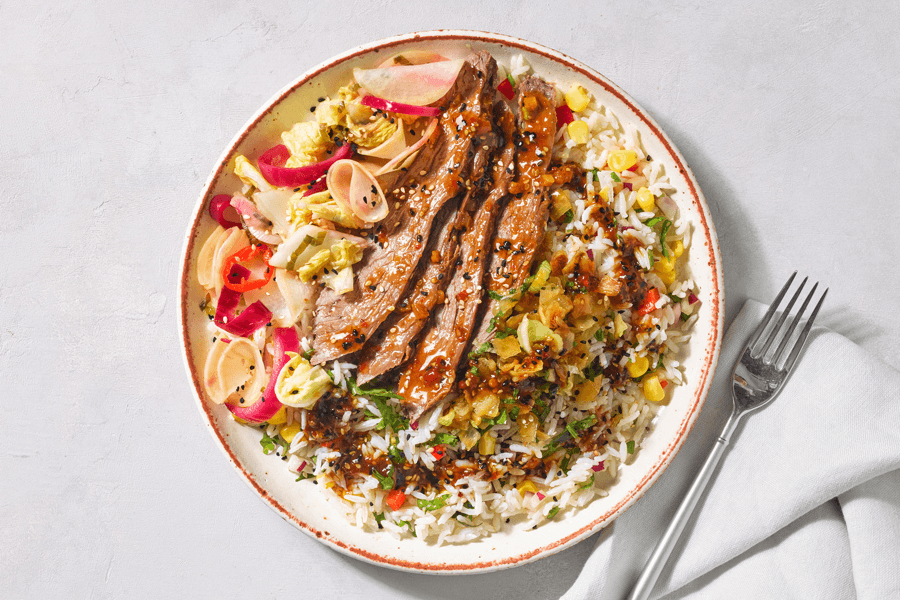
Try Frive's Beef Gyudon Rice Bowl.
1. 30 to 40g of natural protein
This is the dose that comfortably clears the leucine threshold (~2.5–3g per meal) needed to maximally stimulate muscle protein synthesis in a typical adult. Witard and colleagues (2014, AJCN) established 20g of whey as the saturating dose for resistance-trained men; natural protein has lower bioavailability per gram, which is why the standard recommendation for a recovery meal sits at 30–40g. Moore et al. (2009) found a comparable ceiling. Larger trainees (90kg+), trainees in a calorie deficit, and anyone over 50 should sit at the top of that range.
What 30–40g looks like on the plate: 200g chicken breast (~46g protein), 200g salmon (~42g), 200g lean beef (~44g), 250g firm tofu (~45g), four large eggs plus 50g of cheese (~35g), or 200g of Greek yogurt with 30g of mixed nuts (~30g).
2. Complex carbohydrates (0.5 to 1g per kg of bodyweight)
Carbohydrate is the refuelling half of recovery, not an optional extra. The ISSN's 2017 position stand recommends 0.5–1g/kg of bodyweight of carbohydrate in the post-exercise meal for most trainees. For a 70kg adult that's 35–70g: roughly one large sweet potato, one cup of cooked brown rice, 80g of dry quinoa, or two slices of seeded sourdough plus a portion of berries.
Choose slow-releasing options. They keep blood sugar steady through the night, and glucose volatility before bed fragments sleep. Skip the white-bread-and-honey approach.
3. Vegetables for micronutrient density
Fill half your plate. The point isn't fibre alone. It's the specific recovery role of the micronutrients. Leafy greens (spinach, kale, chard) supply magnesium for muscle relaxation and sleep onset. Broccoli, cauliflower and Brussels sprouts deliver sulforaphane and vitamin C, both of which support inflammation resolution. Red and orange vegetables (peppers, carrots, tomatoes) provide carotenoids that help dampen the oxidative stress of a heavy session. The NHS Eatwell Guide recommends a third of the plate be vegetables; for a recovery dinner, aim closer to half.
4. Healthy fats for hormone recovery
Fat is the recovery component most often dropped. The body uses it to support testosterone and cortisol balance, to absorb the fat-soluble vitamins (A, D, E, K) in your vegetables, and to slow gastric emptying so amino acids release steadily through the night. Half an avocado, a tablespoon of extra virgin olive oil, a small handful of walnuts, or the fat naturally present in salmon or grass-fed beef all do the job. Avoid frying in seed oils after a session; the inflammatory load works against you.
5. Rehydration and electrolytes
A heavy session can cost 1–2 litres of fluid plus the sodium, potassium and magnesium dissolved in it. Drink 500–750ml of water with your meal, and add 300–700mg of sodium. A pinch of good sea salt does most of it, or use a clean electrolyte tab without added sugar. Potassium-rich foods on the plate (sweet potato, leafy greens, avocado) handle the rest. If you wake up with calf cramps, you're under-replacing electrolytes, not under-drinking.
For a structured plan that brings all five pillars together over a week, see our 7-day muscle-gain meal prep guide, or our deep dive on the best foods for muscle recovery.
Why most people skip the recovery dinner anyway
Knowing what to eat and actually getting it on your plate at 8.30pm on a Thursday are two different problems.
Cooking from scratch after a heavy session is unrealistic three or four nights a week. The cumulative decision fatigue of a full work day, plus the physical depletion of a workout, plus the cognitive load of choosing, prepping, cooking and washing up: most people can do that once or twice a week; nobody does it five times. The shake-and-cereal default isn't laziness, it's load management.
Sunday meal prep partly solves this, but creates two new problems. Variety burnout: by Thursday, the third container of chicken-and-rice has lost its appeal. And storage decay: the broccoli that was crisp on Sunday is sad by Wednesday. Both nudge you toward delivery apps and shop-bought ready meals that quietly fail the recovery-grade test: UPF ingredients, seed oils, low protein density, excessive sodium.
The unspoken reality is that most of the gym-going professional population is leaving recovery on the table, several nights a week, every week.
The three-minute recovery dinner solution
The only way a recovery-grade dinner happens reliably after late training is if the cooking step has already been done. Pre-prepared, natural, nutritionist-designed meals are the one option that satisfies all three constraints at once: speed, quality, and low cognitive load.
How Frive automates your high-protein post-workout nutrition
Frive is built around exactly this use case. Every meal on the rotating menu is designed by registered nutritionists against a recovery-grade brief:
30 to 40g of natural protein in every box. Anchored on British-farmed and grass-fed meats, wild-caught fish, free-range eggs and organic plant proteins.
A complete plate. Protein, complex carbs, vegetables and a healthy fat source in every meal, ratioed by nutritionist macro design rather than by guesswork.
Three minutes from fridge to fork. Faster than reheating leftovers, with no chopping, no cooking and no pan to scrub.
100+ rotating meals across the menu. The variety burnout problem that kills meal prep by Thursday never kicks in.
Zero ultra-processed shortcuts. No seed oils, no emulsifiers, no refined sugars, no UPF additives. The convenient option is also the right option.
This is the dinner that happens on the night you finish training at 8.45pm and need to be in bed by 11. The recovery-grade meal arrives without taking any of the energy you don't have.
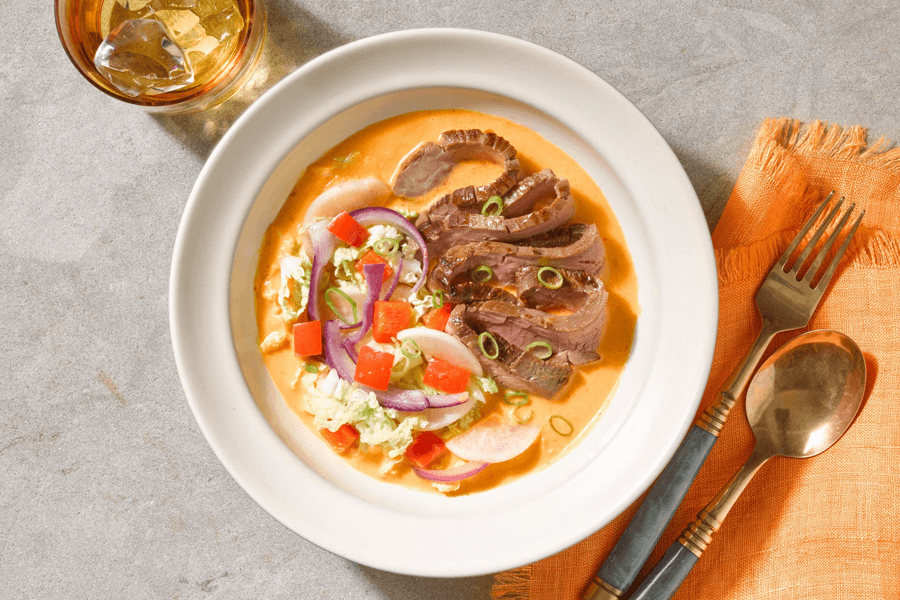
Try Frive's Tom Yum Beef Soup with Japanese Vegetables & Fragrant Herbs.
Ready to stop fighting the post-gym dinner? Explore the Frive menu to see this week's recovery meals, or look at our high-protein meal plans to find the right rotation for your training schedule.
Frequently Asked Questions
What should you eat for dinner after a late gym session?
A recovery-grade post-gym dinner needs four things: 30 to 40g of natural protein, complex carbs (0.5 to 1g per kg of bodyweight), a generous portion of vegetables, and a healthy fat source. A worked example is 200g grilled salmon, 250g sweet potato, tenderstem broccoli and half an avocado, finished with olive oil.
Is a protein shake enough for dinner after the gym?
No, a protein shake on its own is not enough for dinner. Shakes deliver protein but miss the carbohydrates that replenish muscle glycogen, the micronutrients that drive cellular recovery, and the fibre and fat that keep you full overnight. Treat a shake as a stopgap, not as your post-training meal.
How much protein do you actually need after a workout?
Aim for 30 to 40g of high-quality protein in your post-training meal. This dose comfortably clears the ~2.5g leucine threshold needed to maximally stimulate muscle protein synthesis (Witard 2014; Moore 2009). Larger trainees and those in a calorie deficit should sit at the top of that range. Your total daily intake (1.6 to 2.2g per kg) still matters more than any single meal.
Is the 30-minute anabolic window real?
No, the 30-minute "anabolic window" is largely a myth for most trainees. Schoenfeld and Aragon's 2013 meta-analysis showed that total daily protein intake drives muscle gain, not narrow post-workout timing. The real window is several hours wide. Hit your daily protein target and eat a proper recovery dinner within a few hours of training.
What are the best carbs to eat after the gym?
Choose slow-releasing complex carbohydrates: sweet potato, brown rice, quinoa, oats or giant couscous. A 70kg trainee should aim for roughly 35 to 70g of carbohydrate post-workout to refill the muscle glycogen depleted during training. Avoid refined sugars and alcohol with your recovery meal; both blunt protein synthesis and disrupt sleep.
Is it bad to eat dinner late after the gym?
The timing itself isn't the problem; what you eat and how it's prepared is. A natural, moderate-portion meal eaten 30 to 60 minutes before bed supports overnight muscle repair without disrupting sleep. The real issues are ultra-processed late-night meals, which spike inflammation, and cooking at 9pm, which re-elevates cortisol when your body is winding down.
Is natural protein better than whey for muscle recovery?
Yes, for the post-training dinner specifically, natural food outperforms whey. Natural sources release amino acids more steadily and deliver the "food matrix effect" of co-delivered micronutrients, fats and fibre. Van Vliet's 2017 study showed whole eggs produced a 40% greater muscle protein synthesis response than equal-protein egg whites.