Do you often finish a large lunch at your desk, feeling physically full, only to find yourself scouring the kitchen cupboards for a snack forty-five minutes later?
It's an incredibly frustrating cycle, especially when you are trying to stay on track with your health goals. Many professionals across the UK find themselves in the same loop, where calories consumed don't seem to translate into the satisfaction or energy they expected.
The truth is that biology, rather than your discipline, plays the leading role here. That nagging, persistent hunger usually stems from how your modern diet interacts with your body's ancient signalling systems.
Navigating this is particularly difficult in the UK, where ultra-processed foods (UPFs) account for 57% of the average adult's energy intake. For adolescents, that figure climbs to nearly two-thirds. With these foods making up so much of the national plate, it's no surprise so many of us struggle to feel genuinely satisfied by what we eat.
In this guide, we dive into the science of why these foods leave you reaching for more and how they effectively mute your body's natural stop signals. More importantly, we explore practical, sustainable steps to help you feel in control again.
| The UPF-weight connection: At a glance | |
|---|---|
| Environmental pressure | Massive UPF prevalence in the UK makes overeating a problem of the food environment, not willpower. |
| Muted signals | Industrial processing strips out the natural structure of food, suppressing the release of stop-eating hormones like GLP-1. |
| Hormonal interference | Additives and rapid sugar absorption drive insulin spikes that drown out leptin, the hormone that tells your brain you have enough energy stored. |
| The dopamine trap | Engineered bliss points overstimulate the brain's reward system, making it biologically harder to stop eating. |
| The 14-day shift | Moving to natural foods for just two weeks can begin to recalibrate your palate and gut health. |
| Reclaim your biology | Choosing Frive's chef-prepared, 100% natural meals removes UPFs from your daily defaults, letting your hunger signals work the way they were designed to. |
What actually counts as ultra-processed food?
To understand why your body reacts this way, it helps to define what we are actually eating. People often use the terms "processed" and "ultra-processed" interchangeably, but they describe different categories of food.
A bag of frozen peas or a tin of chopped tomatoes is processed, but remains a nutritious staple. Ultra-processed foods are different because they are industrial formulations, made primarily from broken-down food components and additives that you wouldn't find in a domestic kitchen.
Beyond the ingredients: The NOVA system
Researchers use a scale called the NOVA system to categorise food based on how much it has been altered. Most of the confusion lies in Group 4, the ultra-processed category, which is defined less by what is in the food and more by how it is made.
When a grain is stripped of its husk and pulverised into fine flour, your body digests it almost instantly. This shift from our evolutionary blueprint is the central reason why these foods disrupt the systems that have kept us regulated for thousands of years.
Why "healthy" UPFs are the real trap
This is where many health-conscious individuals get caught out. We often reach for products that promise a quick nutritional fix, believing they support our goals. The supermarket shelves are full of products marketed as healthy, including many supermarket ready meals, that are technically ultra-processed.
Manufacturers frequently pack these products with emulsifiers for texture, seed oils for stability, and sweeteners for flavour without the calories. While they hit the right macros on a label, they remain calorie-dense industrial formulations that interact with your appetite the same way a packet of crisps does.
Spotting the difference: The UPF spectrum
Sometimes the contrast is easier to see than to describe. The table below shows what happens to four everyday foods as they move from natural to industrial.
| Base food | Unprocessed (Group 1) | Processed (Group 3) | Ultra-processed (Group 4) |
|---|---|---|---|
| Chicken | Fresh chicken breast | Roast chicken in brine | Chicken bites with thickeners and dextrose |
| Oats | Steel-cut or rolled oats | Porridge with added sugar | Instant oat pot with sweeteners and flavourings |
| Yoghurt | Plain Greek yoghurt | Yoghurt with tinned fruit | Low-fat yoghurt with thickeners, flavourings and aspartame |
| Corn | Corn on the cob | Tinned sweetcorn in salt | Extruded corn puffs with seed oils and flavouring |
How do ultra-processed foods affect hunger hormones?
Your body possesses a sophisticated system of checks and balances designed to prevent overeating. Ultra-processed products effectively bypass this entire system.
Why your 'fullness alarm' is muted
Appetite is mainly governed by two key hormones that act like a biological fuel gauge. Ghrelin originates in the stomach and signals to your brain that it is time to eat, while leptin is released by your fat cells to signal that you have enough energy in storage.
Industrial processing may disrupt this delicate conversation. Calorie-dense products are absorbed so rapidly that they cause a sharp spike in insulin, which can interfere with healthy leptin signalling. The result is that your brain stops registering fullness, even when your stomach is technically full.
The missing GLP-1 signal
Natural nutrients are bound up in a complex web of fibre known as the food matrix that forces your digestive system to work harder, slowing the release of sugars and nutrients into the bloodstream.
Nutrients eventually reach the lower part of the intestine, where the hormone GLP-1 is produced in the L-cells, a powerful signal that tells your brain to feel satiated. Because UPFs are absorbed too quickly, the lower intestine often gets little to do, meaning the GLP-1 signal is weak. Your brain misses the message that you are full.
Volume vs density: The empty stretch problem
Your stomach relies on physical stretch receptors to gauge how much you have eaten. To trigger these sensors and signal fullness, the stomach wall needs to be physically distended.
Research shows that people consume calories much faster when eating UPFs. Industrial products are incredibly energy-dense but low in volume. You can easily consume 500 calories of biscuits without ever physically filling your stomach, while 500 calories of natural food provide the physical bulk needed to trigger satiety.
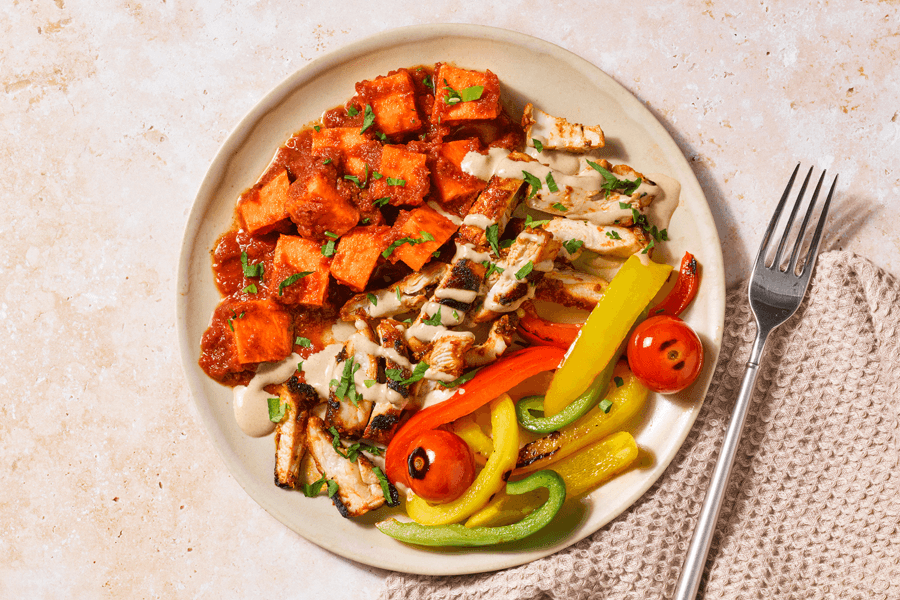
Try Frive's Harissa & Tahini Chicken Thighs.
Why do ultra-processed foods cause overeating?
Industrial foods set up a tug-of-war in your brain. While your gut sends signals of physical fullness, your reward system is being lit up by engineered chemical signals.
Engineering the bliss point
Food scientists aim for a precise target known as the bliss point: the exact ratio of salt, sugar and fat required to maximise a product's appeal.
Far from a culinary accident, the resulting chemical peak ensures an item remains more-ish without ever reaching the point of sensory boredom your brain uses to tell you to stop. It's a calculated override of your natural off-switch.
Neuroscience vs willpower: Why you crave processed food
Stopping at just one biscuit or a handful of crisps can feel nearly impossible because of the dopamine loop. Once your brain experiences that engineered hit, it craves the next one with growing intensity.
The prehistoric brain: Our ancestors evolved to eat as much as possible whenever they found rare, calorie-dense food, to survive scarcity.
The modern exploit: Industrial foods hijack this circuit. The engineered reward signal becomes so loud that it drowns out the quiet fullness signals from your gut.
The biological tug-of-war: Attempting to use self-control against a dopamine loop is like trying to stop a freight train with a handbrake.
Does ultra-processed food affect gut health and weight?
Billions of bacteria live in your digestive tract, forming a complex ecosystem that dictates how you regulate metabolism and appetite. Ultra-processed foods fundamentally disrupt this balance, often setting the stage for chronic weight management issues.
How emulsifiers disrupt your gut
Many products rely on emulsifiers to stay smooth and shelf-stable. However, peer-reviewed research has shown that these additives can act like detergents on the gut lining, eroding the protective mucus layer that keeps inflammation at bay.
The link between inflammation and metabolism
Chronic inflammation acts as static across your metabolic system, drowning out the signals it relies on to regulate appetite and energy balance.
Appetite confusion: Inflammatory markers can disrupt the brain's command centre for weight, making it stop responding accurately to fullness signals.
Insulin resistance: Chronic inflammation is a primary driver of insulin resistance. A 2023 systematic review and meta-analysis found that the highest UPF intake was associated with significantly higher odds of metabolic syndrome.
The hunger spiral: An imbalance of gut bacteria can actually change what you crave, as specific microbes demand more sugar to survive.
Why natural foods work differently to stop cravings
Restoring those stop signals starts the moment you change what's on the plate. When you move away from industrial products, you stop fighting your biology and start working with it.
Physical satiety: Unlike the pulverised fibre in many "healthy" snacks, natural fibre from vegetables and grains stays bulky. This physically fills your stomach and triggers the stretch receptors that signal fullness.
The protein threshold: The protein leverage hypothesis suggests your body will signal hunger until you reach a certain protein level. High-quality sources like lean meats, eggs and pulses hit that threshold reliably.
Rewarding the palate: Reducing bliss point foods allows your brain's reward receptors to reset. You will find that natural flavours become more vivid and satisfying as your taste recalibrates.
The compounding effect: This is where consistency starts to pay off. Reducing your UPF load over weeks, not days, allows hunger hormones to recalibrate, gut bacteria to rebalance, and your relationship with food to settle into something far less effortful.
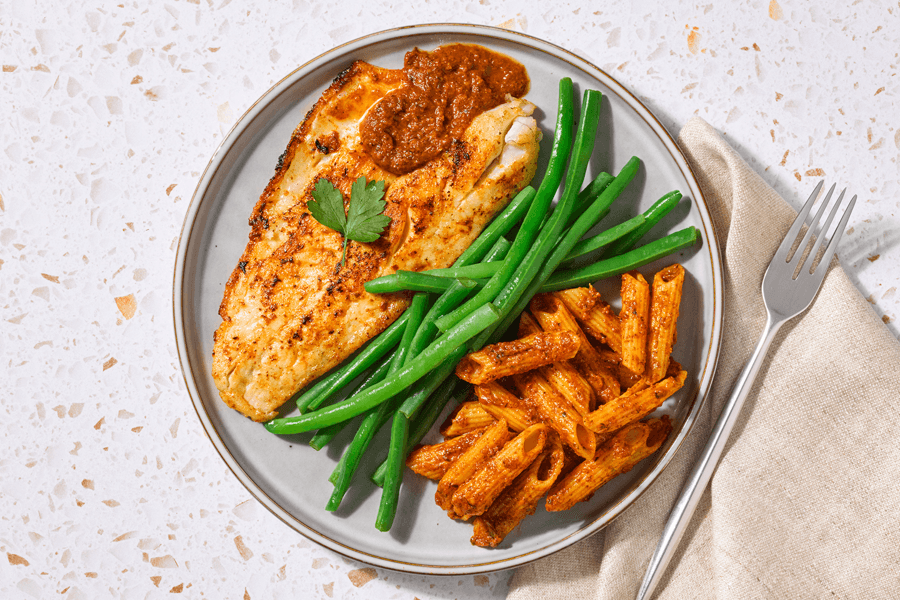
Frive's Roasted Sea Bass With Tomato & Herb Penne Pasta.
How to reduce ultra-processed foods in your diet
A well-managed environment beats willpower almost every time. You now understand that the hunger following a processed meal is a biological reaction, not a personal failure. Knowing this lets you design a routine that works with your body rather than against it.
Breaking the convenience barrier
Knowledge rarely acts as the primary hurdle. Most people recognise that a home-cooked meal is nutritionally superior to a supermarket meal deal. The difficulty appears when you are tired, busy or stressed and need to eat in the next twenty minutes. In those moments, convenience usually wins.
If your weight isn't shifting despite the effort, it's worth understanding why; the type of food you're eating shapes whether your body is willing to let go of stored energy. Calories alone don't explain the full picture.
Choose Frive: Your path of least resistance
Think of Frive as a safety net for those days when life gets in the way. By delivering meals 100% free from ultra-processed additives, Frive removes the friction between intention and execution.
Every dish is designed to keep your body's natural signals in check, using plenty of vegetables and high-quality proteins to keep you satisfied and your energy steady.
Reaching your best weight should feel like a natural progression, not a daily struggle. A lower UPF load lets your hormones recalibrate and your hunger settle, so the discipline part stops feeling like discipline at all.
Ready to stop the hunger cycle? Let Frive handle the preparation so you can focus on your goals. Discover our 100% natural, UPF-free meals today and make the high-performance choice your default.
Frequently Asked Questions
Why do ultra-processed foods make you hungry?
Ultra-processed foods are engineered to be calorie-dense, low-volume and rapidly absorbed, which means they bypass the stomach stretch receptors and L-cell GLP-1 signals that tell your brain you're full. Combined with insulin spikes that interfere with leptin and a dopamine reward loop driven by engineered bliss points, the result is persistent hunger and overeating.
Do ultra-processed foods cause weight gain?
Yes. The 2019 NIH inpatient randomised controlled trial found that people on a UPF diet ate around 500 more calories per day and gained roughly 1kg in two weeks compared to those on a matched natural diet, despite both diets being matched for calories, sugar, fat, fibre and macronutrients. The difference came from how the foods were processed, not what nutrients they nominally contained.
What counts as an ultra-processed food in the UK?
Ultra-processed foods are NOVA Group 4: industrial formulations made from broken-down food components and additives like emulsifiers, seed oils, sweeteners and protein isolates that you wouldn't find in a domestic kitchen. They commonly include "healthy" ready meals, snack bars, mass-produced breads and most flavoured drinks.
Are all processed foods bad for you?
No. Processed foods like tinned tomatoes, frozen peas, plain Greek yoghurt and canned beans (NOVA Group 3 and below) are nutritious staples. The issue is specifically with NOVA Group 4 ultra-processed formulations, where industrial methods strip out the food matrix and replace it with additives that disrupt how your body regulates hunger and metabolism.
How long does it take to recalibrate hunger signals?
Most people notice a meaningful shift in hunger signals within 10 to 14 days of reducing UPF intake. Gut microbiome changes can begin within 24 to 48 hours, while leptin sensitivity and dopamine receptor reset typically take two to four weeks of consistent natural eating to settle.
Can you lose weight without cutting out ultra-processed foods entirely?
Yes, but it is structurally harder. UPFs increase passive calorie intake, blunt satiety hormones and drive cravings, so most people in a calorie deficit on a UPF-heavy diet end up fighting their biology rather than working with it. Reducing UPF load tends to make a calorie deficit feel almost effortless rather than a constant battle.
What's the easiest way to reduce ultra-processed foods on a busy week?
Address the system, not the willpower. The fastest UPF reductions come from changing the default convenient option: pre-prepared natural meals delivered to your door, a stocked freezer of batch-cooked staples, or a fixed weekly lunch order from a UPF-free service. When the easy choice is also the right choice, you stop relying on midweek discipline.