The best energy food is oats: slow release carbohydrates, B vitamins and fibre that fuel you for hours without a crash. Other top high energy foods include bananas, eggs, salmon, lentils, Greek yoghurt and nuts. For steady energy all day, build meals that pair slow release carbs with protein and healthy fats.
If you’re constantly running on empty, you’re not alone: a YouGov poll found that one in eight UK adults feel tired all the time, and another quarter are exhausted most of the time. The good news is you don’t need endless coffee or sugary snacks to stay awake. The right foods for energy keep you fuelled and focused without the crash. Here are the 20 best, what makes each one work, and seven meal ideas that put them together.
What is the best energy food?
Oats are the best all round energy food. They combine slow release complex carbohydrates with B vitamins that help convert food into energy, plus enough fibre to keep blood sugar steady for hours, which is why porridge outlasts almost any breakfast for staying power. Close runners up are bananas (nature’s energy bar), eggs (protein plus B12 and choline) and salmon (omega 3s plus niacin and B12). The real secret is pairing: a slow release carb plus a protein beats either on its own.
The 20 best high energy foods at a glance
Ranked by how well each food delivers steady, lasting energy, with the nutrient doing the work and the best moment to eat it.
Why do energy levels matter?
Energy levels shape how well you think, move and function. When you’re running low, simple tasks feel like a struggle, focus and motivation dip, and your mood follows. Fatigue is more than sleepiness: it’s the drained, sluggish feeling that sticks around even after rest, and common signs include brain fog, irritability, muscle heaviness, headaches and catching every cold going round. Persistent exhaustion can also point to low iron or B12, which is worth ruling out with a blood test rather than guessing at. Occasional tiredness is normal; if it persists, the NHS advice on fighting fatigue recommends regular meals, movement and sleep first, and a GP conversation if nothing shifts. Diet is the lever you control three times a day.
What foods give you energy?
Foods that combine slow release carbohydrates, protein or healthy fats with the micronutrients your body uses to make energy: B vitamins, iron and magnesium. Your body runs on three macronutrients, and each plays a different energy role:
Carbohydrates: the body’s main energy source, powering everything from brain function to muscle movement. Whole grains, fruits and vegetables release glucose steadily, keeping you going without the crash.
Protein: built from amino acids that repair muscle and build tissue, protein digests slowly and steadies blood sugar; think chicken, Greek yoghurt, tofu, salmon and eggs.
Fat: the most concentrated energy source, with more than twice the energy per gram of carbs or protein. Fats from avocados, nuts, seeds and olive oil also help absorb vitamins A, D and E.
Micronutrients do the behind the scenes work: iron transports oxygen in your blood (spinach, lentils, red meat), and B vitamins convert food into usable energy (eggs, nuts, whole grains, leafy greens). Most persistent afternoon slumps trace back to meals missing one of these pieces.
The 20 best high energy foods, group by group
Slow release carbohydrates (1, 2, 8, 10, 11, 14, 16)
Oats: the number one for a reason: slow release carbs, B vitamins and blood sugar steadying fibre. How to eat: porridge with nuts and fruit, overnight oats, or blended into smoothies.
Bananas: nature’s energy bar: glucose, fructose and sucrose with fibre to slow the release, plus vitamin B6. How to eat: on their own, sliced over oats, or with peanut butter for a balanced snack.
Sweet potatoes: complex carbs, fibre and manganese, which helps break down nutrients into energy. How to eat: roasted, mashed, or as wedges alongside a protein.
Brown rice: keeps its fibre rich outer layer, so energy arrives steadily rather than in a spike; rich in manganese and B vitamins. How to eat: as a base for stir fries, curries and grain bowls.
Quinoa: technically a seed and a complete protein, with all nine essential amino acids plus slow release carbs. How to eat: in salads and grain bowls.
Dates: dense natural sugars with potassium and fibre; one of the fastest clean energy hits available. How to eat: two or three with nuts as an afternoon pick me up, or chopped through porridge.
Whole grain bread: fibre and B vitamins for steady energy where white bread spikes and crashes. How to eat: toast with nut butter, eggs or avocado.
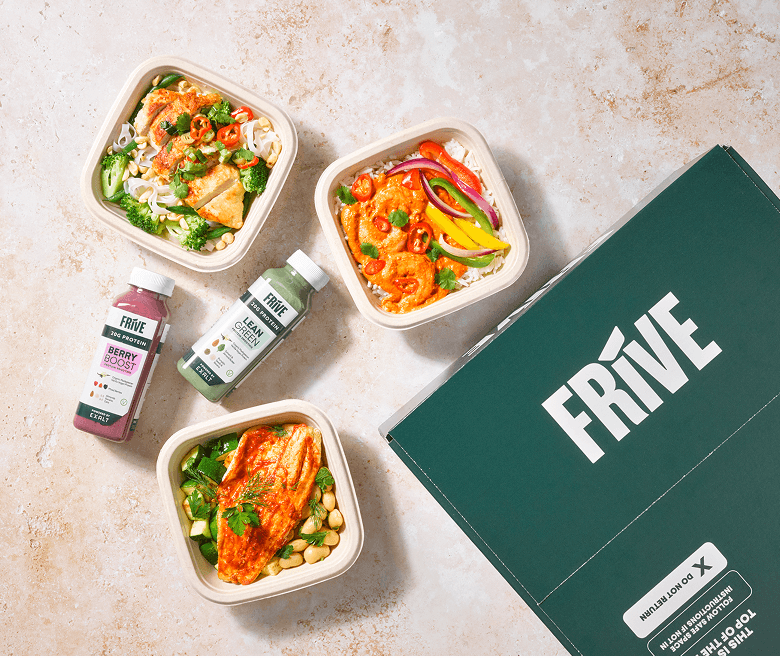
Skip the cooking: every dish on the Frive menu is built on exactly this logic: slow release carbs paired with protein, macros on the label.
Protein for lasting energy (3, 4, 6, 12, 18)
Eggs: high quality protein, B12 and choline keep you full for hours and your brain sharp, plus leucine for muscle recovery. How to eat: scrambled, boiled into salads, or as a veggie omelette.
Salmon: omega 3 fats help counter the inflammation that can sit behind fatigue, while B12 and niacin convert food into energy. How to eat: grilled or baked for dinner, or flaked into salads.
Greek yoghurt: nearly double the protein of regular yoghurt with B12, keeping blood sugar level and hunger quiet; the live cultures support gut health too. How to eat: breakfast base with fruit and nuts, or a thick snack.
Lean chicken: loaded with niacin, B6 and B12; a single serving provides nearly all your daily niacin, a key player in reducing tiredness. How to eat: grilled, shredded into salads, or in wraps.
Cottage cheese: light, high in protein and B12, and easy on the evening appetite. How to eat: on rice cakes or oatcakes, or with chopped tomatoes.
Iron and B vitamin heroes (5, 9, 13, 15)
Lentils: plant iron for oxygen transport, plus protein and fibre that release energy slowly; a genuine fatigue fighter. How to eat: in soups, curries, salads and chilli.
Spinach: iron for red blood cells, vitamin C to help absorb it, and magnesium for energy metabolism. How to eat: wilted into anything, or raw in salads and smoothies.
Beans and chickpeas: fibre, iron and protein at store cupboard prices; the steadiest budget energy there is. How to eat: in chilli, tacos, hummus or roasted as a snack.
Oranges: vitamin C and natural sugars, and that vitamin C boosts iron absorption from the plant foods above; eat them together. How to eat: whole as a snack, segments through salads.
Skip the cooking: browse this week’s Frive menu for fresh, iron and protein rich dishes ready in minutes.
Healthy fats and smart extras (7, 17, 19, 20)
Nuts and seeds: protein, healthy fats and fibre in slow burning balance; almonds, walnuts and cashews bring magnesium, while flax, chia and pumpkin seeds add omega 3s. How to eat: a small handful as a snack, or sprinkled over yoghurt and porridge.
Avocado: unsaturated fats and fibre digest slowly for a steady glucose drip, with magnesium and B vitamins in support. How to eat: on wholegrain toast, in salads, or mashed into guacamole.
Dark chocolate (70%+): theobromine gives a gentle lift without caffeine jitters, and flavanols support blood flow. How to eat: a square or two mid afternoon, or shaved over yoghurt.
Green tea: the calmest caffeine there is: L-theanine smooths the stimulant curve for alert focus without the crash. How to drink: morning or early afternoon; late cups can nudge into sleep time.
High energy meals: 7 energy boosting meal ideas
Single foods help; combinations work. Each of these high energy meals pairs slow release carbohydrates with protein and healthy fats, the formula that keeps energy level from morning to night:
Overnight oats with nuts and berries: oats for slow carbs, nuts for fats and magnesium, berries for vitamin C; the strongest start to a long day.
Eggs on wholegrain toast with avocado: protein, steady carbs and healthy fats in the classic all day breakfast.
Salmon, quinoa and roasted sweet potato bowl: the top table combined: omega 3s, complete protein and two slow release carbs.
Chicken and brown rice stir fry with greens: niacin rich protein, steady grains and iron rich spinach in one pan.
Lentil and vegetable curry: iron, fibre and plant protein; serve on brown rice for the full slow release effect.
Greek yoghurt, banana and peanut butter bowl: the three minute option: protein, natural sugars and healthy fats.
Bean chilli with a square of dark chocolate to finish: fibre and iron in the bowl, a gentle theobromine lift after.
Skip the cooking: Frive’s chefs build these combinations for you; see the full menu with every dish’s macros on the label.
What foods drain your energy?
Knowing what to avoid matters as much as knowing what to eat. The biggest culprits work the same way: a fast glucose spike followed by a deeper dip than where you started.
Sugary snacks and drinks: sweets, biscuits and energy drinks lift you for twenty minutes and drop you for two hours; the crash usually arrives mid meeting.
Refined white carbs: white bread, white pasta and pastries digest fast and spike blood sugar; swap for the wholegrain versions above and the afternoon changes.
Heavy, fried meals: large portions of fried food divert blood flow to digestion and sit heavily for hours; the classic post lunch shutdown.
Alcohol: even moderate evening drinking fragments sleep, and tomorrow’s energy pays the bill.
Caffeine after mid afternoon: a 4pm coffee can still be in your system at bedtime; it does not create energy, it defers tiredness with interest.
How do you keep energy steady all day?
Food is the biggest lever, but it works best alongside a few habits:
Eat at regular intervals: skipping meals is the fastest route to an energy crash; aim for balanced meals and snacks every few hours.
Stay hydrated: even mild dehydration reads as tiredness and poor focus; keep water within reach all day.
Time your caffeine: coffee and green tea work best before 2pm; later cups borrow energy from tomorrow.
Prioritise sleep: aim for 7 to 9 hours; no food out-fuels a short night.
Manage stress: chronic stress is an energy drain; walks, daylight and breathing space all help recharge.
Loading the menu…
Fuel your day the right way
Eating for energy comes down to choosing nutrient dense foods that release fuel steadily: oats, eggs, salmon, lentils and the rest of the twenty above, combined into meals that pair slow carbs with protein. Add regular meal times, water, sleep and a little stress management, and the mid afternoon slump stops being a daily fixture.
At Frive, every meal is designed around exactly that formula: slow burning carbs, high quality protein and the nutrients that keep energy steady, across balanced meal plans that arrive fresh and heat in minutes. Explore the menu and take the guesswork out of eating for energy.
*Please note, offers are subject to change. At the time of writing, Frive is offering an introductory discount on first week orders for new customers.
FAQs
What food gives the most energy?
Oats give the most usable, lasting energy of any single food, thanks to slow release carbohydrates, B vitamins and fibre that keep blood sugar steady for hours. For quick energy, bananas and dates work fastest; for all day stamina, pair a slow release carb with protein, like eggs on wholegrain toast.
What should I eat when I feel weak and tired?
Reach for a combination of quick and slow fuel: a banana with a handful of nuts, Greek yoghurt with fruit, or eggs on wholegrain toast. If weakness and tiredness are constant, prioritise iron rich foods like spinach, lentils and red meat, drink water, and speak to a GP if it persists beyond a few weeks.
What foods are good for fatigue?
Iron rich foods like spinach, lentils and beans help fight tiredness, especially if your iron is low, while slow digesting carbs like oats and brown rice provide steady energy. Healthy fats from salmon, avocado and nuts support brain function and endurance. Vitamin C alongside plant iron improves absorption.
How can I increase my energy fast?
For a quick lift, eat a banana, a few dates, or a small handful of nuts with a square of dark chocolate: natural sugars for speed, fats and fibre to stop the crash. A glass of water helps too, since mild dehydration is one of the most common hidden causes of sudden tiredness.
What is the best breakfast for energy?
Porridge topped with nuts, seeds and fruit is the strongest energy breakfast: slow release oats, protein and healthy fats together. Eggs on wholegrain toast is the best savoury equivalent. Both hold blood sugar steady until lunch, unlike pastries or sugary cereals, which spike and crash within a couple of hours.
Why are carbs and fats high energy foods?
Carbohydrates and fats are the body’s two main fuels. Carbs break down into glucose, the brain and muscles’ preferred energy source, while fat stores more than twice the energy per gram and burns slowly. Natural versions of each, like oats and avocado, release that energy steadily rather than all at once.
What can I drink for more energy?
Water first: mild dehydration is a leading cause of flagging energy and headaches. After that, green tea offers the smoothest lift, pairing gentle caffeine with L-theanine for calm focus, and coffee works well before mid afternoon. Sugary energy drinks give a fast spike followed by a deeper crash.