It started with one shake after a heavy session. Now there's one with breakfast, one mid-afternoon, and a casein scoop before bed. Somewhere between starting the gym and now, the supplement quietly became the default.
This is the quiet reality for most gym-going professionals. The supplement industry built it that way; convenience compounded into habit, and the question 'am I getting enough protein?' got answered with a tub instead of a plate.
The problem isn't shakes. They have a place. The problem is what gets displaced when a shake becomes the default; the food matrix, the micronutrients, the satiety signals and the gut effects that natural protein delivers and powder can't.
This article gives you the rigorous, evidence-led case. We cover how protein quality is actually measured, what shakes can't replicate, why 'clean' protein labels are doing more marketing than nutrition, and the realistic moves that put natural back in the default position.
| At a glance | |
|---|---|
| Best for daily default | Natural protein (eggs, dairy, fish, lean meat, legumes) |
| Best for peri-workout convenience | A shake (fast-digesting, travel-friendly) |
| DIAAS leaders (per gram) | Whole milk 1.18; eggs 1.13; beef 1.10; whey isolate 1.09; chicken 1.08 |
| 'Clean' protein reality | Most powders qualify as ultra-processed under NOVA classification |
| The real protein gap | Usually breakfast and lunch; rarely solved by another scoop |
| Frive per meal | 35–40g+ natural protein, zero UPFs, ready in 3 minutes |
How protein quality is actually measured
Before comparing natural protein to powder, it helps to understand how scientists actually score protein quality in the first place. The scoring system is where most marketing claims quietly fall apart.
From PDCAAS to DIAAS
For decades the standard was the Protein Digestibility-Corrected Amino Acid Score (PDCAAS). Useful, but with a meaningful flaw: any score above 1.0 was capped at 1.0. That meant high-quality animal proteins scoring 1.13 or 1.18 looked identical on paper to a soy isolate scoring 1.0. The cap masked real differences.
The Digestible Indispensable Amino Acid Score (DIAAS), endorsed by the FAO, removes the cap and uses ileal digestibility (measured at the end of the small intestine) instead of faecal digestibility. The result is a more accurate read on how much usable protein you actually get per gram. For a fuller breakdown of how much protein you need and why bioavailability matters, see our guide on how much protein you actually need.
How common protein sources rank
The DIAAS data tells a clearer story than most of the marketing on a protein tub. Animal natural sources cluster at the top; isolated powders sit alongside them; common plant sources lag without thoughtful pairing.
| Source | Type | DIAAS |
|---|---|---|
| Whole milk | Dairy (natural) | 1.18 |
| Casein | Dairy isolate | 1.18 |
| Whole eggs | Animal (natural) | 1.13 |
| Beef (lean) | Animal (natural) | 1.10 |
| Whey protein isolate | Dairy isolate | 1.09 |
| Chicken breast | Animal (natural) | 1.08 |
| Salmon / fish | Animal (natural) | 1.00 |
| Soy protein isolate | Plant isolate | 0.91 |
| Pea protein isolate | Plant isolate | 0.65–0.82 |
| Wheat (alone) | Plant (natural) | 0.40 |
The takeaway is uncomfortable for the powder industry: per gram of protein delivered, whole eggs, milk, beef and chicken either match or beat whey isolate on bioavailability. The 'shakes are higher quality' assumption is, on the actual evidence, wrong.
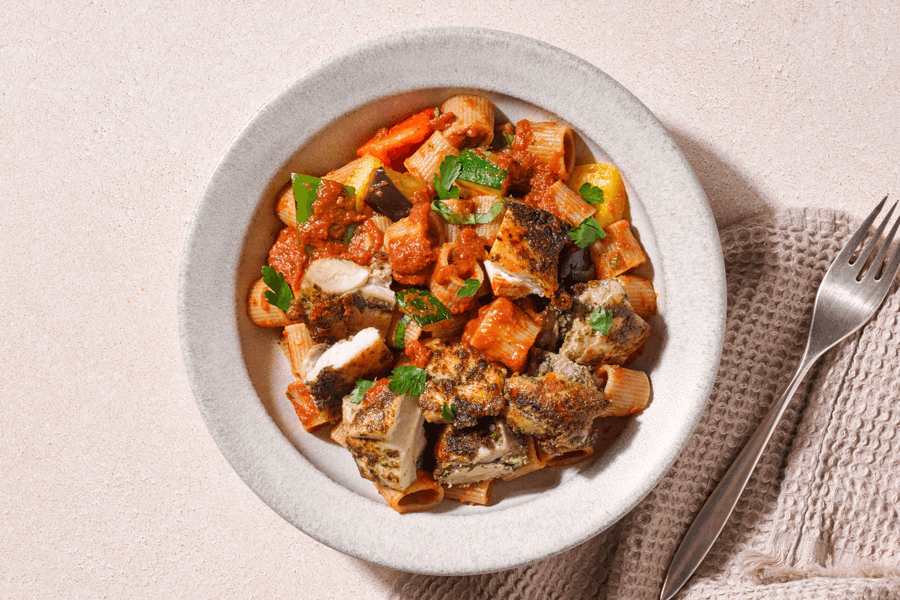
Frive's Chicken Puttanesca Rigatoni.
What a shake doesn't give you
Even if a shake matched natural sources on protein quality alone, it wouldn't match it on everything else that comes alongside the protein. This is where the gap stops being academic and starts showing up in your training, your recovery and your gut.
Micronutrient co-delivery
Natural protein arrives packaged with the cofactors your body uses to put it to work. A 150g chicken breast brings B6, B12, niacin, selenium, phosphorus and zinc. A 150g salmon fillet adds omega-3, vitamin D and iodine. Three eggs add choline, vitamin A and folate.
None of that is in a scoop of isolate. The protein arrives stripped, leaving your body to source the cofactors elsewhere. Recovery uses the full nutrient profile, not just the amino acids.
The food matrix effect
Nutrients in natural foods are absorbed in their natural co-context. Fat-soluble vitamins absorb better with the lipids that come with them; iron and zinc absorb better in the food matrix than from isolated supplements. Strip the matrix, and bioavailability of the surrounding nutrients drops in ways that don't show up on the protein label.
Phytochemicals, antioxidants and the rest
Natural foods bring phytochemicals: the polyphenols, carotenoids and flavonoids that help manage training-induced inflammation. Spinach with eggs, broccoli with salmon, peppers with chicken; these are not garnish, they're functional partners to recovery.
The mastication signal
There is also a behavioural piece. Chewing food triggers a different metabolic and psychological response than drinking it. Cephalic-phase digestive responses, satiety signalling, and the post-meal 'I have eaten' cue all run through chewing and slower consumption. A shake skips all of that.
The satiety difference
This is where shakes lose the biggest practical battle. Liquid calories, including liquid protein, satisfy less than solid calories at the same protein and calorie load. Studies comparing matched-protein, matched-calorie meals consistently find that solid forms produce stronger satiety responses than beverages.
The implication is direct: people who substitute shakes for meals tend to eat more later in the day, often without realising it. The protein is in; the appetite signal isn't.
Why this matters in a deficit
For someone tracking calories closely, the satiety gap is a small inconvenience. For someone in a fat-loss phase, it's a meaningful problem. Satiety drives adherence; adherence is the variable that makes or breaks any deficit. A high-protein plate at lunch carries the afternoon. A shake does not.
The compensation pattern
There is also a compensation pattern in the appetite data. People who replace a meal with a shake consume more total calories at the next meal than people who eat solid food. The 'shake instead of breakfast' habit, popular among professionals, often costs more later than it saves.
The 'clean' protein marketing problem
Walk down the supplement aisle and almost every powder is sold as 'clean', 'natural', 'pure' or 'premium'. The front-of-tub claims promise a level of food integrity that the back-of-tub ingredient list usually doesn't support.
The NOVA classification problem
Under the NOVA food classification used widely in nutrition research, almost every protein powder qualifies as ultra-processed. The reasons are mechanical: hydrolysed protein, isolated protein fragments, and additives like emulsifiers, gums, modified starches and artificial sweeteners are all UPF markers.
This is uncomfortable for the industry, because the same gym-going customer who buys 'clean' protein is often actively trying to cut UPFs in the rest of their diet. The two positions don't reconcile.
What actually shows up in 'clean' protein
Common ingredients in shake products that rarely make it onto the front of the tub:
Sucralose: Artificial sweetener, linked in recent human studies to gut microbiome shifts and altered glucose responses at typical daily doses.
Soy and sunflower lecithin: Emulsifiers; useful for texture, but cumulative intake matters and human gut data is still emerging.
Gums (xanthan, guar, carrageenan): Texture modifiers; high intake associated with gut barrier disruption in animal models.
Modified starches and maltodextrin: Refined carbohydrates pretending to be neutral fillers.
None of these are individually catastrophic. The point is that 'clean' on a label and 'natural' on a plate are not the same thing, and treating them interchangeably misreads what 'clean' actually means in practice.
The microbiome question
Recent research links emulsifiers and artificial sweeteners to reduced microbial diversity and increased intestinal permeability. The downstream effects, low-grade inflammation and metabolic disruption, are exactly what most performance-focused readers are training to avoid.
When shakes genuinely earn their place
The case here is not 'never use protein powder'. There are situations where a shake is the right tool, and pretending otherwise loses the credibility of the argument.
Peri-workout convenience
After a heavy session when natural food isn't practical, a shake delivers fast-digesting amino acids in a useful window. Travelling, training very early, or training very late are all real situations where a shake earns its place.
Genuine intake gaps
If you've audited your natural intake honestly and you're still 30g short most days, a shake can fill the gap. The order of operations matters: review the food first, then add the supplement, not the other way round. For plant-based readers running into protein gaps, our vegetarian protein guide walks through the natural fixes that usually solve the problem before powder needs to enter the conversation.
Specific clinical and ageing contexts
Recovery from illness, post-surgical periods, very high training volumes during competition phases, and certain ageing-related anabolic resistance scenarios all have evidence behind targeted supplementation. These are real use-cases; they're also a small fraction of who actually buys protein powder.
The issue isn't shakes. The issue is shakes by default. Used as a backup, they're useful. Used as the primary protein delivery vehicle, they cost more than they give.
How to make natural protein the default
Most professionals already know they should eat more natural food. The question is how to make it the path of least resistance on a typical Tuesday. The honest answer: change the structural defaults, not your willpower.
Audit your current intake
Most professionals overshoot at dinner and undershoot at breakfast and lunch. The shake habit usually plugs the breakfast or mid-afternoon gap. Fix the gaps with food and the shake becomes optional, not abandoned.
The breakfast lever
30g of protein at breakfast is achievable in five minutes. Three eggs and Greek yoghurt: around 30g. Cottage cheese with berries and a slice of rye: about 28g. Smoked salmon and eggs: 35g. None of these need a powder; they just need to be the default rather than the exception.
The lunch lever
Lunch is where most professionals leak protein. The 'something quick' default is usually a sandwich, a salad bowl, or a meal deal at 12–18g of protein. That gap is what drives the mid-afternoon shake habit.
The fix is structural: pre-prepared natural meals at 35g+ of protein remove the gap entirely. The shake becomes redundant because the lunch was actually the meal.
Dinner usually looks after itself
Cooking-from-scratch evenings or restaurant meals usually clear 35–45g of protein without much effort. The work is at breakfast and lunch; that's where the structural change earns the most return.
How Frive resolves the convenience gap
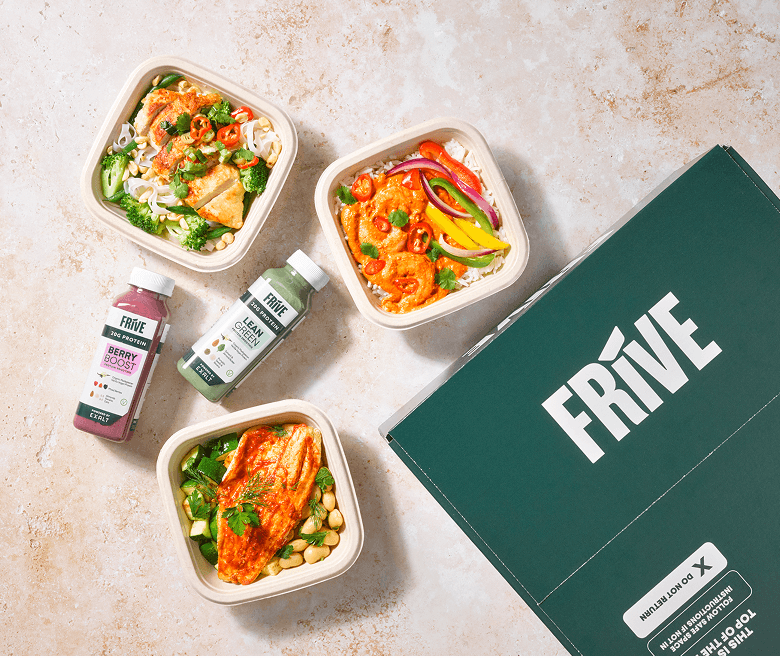
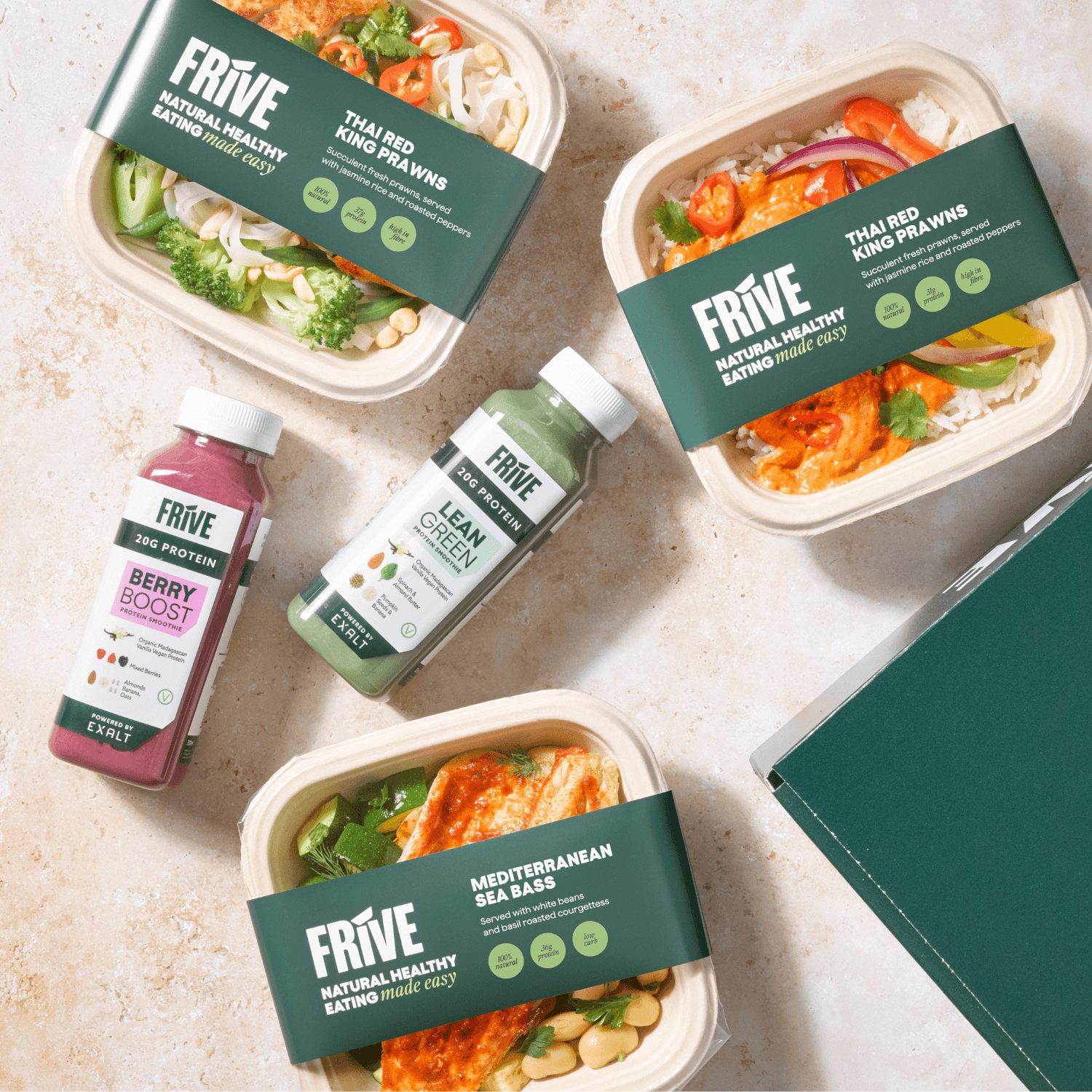
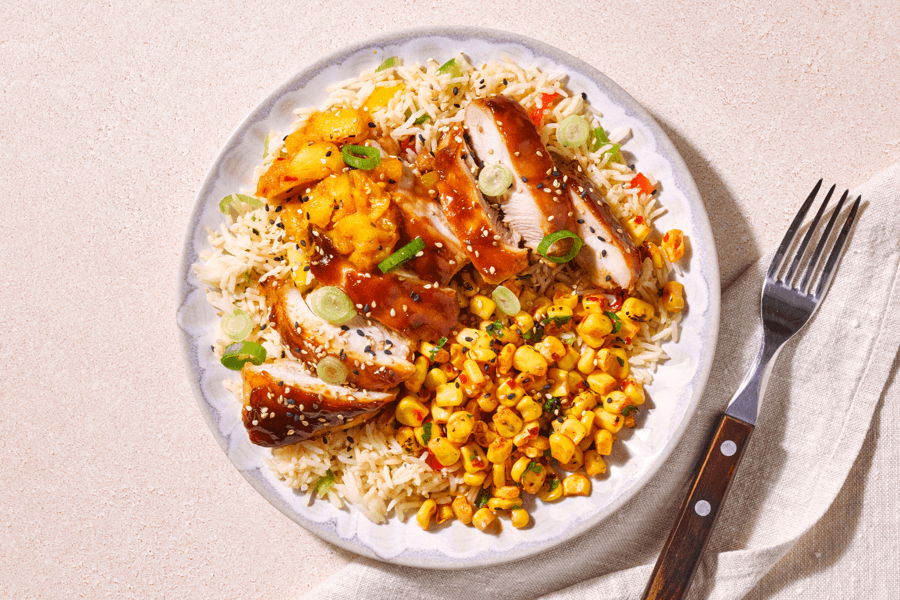
Frive was built for this exact problem. Every meal on the Frive menu delivers 35–40g+ of natural protein from whole cuts of chicken, beef and fish, or premium plant sources; never reformed, never isolated, never mechanically separated. British-farm and grass-fed sourcing where possible. Co-delivered with vegetables, complex carbs and healthy fats; the food matrix that a shake removes.
For the gym-going professional whose shake habit is filling a convenience gap rather than a nutrition gap, Frive's high-protein meal prep plan closes the gap. The shake becomes a tool you use occasionally, not a daily crutch. For a side-by-side against the rest of the UK high-protein delivery market, see our UK high-protein meal prep services compared.
The closing reframe
The goal isn't to swear off supplements. It's to need them less. When the food is right, the powder becomes optional; that's the win. See how Frive works for the system-level version of this argument; what happens to your daily protein default when you remove the shopping, prep and cooking decisions.
Frequently Asked Questions
Is natural protein really better than whey?
For most goals, yes. Natural sources like eggs, milk, beef and chicken match or exceed whey isolate on DIAAS scores per gram, and they arrive with the micronutrients, food matrix and satiety effects that powders can't replicate. Whey still has a useful role around training; it just shouldn't be the default.
Are protein shakes ultra-processed foods?
Most are. Under NOVA classification, hydrolysed proteins, isolated protein fragments, emulsifiers and artificial sweeteners are all UPF markers, and a typical 'clean' protein powder carries several of them. Single-ingredient cold-filtered concentrates sit at the less processed end, but they are still classified as UPF in the strict NOVA sense.
What is DIAAS and why does it matter?
DIAAS (Digestible Indispensable Amino Acid Score) is the modern standard for protein quality. It removes the cap built into older scores and measures digestibility more accurately. Whole milk scores 1.18, eggs 1.13, beef 1.10 and chicken 1.08; comparable to or above whey isolate at 1.09.
Do I need a protein shake to build muscle?
Not unless you've audited your food intake honestly and you're still short. Natural sources can comfortably hit 1.6 to 2.2g/kg targets when meals are structured around protein rather than around it; the shake becomes a useful tool for travel, very early training or genuine intake gaps, not a daily requirement.
Are protein shakes ever genuinely useful?
Yes; for peri-workout convenience when natural food isn't practical, when there's a real intake gap, for travel or unusual training schedules, and in specific clinical or ageing-related contexts. The issue is using them as the daily default rather than a backup.
What does 'clean' or 'natural' actually mean on protein powder?
On a powder, 'natural' usually means the flavours or sweeteners are derived from natural sources; the protein itself is still isolated, often combined with emulsifiers, gums and sweeteners. On natural foods, 'natural' means the food itself, with no isolated fragments or additives. The two are not interchangeable.
How much protein should I get from natural foods per day?
Aim for 1.6 to 2.2g per kilogram of bodyweight, spread across 3 to 4 meals at 30 to 40g each. Most professionals can hit this range without supplements once breakfast and lunch are protein-anchored; dinner usually looks after itself.