The scales are moving in the direction you wanted. Clothes fit looser. The number on the app finally stops creeping the wrong way. Then, somewhere around week eight or ten on Mounjaro, Wegovy or Ozempic, you start noticing something else. Workouts feel harder, not easier, even though you weigh less. Trousers hang oddly at the waist. The face in the bathroom mirror looks a touch more drawn. It is the part of the GLP-1 conversation almost nobody warns you about before the prescription.
Without the right food and a little resistance training, current evidence suggests 30 to 40% of the weight lost on a GLP-1 can be lean tissue rather than fat. That is the headline number, and it is real. It is also entirely preventable. Two specific habits cover almost all of it: enough protein at every meal, and two short resistance sessions a week. The rest of this guide is the practical how.
| Protein on a GLP-1: At a glance | |
|---|---|
| The problem | Up to 30–40% of weight lost on a GLP-1 can be lean tissue rather than fat. |
| Daily protein target | 1.6–2.0g per kg of bodyweight per day during active GLP-1 weight loss. |
| Per-meal floor | Aim for 30–40g of protein at each main meal. Daily total alone is not enough. |
| Training | Two short resistance sessions per week, full-body, compound movements. |
| Default approach | Natural protein. Shakes are a fallback for travel and very low-appetite days, not a default. |
| Cost of getting it wrong | Coming off the medication with less muscle than you started leaves you with a slower metabolism and a higher chance of putting weight back on. |
| Right for you if | You are 4–16 weeks into Ozempic, Wegovy or Mounjaro and want a clear, food-first plan. |
Why GLP-1s cause disproportionate muscle loss
The mechanism is simpler than it sounds. GLP-1s work mainly by switching off the hunger signal and slowing how fast food leaves your stomach, so the total amount you eat drops, often by a lot. Your body still needs a steady supply of protein every day to keep its muscle intact. When it does not get enough from food, it starts breaking down muscle to make up the difference. That is normal physiology on any aggressive calorie deficit. The drug just makes the deficit very easy to fall into.
The major semaglutide and tirzepatide trials have all been re-analysed to ask exactly this question, body composition included, and they keep landing on the same answer: somewhere between 30% and 40% of the weight lost on a GLP-1 is lean tissue when you take no specific steps to preserve it.
That matters because muscle is doing more work in the background than you tend to give it credit for. It is your body's biggest glucose user, it sets a big part of how many calories you burn at rest, and it makes you stronger and harder to injure as you age. Losing it during a phase you eventually have to come off is the textbook 'skinny but worse' outcome. The good news is that the same research is just as clear on the fix: people who pair more protein with resistance training on a GLP-1 hold on to much more of their muscle. Two habits, done properly, cover most of it.
How much protein you actually need on a GLP-1
Ignore the UK government figure of 0.75g of protein per kg of bodyweight per day. That is a maintenance baseline aimed at sedentary adults who are not losing weight and not training. It has almost nothing useful to say about your situation.
The figure that actually matters during active weight loss lands much higher. The International Society of Sports Nutrition and other recent reviews put the muscle-preserving range during a deficit at roughly 1.6 to 2.0g per kg of bodyweight per day. That is the figure to anchor to.
A 90kg adult should be aiming for 145 to 180g of protein per day. A 70kg adult, 110 to 140g. If you are heavier and just starting out, work to 1.6g per kg of your current weight, not your goal weight. Recalculate every 5 to 8kg lost so the target keeps up with you.
On protein quality, briefly: animal proteins (eggs, dairy, fish, poultry, lean red meat) are complete and easy for the body to absorb. The plant-forward route works too, but build it around legumes, soy, edamame, tofu and tempeh, not just nuts and seeds, which are mostly fat. Our daily protein guide breaks the numbers down further.
The per-meal floor that changes everything
Your body builds muscle one meal at a time, not by adding up your daily total. There is a minimum amount of protein it needs in a single meal before it bothers to flip the muscle-building switch on, and the practical translation is roughly 30 to 40g of protein per main meal. Hit that floor at three meals and you have 90 to 120g of quality protein in the bank, with three solid build signals across the day. Miss it and your daily total can look fine on paper while your muscles never get the message.
This is the single most important habit on a GLP-1, and the one most people miss. When appetite is low, the default move is smaller plates with the same proportions, which often works out at 10 to 15g of protein per meal, scattered across the day. That is exactly where lean loss accelerates.
Three proper meals beat constant grazing for the same reason. Each meal carries enough protein to do the job, your stomach gets a break between meals, and you are not perpetually full from low-protein nibbles. Our piece on how to get 30g of protein for breakfast is a useful template for the trickiest meal of the three.
The best natural protein sources when you're not hungry
Most GLP-1 protein advice online is written by powder brands, so the article you keep finding tells you to drink a shake. Natural is the better default for three reasons. It fills you up more, so a small portion does more work. It comes packaged with the vitamins and minerals your reduced food volume needs (iron, B12, zinc, omega-3s). And it sits better on a slow-digesting stomach than a litre of liquid.
Our take on natural protein versus shakes covers the trade-off in more detail.
A high-density shortlist worth keeping in the fridge: eggs, Greek yoghurt, cottage cheese, chicken thigh (easier than dry chicken breast on a slow stomach), salmon and white fish, tinned tuna, prawns, lentils and beans, edamame, tofu and tempeh. These hit the per-meal target in genuinely small portions.
A 30g of protein cheat sheet at realistic UK portion sizes: 120g of chicken thigh cooked, 150g of salmon fillet, 170g of cottage cheese, 200g of Greek yoghurt plus a small scoop of whey or seeds, three large eggs plus 30g of feta, 120g of tinned tuna and a soft-boiled egg, or 200g of tofu drained and pan-fried.
Shakes do have a role. Post-resistance training, travel days, or the first 48 hours of a dose increase when nausea spikes, a quality whey shake is a sensible backstop. Keep it as the fallback, not the default.
For ideas in the gaps between meals, our roundup of the best protein snacks covers what to keep close at hand.
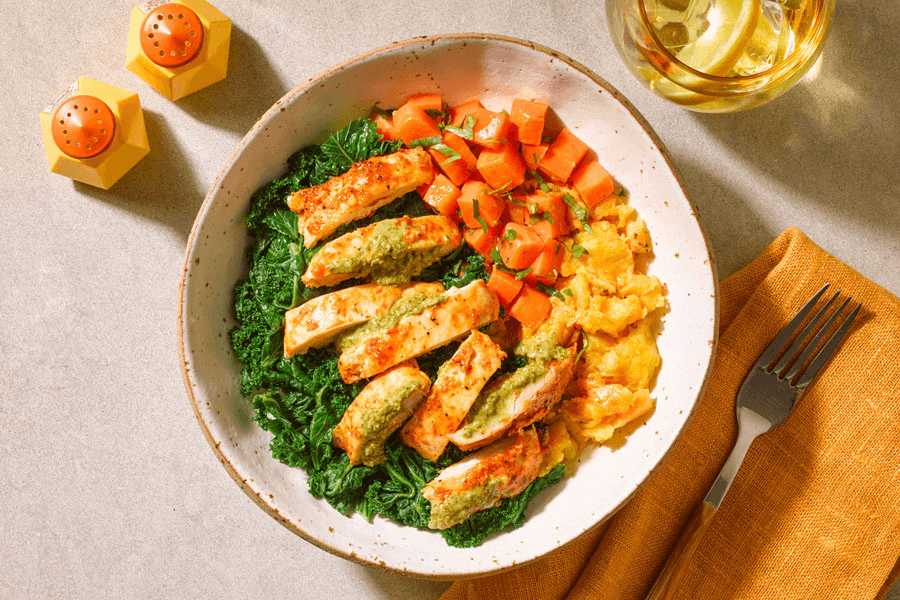
Try Frive's Pollo a la Brasa Chicken Thighs with Smashed Plantain & Kale
Resistance training is non-negotiable
Protein on its own does some of the work, but not most of it. Pairing it with resistance training is the combination with the strongest evidence for keeping muscle while you lose weight, GLP-1 or otherwise. Without the training stimulus, your body has no reason to hold on to muscle it is not using.
The minimum that actually works is genuinely minimal. Two sessions a week, 30 to 40 minutes each, full-body, focused on the big movements (squats, hinges, presses, rows, carries) covers it for most people. No gym membership needed. Dumbbells and resistance bands at home will do, and the work does not need to be punishingly hard to do its job.
Two caveats. Walking the dog is not resistance training. Cardio is great for your heart, but it does not give your body the signal it needs to keep its muscle. And if you are returning to training after a long break, start gently for the first three or four weeks.
Our guide on the best foods for muscle recovery is a useful companion once you are training consistently, and our take on losing weight while gaining muscle sets the bigger picture.
A practical GLP-1 eating day
Here is what a realistic day looks like for a 75kg adult on Mounjaro at week ten, with an appetite at maybe 50% of pre-treatment. Target around 130 to 140g of total protein, three meals plus optional snack, no heroics.
Breakfast (around 8am), 35g protein: Three scrambled eggs, 30g of feta crumbled in, half a slice of sourdough toast, a small handful of cherry tomatoes. Sits gently, hits the floor, takes seven minutes.
Lunch (around 1pm), 40g protein: 150g of cooked salmon, a small portion of cooked quinoa or basmati rice, a soft-cooked vegetable side (steamed courgette and peas with a little olive oil), a squeeze of lemon. Avoid large raw salads for now, they can sit heavily and trigger reflux when digestion is slow.
Dinner (around 7pm), 35g protein: Slow-cooked chicken thighs, mashed sweet potato (half a normal portion), buttered greens. Soft textures across the plate, protein on the plate first.
Optional protein snack, 20g: A small pot of Greek yoghurt with a tablespoon of seeds, or 100g of cottage cheese on a single rye cracker. Only if you are genuinely hungry between meals, not out of habit.
Two notes for this kind of day. Water and fibre matter more on a GLP-1 than they did before. Constipation is a common side effect, and eating lots of protein without enough fluid and fibre makes it worse. Aim for 2 litres of fluid spread through the day, with soft-cooked vegetables and a piece of fruit non-negotiable on the plate. And eat to a clock rather than to hunger cues, because the drug is dampening them.
The seven-day high-protein plan is a useful weekly template to adapt to a smaller appetite.
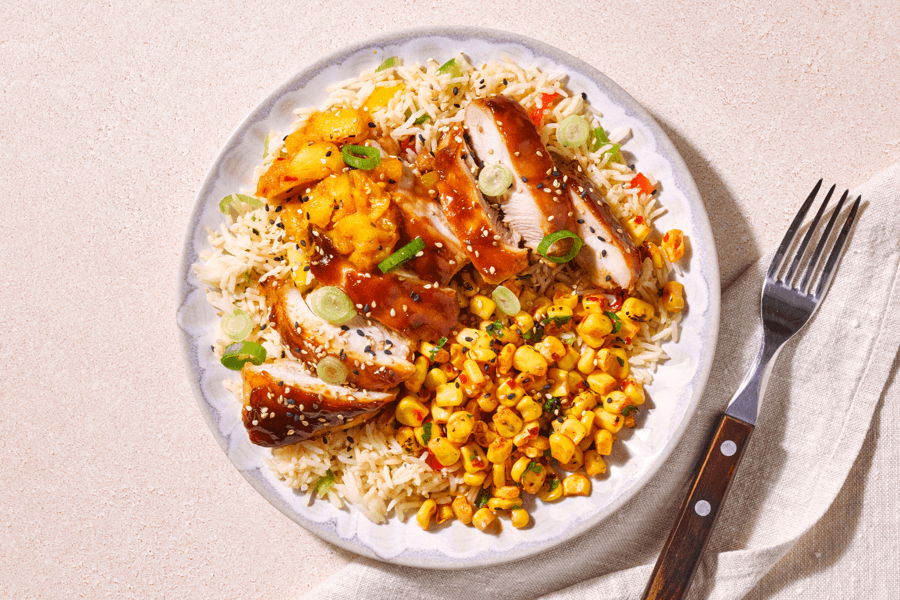
Try Frive's Shoyu Chicken Thighs
How Frive makes the per-meal protein target effortless
The honest constraint on a GLP-1 is not knowledge. You almost certainly know you should be eating more protein. The constraint is execution at the exact moment cooking feels impossible, you are not hungry, and the things you used to want do not appeal anymore. Standard advice (batch-cook six chicken breasts on Sunday) assumes a level of energy and food interest that GLP-1 reality does not have to give.
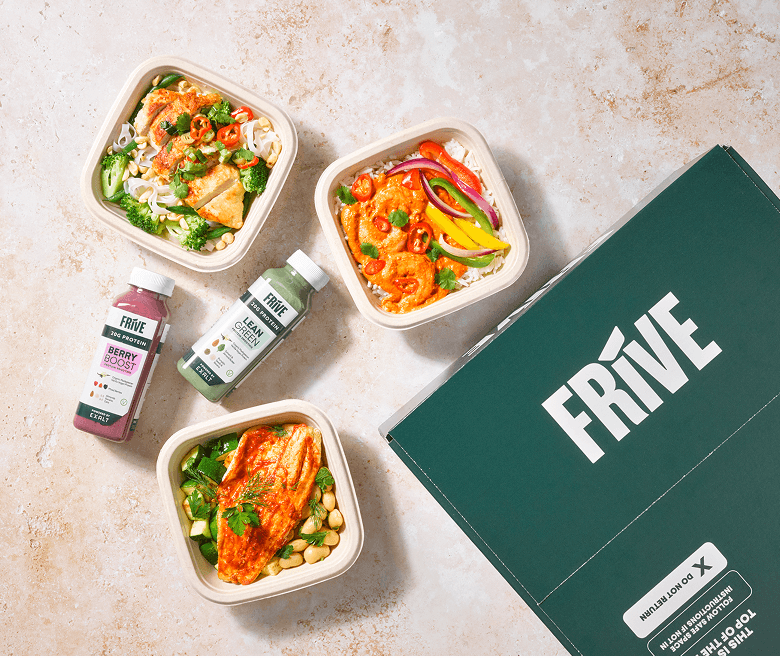
Every meal on the Frive high-protein plan is built by our nutrition team to clear the 30g per-meal floor with natural ingredients: never powders, never UPF fillers, never seed oils. The portions are right-sized for the small-appetite reality of an active GLP-1 dose, and fridge to plate is three to five minutes, which keeps friction below the threshold where you would otherwise skip dinner. The weight-loss meal delivery plan applies the same logic at a slightly lower-calorie default. Either way, the per-meal target stops being something you have to think about three times a day.
What happens when you come off the medication
Most articles on this topic skip the bit you most need to plan for. GLP-1 medication is a finite window. Whether you stop after a year or stay on a low maintenance dose for several, the body you have at the moment the appetite suppression eases off is the one you live with. The work to make it a good one has to happen inside the window, not after.
Two people can finish a year on Mounjaro at the same weight on the scale and end up with very different bodies. One has held on to their muscle, kept their metabolism healthy, and built a baseline that holds the result. The other has the same number on the scale but with materially less muscle, a slower metabolism than they started with, and an appetite that comes back to a body now wired to regain weight quickly. The single best predictor of who keeps the weight off is how much muscle they protected while they were on the drug. Protein at every meal, two resistance sessions a week, real food on the plate. Get those right, and the day you eventually taper down is a graduation rather than a relapse.
If hitting 30g of protein at every meal feels like one more job in a week that already does not have time for it, that is exactly the problem our menu solves. Browse this week's high-protein meals, or start with the weight-loss delivery plan for a slightly lower-calorie default.
Frequently asked questions
How much protein should I eat on Ozempic, Wegovy or Mounjaro?
Aim for 1.6 to 2.0g of protein per kg of bodyweight per day during active loss. For a 75kg adult, roughly 120 to 150g, split across three meals at 30 to 40g each. Re-anchor every 5 to 8kg lost so the target tracks your current weight.
Does Ozempic cause muscle loss?
Not directly. The drug causes a steep drop in how much you eat, and the muscle loss is the knock-on effect of eating well below what your body needs to maintain itself while not doing any resistance training. Add enough protein and two sessions a week and the muscle loss largely resolves.
Can I build muscle on a GLP-1?
Building real new muscle in a proper calorie deficit is hard for anyone past the beginner stage. The realistic goal during your time on the drug is to keep the muscle you already have. Strength can still improve because your body gets better at firing the muscles it has, and complete beginners may add a small amount, but holding on to what you have is the right target.
Are protein shakes okay on Ozempic?
Yes, as a backstop. A decent whey or plant shake is sensible after a training session, on travel days, or in the first 48 hours of a dose increase when nausea spikes. Use it to plug gaps, not as the foundation. A shake-led approach trades all the vitamins and minerals you get from real food for a convenience you do not need three times a day.
What if I physically can't eat 30g of protein in one meal?
Eat the protein on the plate first, while appetite is at its highest. Choose denser sources: 150g of salmon or 170g of cottage cheese delivers 30g in a much smaller volume than a chicken breast and a bowl of rice. On the worst days, hit two meals at 30g and use a half-shake to bridge the third. Two strong meals beat three weak ones.
Will I rebuild muscle after coming off the medication?
Some of it, yes, given sensible protein and a return to consistent resistance training. But rebuilding takes far longer than preserving would have, and the metabolic gap between 'kept it' and 'lost it then rebuilt some' is one most people feel for years. The argument for prevention is overwhelming.