It's 6:45pm on a Wednesday. You're staring into the cold light of an open fridge, assessing a rather bleak culinary landscape: half a wrinkled onion, a jar of condiments you bought for a single recipe in 2025, and a solitary Greek yoghurt. The ambitious plan you had on Sunday, to cook from scratch every night like a functional adult, has officially evaporated. You close the door, pull out your phone, and open a delivery app with a familiar sense of defeat.
If that sounds like a personal replay of your week, you are in extremely good company. Millions of UK professionals hit the exact same midweek wall, and most of them write it off as personal failure: a lack of discipline, a flunked Sunday meal prep, a Pinterest-board life they can't quite stick to. The truth is much simpler. You're not lazy. Your energy and your kitchen are both running on empty at the same time, on the day your work calendar is densest.
This guide explains why Wednesday dinner is structurally the hardest meal of the week to get right, what the research actually says about willpower, and the one fix that holds even on the weeks your 4pm meeting overruns.
| Why Wednesday dinner fails: At a glance | |
|---|---|
| The problem | Decision fatigue, an end-of-week fridge, and peak midweek meeting load all collide on the same evening. |
| The data | Wednesday and Thursday are the UK's two busiest delivery days in summer (15.3% and 16.4% of weekly orders). |
| The wrong fix | Sunday batch-cooking, "just be more disciplined", or another willpower-based pep talk. |
| The high-performer move | Delete the decision in advance, the same logic Obama applied to suits and Zuckerberg applied to t-shirts. |
| The right fix | Pre-prepared natural meals ready in three minutes; no cooking, no shopping, no decision. |
| Right for you if | You've abandoned a Sunday meal plan more than once this year. |
Why is Wednesday statistically the worst day for healthy eating in the UK?
Reaching the middle of the working week triggers a measurable shift in behaviour. Monday and Tuesday still ride the residual energy of the weekend; by Wednesday evening, professional fatigue and logistical friction collide in the same kitchen.
There's a data point that captures it neatly. Analysis of UK delivery patterns shows that during summer months, Thursday is the single busiest day for takeaway orders nationally (16.4% of all weekly delivery orders), with Wednesday a close second at 15.3%. The two days that bookend the midweek slump are also the two days the country reaches hardest for the easy option.
1. The midweek slump
Reaching "hump day" introduces a recognisable dip in energy. UK workplace eating data shows a clear midweek spike in snacking, and broader research links long working hours to weight gain and sugary-snack reliance. By Wednesday afternoon, the office biscuit tin is doing strategic work.
2. An empty crisper drawer
Most UK households shop at the weekend. By Wednesday evening, the fresh produce that powered Monday's ambitious salad has thinned out, and what's left is a defeated onion and three condiments.
3. Sunday prep has run out
Even households that meal-prep on Sunday rarely make it to Friday. Pre-cooked supplies tend to last to Tuesday or Wednesday, after which people default to the easiest option in reach. Our guide on how long meal prep actually lasts breaks down the realistic shelf-life of a Sunday cook-up across seven days.
4. Calendar density peaks midweek
For most hybrid and office workers, Monday and Friday are the lightest meeting days. Wednesdays are typically the heaviest. By 6pm, the decision budget is gone, and dinner is the meal asking for the biggest decision.
What is decision fatigue, and how does it derail your dinner choices?
To understand why Wednesday dinner feels like an uphill battle, look at how your brain handles choices. Every time you reply to a complex email, sit through a planning meeting, or arbitrate between two flawed options at work, you draw from a finite pool of mental energy.
Psychologists call the exhaustion that follows decision fatigue. The concept was popularised by social psychologist Roy Baumeister, whose 1998 "radish and cookie" experiment found that participants forced to resist tempting biscuits gave up on a subsequent puzzle 60% faster than a control group. The implication: self-control acts like a limited resource that depletes over the day.
The original "ego depletion" model has since been challenged by replication studies, most notably a 2016 multi-lab meta-analysis (Hagger et al.) that found the effect weaker than originally reported. The metabolic mechanism is contested. The subjective experience is not. Ask any knowledge worker at 6pm whether their judgement feels as sharp as it did at 9am, and the answer is the same regardless of which side of the replication debate you sit on.
Why knowledge workers burn through willpower faster
If your job involves continuous problem-solving, the depletion is steeper. High-cognition roles burn through decision capital long before the working day officially ends, which is why food choices (the lowest-stakes, highest-frequency decision of the evening) are usually the first thing to slip.
Why dinner is the most vulnerable meal of the day
Breakfast benefits from a full reservoir of executive function. Lunch is usually quick or pre-arranged. Dinner sits at the end of the queue, by which point the reservoir is dry. Expecting yourself to invent a recipe, navigate a supermarket, and assemble a balanced meal from scratch at 7pm is asking a tired mind to do its hardest work at its weakest moment.
Why are supermarket meal deals and "healthy" takeaways quietly making things worse?
When the mental budget is spent, the brain looks for convenience. The conscious effort to "be good" usually routes through a supermarket meal deal or a premium delivery app: both presented as the responsible compromise. Both, on closer inspection, are nutritional traps.
The 6:30pm supermarket meal deal
A supermarket sandwich, baked crisps, and a smoothie looks like the light option. In practice, the bread is highly refined, the filling is low-protein, and the whole package digests in under an hour, triggering a blood-sugar spike, a sharp crash, and a dessert craving by 8:30pm.
"Calorie-controlled" ready meals
Green traffic-light labels solve the headline number but not the back-of-pack reality. To survive a long shelf life and a microwave reheat, mass-produced ready meals routinely include emulsifiers, thickeners, and sodium levels that displace much of the nutritional benefit. For a closer look at how this affects appetite and weight, read this guide on ultra-processed foods, weight gain, and hunger.
Premium delivery apps are the same trap in a nicer bowl
Bypassing the supermarket and ordering a premium salad or protein bowl feels like the upgrade. The mass-kitchen reality often isn't. To keep costs down and food stable in transit, dark kitchens routinely rely on heavy emulsifiers, preservatives, and cheap industrial seed oils.
Even when the macros add up on paper, the additives create a digestive load that drives low-grade internal inflammation. The downstream cost is the part most people don't connect to the meal: a heavier-feeling Thursday morning, a foggier 10am meeting, a longer reach for the second coffee.
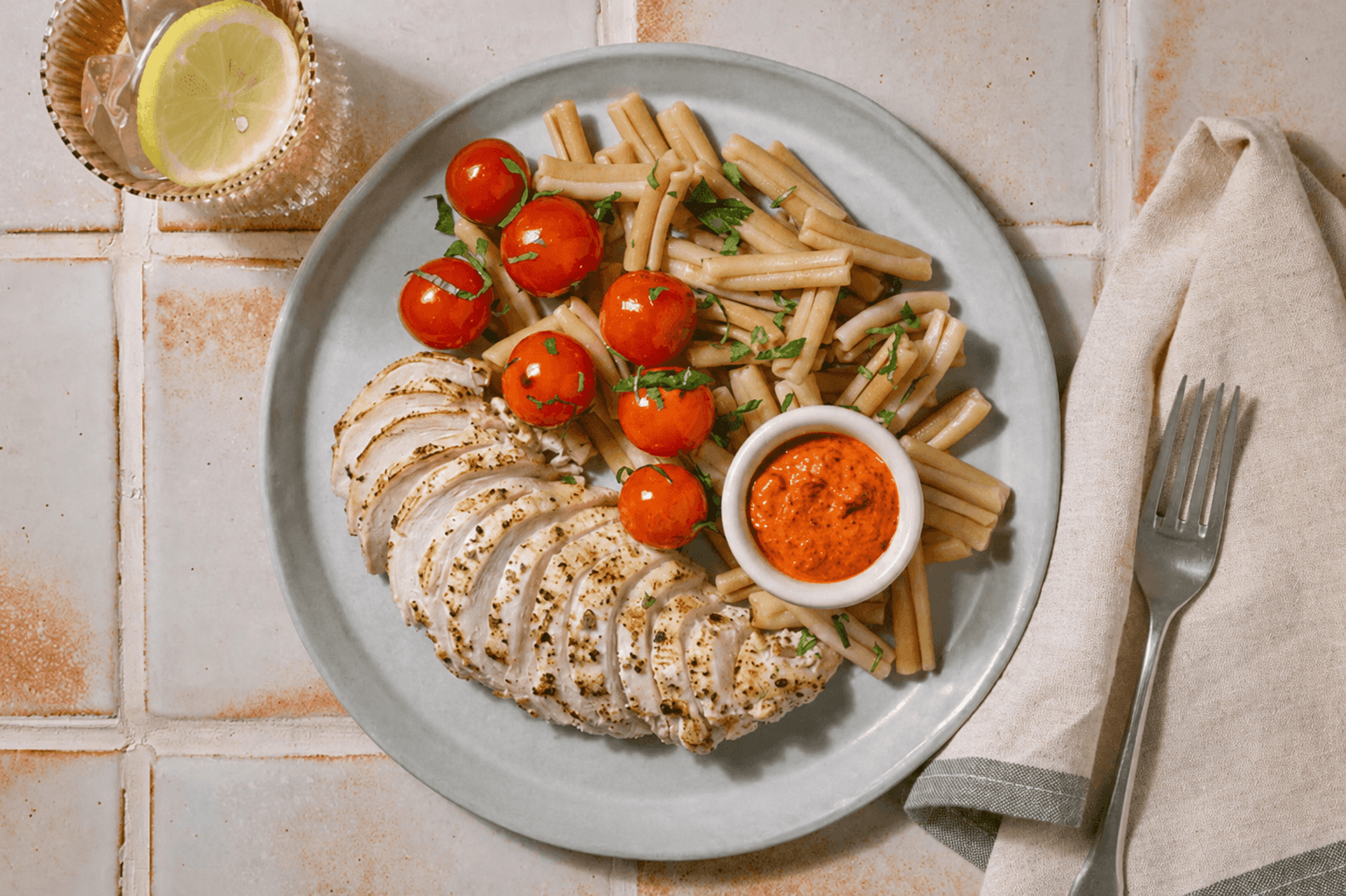
Roasted Red Pepper Chicken with Casarecce Pasta.
How do high performers protect their decision budget at dinner?
Faced with intense professional demand, the instinct for most people is to plan harder. High performers in genuinely demanding fields take the opposite approach: they remove the decision entirely.
The pattern is so consistent across executives, surgeons, and elite athletes that it has its own name in productivity circles: standardise the recurring micro-decision so cognitive energy is preserved for the work that matters.
Obama and Zuckerberg: the wardrobe principle, applied to food
Barack Obama famously wore only grey or blue suits during his presidency. In a 2012 Vanity Fair interview he explained why: "I'm trying to pare down decisions. I don't want to make decisions about what I'm eating or wearing. Because I have too many other decisions to make." Note that food sits inside that quote; the principle was always about more than clothes.
Mark Zuckerberg's grey-t-shirt uniform is the better-known example. Speaking at a 2014 public Q&A, he framed it the same way: he wanted to clear his life of low-value recurring decisions so he could spend his attention on the things that actually moved Facebook forward. The dinner decision, three or four nights a week, is exactly the kind of low-value recurring decision the same logic targets.
Surgeons and elite athletes: nutrition as protocol, not preference
In the operating theatre, removing variable decisions is so well-evidenced that Atul Gawande's The Checklist Manifesto is recommended reading in NHS surgical training. The same logic extends to the surgeon's pre-shift meal: many specialists rely on a small set of repeatable, slow-digesting, high-protein options before scrub-in, because the cost of a 2pm blood-sugar dip during a four-hour operation is non-trivial.
Elite athletes go further. Novak Djokovic's 2013 book Serve to Win documents his entirely standardised in-season eating routine; Eliud Kipchoge, the marathon world-record holder, eats a near-identical training-camp diet for months at a time. The shared logic: precision fuelling is mapped to load, and the meal itself becomes one less thing to think about.
What's the best system for beating the midweek dinner slump?
Beating the Wednesday wall requires a shift in focus, away from personal discipline and toward your environment. The dependable solution is not another willpower-based pep talk, but a system that protects your nutrition on the day your energy is lowest. Here are the three realistic options, ranked by effort and durability:
| Approach | Effort | Durability under a real week | Nutritional control | Time per week |
|---|---|---|---|---|
| Sunday batch cook | High | Low; collapses if the weekend runs over. | High | 3+ hours |
| Recipe boxes (cook from kit) | Medium | Medium; still 30 minutes of cooking after a 10-hour day. | Medium-high | 2.5–4 hours |
| Pre-prepared natural meals | Low | High; survives late meetings, sick days, social plans. | High (provider-dependent) | ~3 minutes per meal |
Option 1: The Sunday batch cook
Spending Sunday afternoon filling plastic containers with pre-cooked chicken and rice gets the week off to a strong start. The trouble is that it relies on a large, predictable block of weekend time you do not always have. The moment a Saturday brunch overruns or a Sunday gets eaten by life admin, the entire system collapses, and you are completely unprotected by Wednesday.
Option 2: Outsourcing the shop
Recipe boxes that deliver pre-portioned ingredients to your door solve the supermarket problem. They do not solve the cooking-when-exhausted problem. Standing over a hot stove for 30 minutes after a gruelling day of meetings is still cooking, and on a Wednesday, even simple cooking is a higher cognitive load than it looks.
Option 3: Removing the decision entirely
The only strategy that consistently scales across late-running meetings, stressful projects, and unexpected exhaustion is full decision deletion. Pre-prepared natural meals that are ready to eat in three minutes mean you never have to answer "what's for dinner?" when your brain is empty. This is what most smart professionals are quietly switching to, the subject of our companion piece on why midweek meal planning is dead, and what smart professionals do instead.
How does Frive remove the midweek dinner decision?
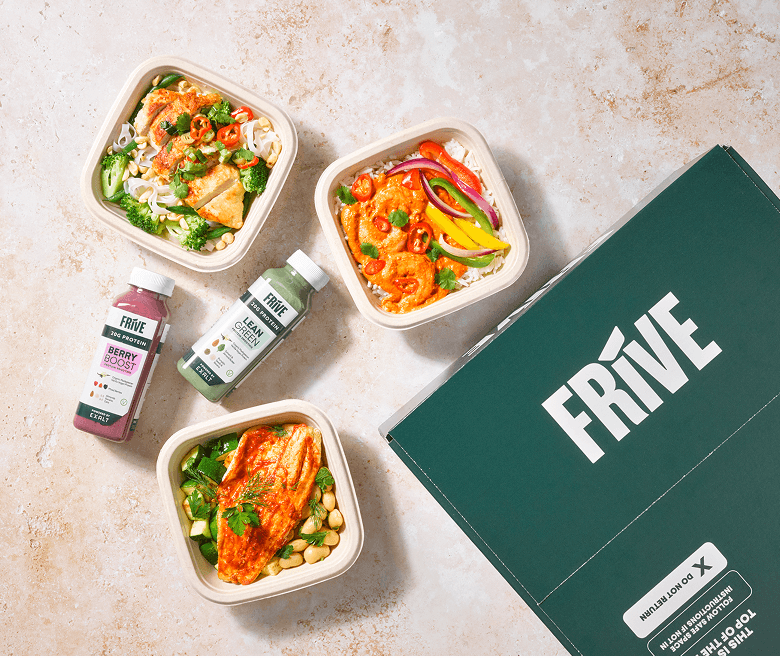
Frive is built specifically for the Wednesday-evening problem. It is not a willpower patch and not a recipe box; it is the cleanest version of the third option, the decision removed in advance.
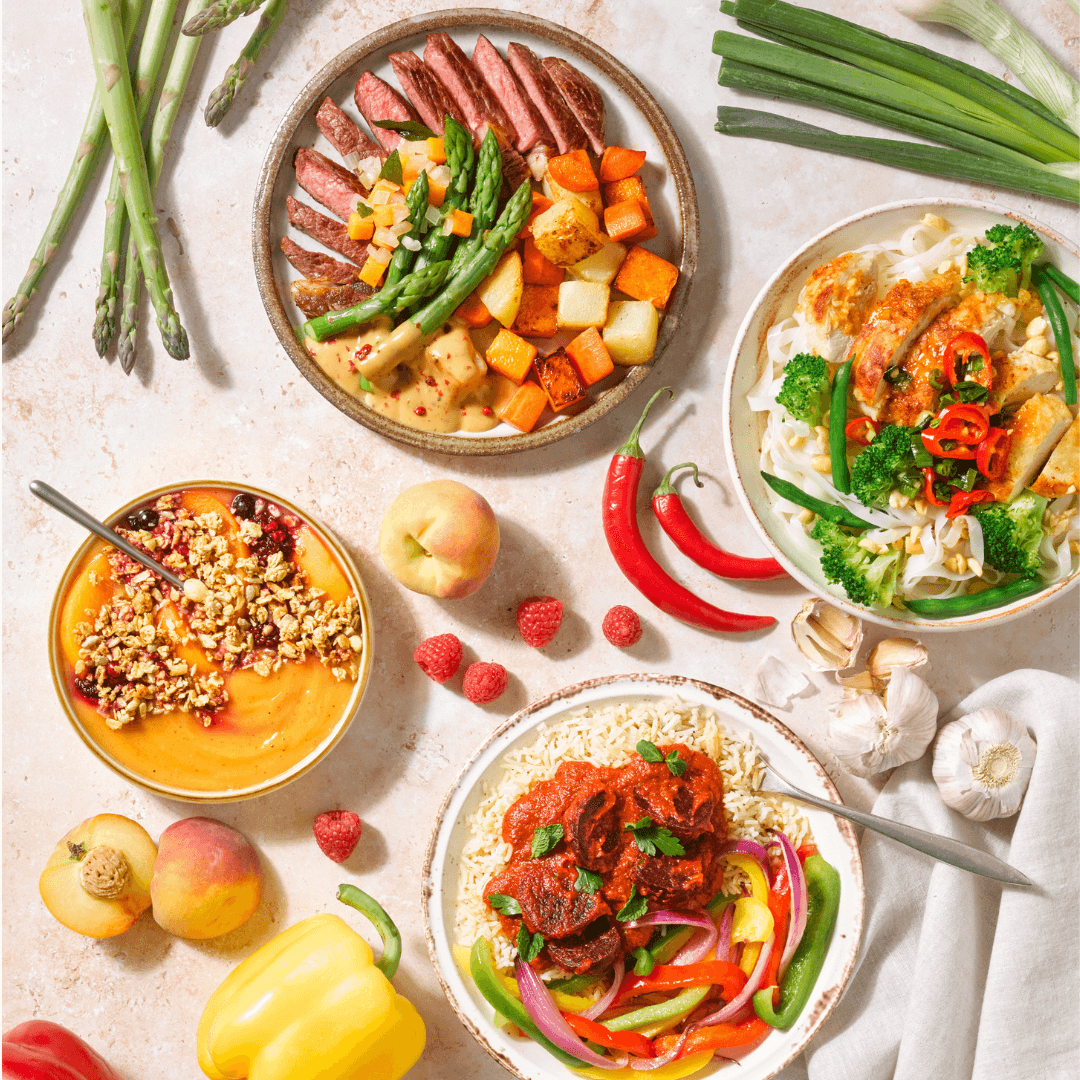
Every Frive meal is built around real, natural food: no industrial seed oils, no emulsifiers, no UPF. The rotating menu means no variety burnout, every recipe is macro-balanced by Frive's nutrition team, and the heat-and-eat format means a complete dinner takes three minutes from the moment you walk through the door. The easiest option in your kitchen is finally also the healthiest.
For the late-finishing reader, our companion piece on why cooking after 8pm is a terrible idea covers what to do on the nights you finish even later, and our deep dive on why your lunch is making you tired explains how the energy story actually plays out across the working day.
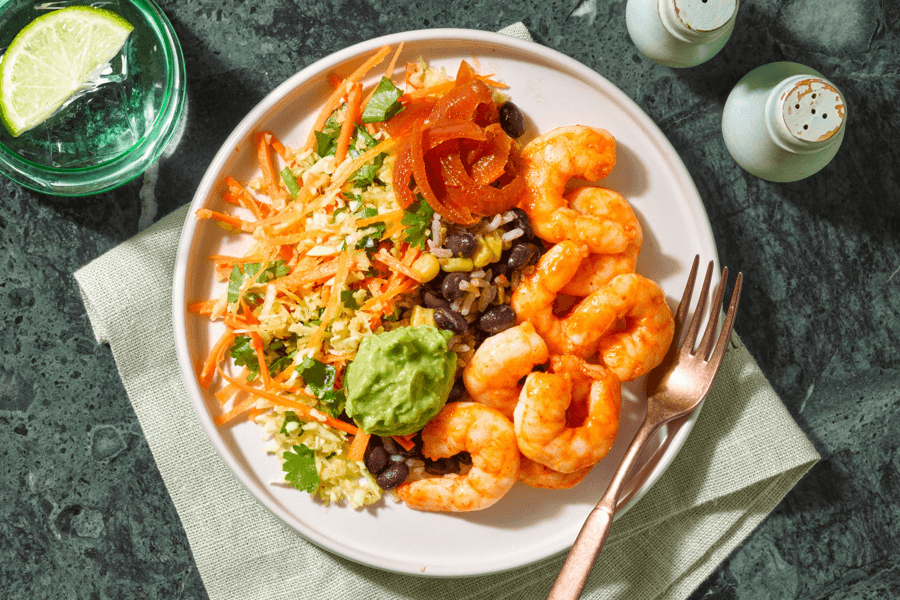
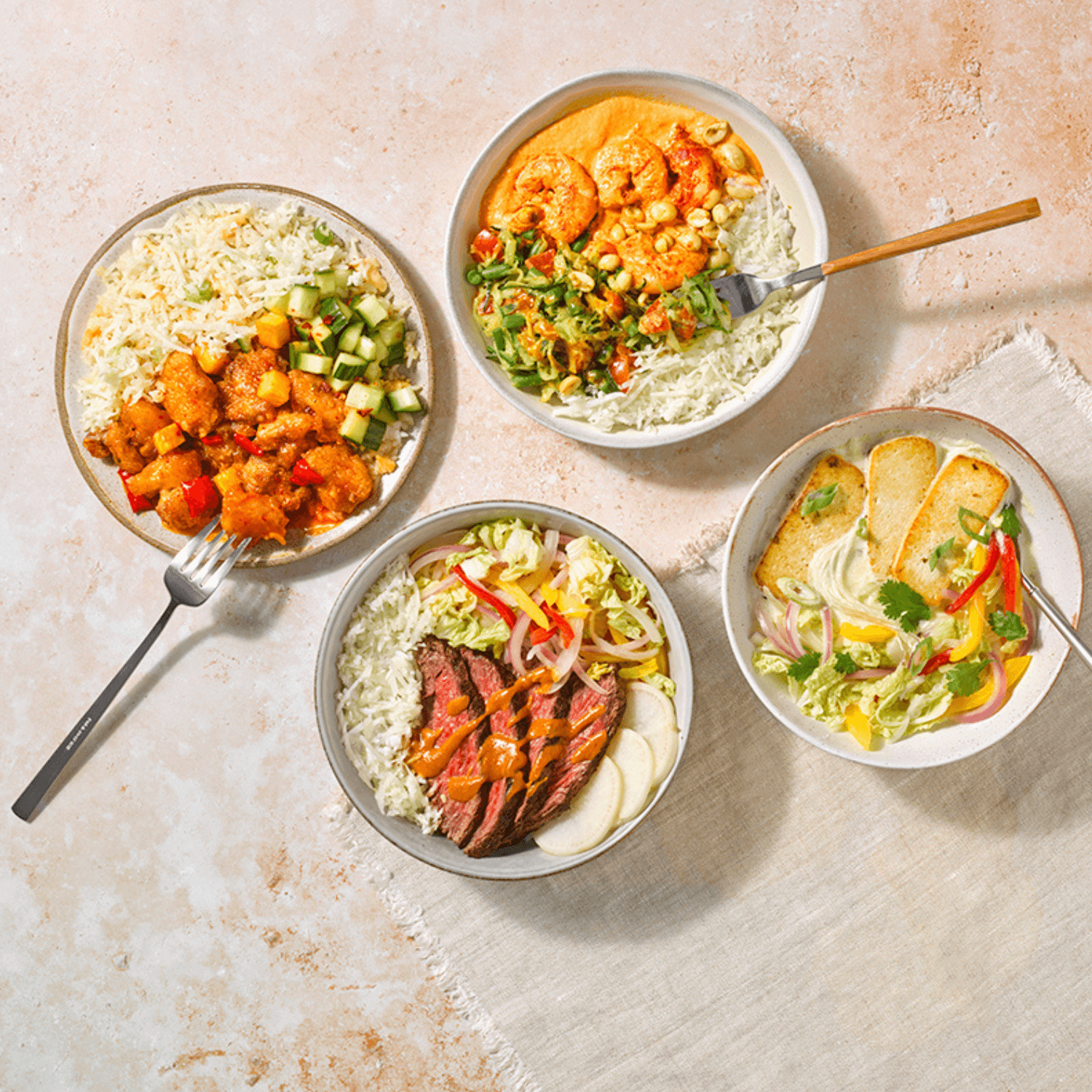
Try Frive's Smoky Chipotle Prawns With Black Bean Rice.
Ready to stop fighting Wednesday with willpower? Browse this week's Frive menu, or start with a five-meal box and feel the difference by next Wednesday.
Frequently Asked Questions
Why is Wednesday the hardest day to eat healthy in the UK?
Wednesday combines three factors that don't peak together on any other day: decision fatigue is at its highest after two full days of work, midweek calendars are typically the densest of the week, and most UK households have already used the freshest ingredients from their weekend shop. UK delivery data confirms it: Wednesday and Thursday account for the highest share of weekly takeaway orders in summer (15.3% and 16.4% respectively).
What is decision fatigue, and how does it affect what you eat for dinner?
Decision fatigue is the deterioration in decision quality that follows a long day of cognitive demands, first described by social psychologist Roy Baumeister in 1998. Because dinner sits at the end of the day, it is the meal most exposed to a depleted mental budget, which is why tired professionals reach for takeaways, supermarket meal deals, and ultra-processed ready meals rather than cooking from scratch.
Are supermarket meal deals actually a healthy dinner option?
In most cases, no. Even "low-calorie" supermarket meal deals are typically built on refined carbohydrates and low-protein fillings that digest quickly and trigger a blood-sugar spike followed by a crash. Many "calorie-controlled" ready meals are also ultra-processed, with added emulsifiers, thickeners, and high sodium levels that displace most of the nutritional benefit of a fresh meal.
Why do supposedly healthy delivery meals still leave you tired the next day?
Most premium delivery meals, including protein bowls and salads, are produced in mass kitchens that rely on industrial seed oils, preservatives, and emulsifiers to maintain shelf stability and transport viability. Even when the macros look correct, these additives create a digestive load that drives low-grade inflammation and disrupted sleep, which is why you wake up foggy on Thursday morning.
What do high performers eat for dinner during a busy week?
High performers, including CEOs, surgeons, and elite athletes, deliberately remove the dinner decision rather than try to make it well when tired. They standardise their weekday meals so food becomes a system that supports performance rather than another choice that drains it. The principle is the one Barack Obama applied to his wardrobe and Mark Zuckerberg applied to his t-shirts: eliminate the recurring micro-decision so cognitive energy is preserved for higher-value work.
Does Sunday meal prep solve the Wednesday dinner problem?
Only partially. Sunday meal prep works in theory but is structurally brittle: it relies on three or more hours of free weekend time, the food typically loses appeal by Wednesday, and a single busy weekend collapses the whole system. For most working professionals, meal prep covers Monday and Tuesday but not the back half of the week, which is exactly when the willpower budget is lowest.
What is the easiest healthy dinner to have on a Wednesday night?
The easiest healthy Wednesday dinner is one that requires no cooking, no shopping, and no decision-making: a pre-prepared, natural meal that is ready to eat in three minutes. This approach removes the willpower requirement entirely, which is the only durable solution to a meal that consistently falls on the day cognitive energy is lowest.