Realistically, going 100% ultra-processed free in the UK is difficult. Ultra-processed food supplies around 54% of the energy in the average UK adult's diet, so removing all of it is a rebuild of everything you eat, not a tweak. That is exactly why most attempts collapse so quickly. The useful goal is narrower: cut the ultra-processed foods that carry the most risk, in the time you actually have.
What follows is the execution, not the argument. You get a three-tier priority list so you stop treating wholemeal bread and cola as the same problem, a swap list organised by meal with the time cost in minutes, an honest account of the nine UK categories where this gets hard, and a first week that starts with no cooking at all.
NOVA is the classification behind the term. It sorts food by how much industrial processing it has had, not by how nutritious it is, and it has four groups.
Ultra-processed food, or UPF, means group 4, and group 4 is what the rest of this page is about.
Can you really go 100% UPF-free?
No, not for most people in the UK. At roughly 54% of daily energy coming from ultra-processed sources, the average British diet is not lightly seasoned with UPF. It is built out of it. Going to zero means replacing bread, cereal, sauces, snacks and drinks all at once, while working full time.
The label is also not precise enough to chase to the decimal point. When 159 trained food professionals sorted the same 120 products into NOVA groups, agreement was weak and 98% of those products ended up in more than one group. NOVA is a useful lens, not a precise instrument. Use it to rank your shopping, not as a purity test.
So the promise here is not purity. It is that you can remove the ultra-processed food that matters most, in under an hour a week of extra effort, and stop worrying about the rest.
Which ultra-processed foods actually matter?
Not all ultra-processed food behaves the same way, and this is the thing to understand before you change anything. Across three large US cohorts covering more than 206,000 people, the highest total UPF intake was associated with an 11% higher cardiovascular risk than the lowest. But within those same 206,000 people, sugar-sweetened drinks and processed meats accounted for the excess risk, while three groups (bread and cold cereals, yoghurt and dairy desserts, and savoury snacks) were associated with lower risk. One label, opposite directions.
The NHS puts it more simply: some ultra-processed foods can be included in a healthy diet, and it names wholemeal sliced bread, wholegrain or higher fibre breakfast cereals, and baked beans. If you take one piece of permission away with you, take that one.
How to triage your trolley
Three tiers, in the order worth spending effort on.
If tier two ready meals are your main exposure, our breakdown of what is really in supermarket ready meals is the ingredient-by-ingredient version. Everything below stays on the how.
What does the evidence actually show?
The short version, the controlled evidence is real but small, and the large evidence is observational. For the full case on why ultra-processed food is linked to over-eating, our piece on UPF, hunger and weight gain makes it properly.
The strongest controlled evidence is very small
In a randomised crossover trial run on a metabolic ward, 20 adults ate 508 kcal a day more on an ultra-processed diet than on an unprocessed one, gaining 0.9 kg in two weeks and losing 0.9 kg on the other arm. Twenty people in a research unit, every meal provided free. A real finding, but not a real-world number.
The best UK trial is more modest than the headlines
The UPDATE trial put 55 UK adults through two eight-week diets, both built to the Eatwell Guide. Across the 50 analysed, both produced weight loss, and the minimally processed one won by about one percentage point of body weight. Both arms losing weight is the part most coverage got wrong.
The mechanism is eating rate, not the label
In a 2026 crossover trial of 41 adults, two ultra-processed diets differed by 369 kcal a day purely because texture changed how fast people ate. Same NOVA group, same palatability, same energy density. Across those 41 people, how fast the food went down mattered more than what the label said.
What UK advisers actually say
The government's nutrition advisers concluded in April 2025 that it is unclear whether these foods are inherently unhealthy due to processing or because most of them are high in calories, saturated fat, salt and sugar, and they left dietary guidance unchanged. The wider evidence, including a 2024 umbrella review covering almost 10 million people, links ultra-processed food to a long list of outcomes. All of it is observational and none was graded as strong evidence. It shows a pattern, not a cause.
What can I swap when I have no time?
Organised by when you eat, not by food group, because that is how a time-poor person shops. Time costs are per week, not per swap, and the first three cost nothing at all.
Drinks
0 minutes
Sugar-sweetened and diet soft drinks to sparkling water, tea, coffee or tap water.
Tier one, no time, and the highest-value change you can make. A buying decision only, with nothing to prepare and nothing to learn.
Breakfast
0 to 3 minutes
Flavoured yoghurt pot to plain or Greek yoghurt with frozen berries and a spoon of honey. Roughly half the sugar, and no label to check twice.
Sweetened cereal to porridge oats, or wholegrain wheat biscuits if you will not cook.
Toast is not the enemy. Whole grains and pulses are also the fastest way to close the UK fibre gap, which our guide to getting to 30g of fibre a day covers in detail.
Lunch at work
5 minutes the night before
Meal deal to leftovers in a box, or tinned fish with a rice pouch and a bag of salad. The pouch is borderline; the sandwich is not.
Packet soup to tinned lentil or tomato soup with fewer than six ingredients.
Dinner
10 to 20 minutes
Jarred sauce to tinned tomatoes, garlic, olive oil and dried herbs. The biggest UPF removal per minute in a British kitchen.
Breaded protein to plain chicken, fish, eggs, tinned pulses or tofu. The coating is the ultra-processed part, not the meat.
Gravy granules to roasting juices, a spoon of flour and the vegetable water. Free, four minutes.
Snacks
0 minutes
Flavoured crisps to ready salted (often just potato, oil and salt), nuts, fruit, or plain yoghurt. Our roundup of the best protein snacks is the fuller list. Snacks are where most weeks quietly fall apart.
Cereal bars to fruit and a handful of nuts. Faster, and no label to read.
Which foods are almost impossible to buy UPF-free in the UK?
Wraps, supermarket sausages and gravy granules are the three with no answer on the shelf, and most advice stops short of telling you that. Nine categories defeat almost everyone. Ingredient lists below were checked in August 2026 and formulations change, so treat the label rule as the durable part and the named product as a starting point.
Protein powder deserves a straight answer
This is the most-searched question in the category, and the honest answer is uncomfortable. Yes, protein powder is ultra-processed under NOVA, and not because of the sweeteners. It is group 4 by definition, because NOVA puts protein isolates there regardless of what else is in the tub. A single-ingredient cold-filtered whey and a heavily flavoured budget powder get the same label, which tells you more about the classification than about the products.
What varies is everything after the protein. In practice you have three options:
Standard flavoured powder: Sweeteners, gums, lecithin and flavourings on top of the protein. Cheapest per gram, longest list.
Unflavoured isolate: One or two ingredients, two to three times the price, and still group 4 under NOVA.
Drop the category: Milk, Greek yoghurt, eggs and tinned fish are unprocessed and cost less per gram of protein than an unflavoured isolate.
Our comparison of whole-food protein versus shakes works through when a powder is genuinely worth it.
How do I start in the first week?
One shop, one list, no cooking until day four. The order matters more than the content, because people rarely fail on difficulty. They fail because day one asked for forty minutes they did not have.
Day 1 (0 minutes): Change what you drink. Nothing else. Sparkling water, tea, coffee, tap water.
Day 2 (0 minutes): Change breakfast. Plain yoghurt with frozen berries, or porridge oats, or wholegrain wheat biscuits.
Day 3 (0 minutes): Change snacks. Fruit, nuts, ready salted crisps, plain yoghurt. Nothing that needs a recipe.
Day 4 (10 minutes): First cooked dinner. Tinned tomatoes, garlic, olive oil, dried herbs, pasta. This replaces a jar and it is the biggest single removal of the week.
Day 5 (5 minutes, the night before): Work lunch. Leftovers from day four, or tinned fish with rice and salad.
Day 6 (15 minutes): One roast or tray bake, with gravy made from the juices. Cook enough for day seven.
Day 7 (0 minutes): Eat the leftovers. Read one label in the cupboard, not thirty.
The one-trip shopping list
One trip, and most of it is frozen or tinned, which is the part almost every UPF guide leaves out.
Cupboard: Tinned tomatoes, tinned pulses, tinned fish, dried pasta, rice, porridge oats, olive oil, dried herbs
Freezer: Frozen vegetables, frozen berries
Fridge: Eggs, plain or Greek yoghurt, a hard cheese, a bag of salad
Fresh and treats: Garlic, onions, fruit, nuts, ready salted crisps, a genuine sourdough loaf
If cooking is not going to happen at all in a given week, that is a separate problem with a separate answer, and our guide to eating healthily when you have no time to cook is the honest fallback.
Why is cutting UPF so hard, and what helps?
Cost
Whole food is not cheaper, and you already know that from your own shopping. The Food Foundation's 2025 Broken Plate report found that in 2024, healthier food cost more than twice as much per calorie as less healthy food, at £8.80 per 1,000 kcal against £4.30. The most deprived fifth of UK households would need 45% of their disposable income to afford the government-recommended diet, rising to 70% with children, against 11% for the least deprived fifth.
Build from the cheapest genuinely unprocessed staples and the gap narrows sharply:
- Tinned pulses, tinned tomatoes and tinned fish
- Frozen vegetables and frozen fruit
- Eggs, oats, rice and dried pasta
- Own-brand plain yoghurt and a block of hard cheese
We have run the numbers properly in our breakdown of what an ultra-processed diet actually costs.
Time
UK adults spend an average of 46 minutes a day making food and drinks, and the load is not shared evenly: women do 3 hours 37 minutes of unpaid work a day against 2 hours 43 minutes for men. In a 2026 UK interview study of 30 people responsible for household food, convenience and lack of time came up repeatedly, alongside cost, taste and family habits, as the reasons ultra-processed food stays in the trolley. If a plan adds forty minutes a day, it is not a plan.
Social eating and shift work
Do not do this at a restaurant, at someone else's table, or on a night shift. Eating out is a rounding error against a weekly shop, and policing it is how a sensible change turns into an unhealthy one. Aim for Monday to Friday at home and let the rest go.
When there is genuinely no time
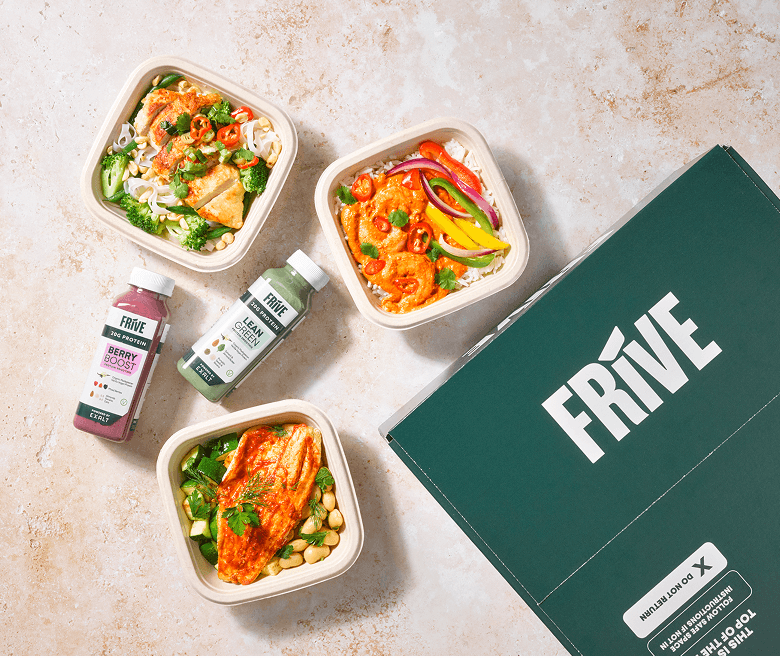
Pre-prepared does not have to mean ultra-processed, and this is where the two get wrongly welded together. A chef-prepared chilled meal made from whole ingredients is a different product from a long-life supermarket ready meal, as we set out in our look at whether microwave-ready meals are bad for you. Frive meals are cooked by chefs from 100% natural ingredients, with no ultra-processed ingredients on the list, delivered chilled and ready in around four minutes. On the days when none of this fits the hours you have, that is a legitimate route rather than a failure, and our healthy ready meals plan is the place to start.
Is X ultra-processed? Quick answers
Eight of the questions people actually type into Google, answered straight. The short version: bread, cheese, pasta and tofu usually are not, and the two that technically are turn out to be worth keeping anyway.
Loading the menu…
So what should you actually do?
If you take five things away from all of the above, make it these.
1. Change what you drink first. It takes no time, there is nothing to learn, and it removes the group most consistently linked to harm in the cohort data.
2. Cut tier one and leave tier three alone. Sweetened drinks, processed meat, confectionery and crisps are worth your effort. Wholemeal bread, baked beans and plain yoghurt are not the problem, and the NHS says so too.
3. Judge the food, not the label. How fast you eat and how much is on the plate change what you take in far more than which NOVA group a product falls into.
4. Stop fighting the categories that cannot be won. Wraps, supermarket sausages and gravy granules will cost you more willpower than they give back. Spend it on the swaps that work.
5. Do not start by cooking. Three no-cook days, one shop, one list. If day one asks for forty minutes you do not have, you will not reach day four.
Do that and you will have removed most of the ultra-processed food that carries real risk, without reading labels in the aisle, without losing your Sunday to batch cooking, and without pretending you got to 100%.
There will still be weeks when none of it fits, and that is not a failure of willpower. It is what a full diary does to cooking. The useful question then is not how to cook more, it is what to eat instead that is still made from real food. Have a look at this week's Frive menu, which changes weekly, runs to more than 40 dishes and is ready in around four minutes.
FAQs
What can you eat that is not ultra-processed?
Almost everything in the fresh, frozen and tinned aisles. Meat, fish, eggs, milk, plain yoghurt, hard cheese, fruit, vegetables, dried pasta, rice, oats, tinned pulses, tinned tomatoes, nuts and olive oil are all minimally processed. Frozen and tinned count, which is the cheapest and fastest way to build a non-UPF week.
How do I know if a food is ultra-processed?
Read to the end of the ingredient list, not the front of the pack. If you find emulsifiers, humectants, flavourings, flavour enhancers, modified starches, sweeteners or any ingredient you would never keep at home, it is ultra-processed. Added vitamins and minerals are fortification and do not count.
Is it possible to eat no ultra-processed food?
Not realistically in the UK, where ultra-processed food supplies around 54% of adult energy intake. Some categories, such as shelf-stable wraps and supermarket sausages, have no version on the shelf that passes. A tiered approach that removes sweetened drinks, processed meat and confectionery first is far more likely to last.
What are the worst ultra-processed foods?
Sugar-sweetened drinks and processed meats such as bacon, ham and salami are the two groups most consistently associated with higher cardiovascular risk in large cohort studies. Confectionery and flavoured crisps follow, mostly because they are easy to eat quickly and in quantity. Start there.
Is bread ultra-processed?
Some bread is and most artisan bread is not. The test is the ingredient list, not the shape or the price: emulsifiers, a preservative such as calcium propionate, or a flour treatment agent mean ultra-processed. A four-ingredient sourdough whose list stops at flour, water, salt and starter does not.
Are ready meals always ultra-processed?
No. Most long-life supermarket ready meals are, because they rely on modified starches, stabilisers and flavourings to survive the shelf. A chilled meal cooked from whole ingredients with a short ingredient list is a different product. Read the list rather than assuming the format.
How long does it take to adjust to a UPF-free diet?
There is no fixed adjustment period and no good evidence for one. Anecdotally, people describe sweet foods tasting sweeter and portions feeling more satisfying within a few weeks, which fits what controlled trials show about eating rate and portion size. Expect the shopping habit, not the taste, to be the part that takes longest.