No one signs up for a recipe box wanting to waste food or feel guilty on a Tuesday night. You probably started your subscription with the best intentions, looking for an easy way to eat fresh, varied meals at home without the mental drag of supermarket shopping. For the first few weeks, the novelty works beautifully.
Eventually, the reality of a cooking subscription catches up with a busy schedule. You find yourself standing in the kitchen at 8pm after a relentless day of meetings, looking at a counter full of raw ingredients that still need serious energy to turn into dinner. Managing a ticking clock on fresh produce starts to feel like a second job, and finding a bag of liquefying coriander at the bottom of the fridge becomes a frustrating weekly ritual.
Admitting you are tired of chopping vegetables has nothing to do with laziness. The truth is that meal kits relocated the hard work of dinner rather than actually removing it. You haven’t failed a lifestyle test by skipping a delivery week or ordering a takeaway instead. You have just outgrown a format that demands far too much of your remaining daily energy. You are also far from alone: nearly one in three UK adults now say they are too tired or unmotivated to eat as healthily as they would like.
In this article we unpack why the meal-kit model stops working for busy schedules, look at the hidden time commitment behind the recipes, and explore how to graduate to a setup that gives you your evenings back.
| Recipe box burnout: at a glance | |
|---|---|
| The reality | Recipe boxes like HelloFresh and Gousto do your weekly shop, but leave all the chopping, cooking and washing up to you. |
| The hidden cost | The “30 minute meal” routinely overruns once you add washing, prep, monitoring and clean-up, on evenings when most of us want dinner done in well under half an hour. |
| The waste | UK households bin around 1.7 million tonnes of edible fruit and veg a year; the wilting recipe-box herbs and skipped deliveries quietly add to it. |
| Signs you’ve outgrown it | Unopened boxes, the weekly “skip” tap, a takeaway ordered next to a fridge of raw ingredients, and guilt-laden bin days. |
| What you actually wanted | Good food at home with no mental load: the deciding, shopping and cooking gone, not just moved around. |
| The graduation step | A natural, chef-cooked meal service like Frive: ready in three minutes, zero prep, and no UPFs or seed oils. |
Why recipe boxes like HelloFresh and Gousto don’t actually save you time
Meal kits sell a beautiful, aspirational dream. The marketing imagery from popular recipe box companies like HelloFresh and Gousto promises a calm, brightly lit kitchen where you effortlessly assemble a vibrant dinner while sipping a glass of wine. It frames the experience as pure convenience and a clever shortcut to healthy eating that handles the chore of weekly food management for you.
Scratch beneath that glossy surface and a very different daily routine appears. You quickly discover that a recipe box handles the grocery shopping side of things, but leaves your evening prep and cooking time completely untouched. Instead of buying a finished meal, you have bought a raw assembly kit where you are still expected to chop every ingredient and tackle the washing up when you are already exhausted. That matters because the time most of us actually have for a weeknight dinner is shrinking: almost half of 18 to 24 year olds in the UK already say they do not have time to cook, and a recipe box asks for that time anyway.
Where the “30-minute meal” time estimate fails
The time stamped on the front of the instruction card is rarely the whole story. Here is where those extra twenty minutes actually disappear, night after night.
Endless knife work before cooking begins
Before you even turn on the hob, you have to wash the produce, peel garlic cloves and slice onions. If the card calls for a fine julienne or a precise reduction, a major chunk of your evening downtime vanishes into tedious prep before any actual cooking takes place.
Constant mental monitoring at the hob
Following a meal-kit recipe demands active, vigilant concentration. You are juggling multiple pots while watching a timer to make sure the protein doesn’t overcook, all while checking the card to see whether the soy sauce went in before or after the ginger. It is an active cognitive load that stops you from switching off and relaxing after a demanding day.
Cleaning up a secondary work shift
Recipe boxes frequently ask you to use separate bowls for marinating alongside individual pans for searing, all to achieve restaurant-style presentation. By the time you sit down to eat, your work surfaces are buried under a mountain of clutter, turning your late evening into yet more chores.
If you want to eliminate this friction entirely and reclaim your evenings, read our guide on how to save 7 hours a week by rethinking your food habits.
Wilting herbs and Friday night guilt
We all know the feeling. It is Wednesday night, you are too tired to look at the instruction card, so you order a takeaway instead. The raw ingredients sit in the fridge quietly mocking you until Sunday morning, when you throw away a brown bag of soggy peppers. You are not imagining the scale of it, either: UK households bin around 1.7 million tonnes of edible fruit and vegetables every year, and a fridge full of perishable recipe-box produce is built to add to that pile.
Cooking from scratch is genuinely rewarding when you use a recipe box on a quiet weekend to learn new techniques, or when you are in a season of life where your evenings are wide open. The system only breaks down when a high-stress, demanding week collides with a rigid cooking commitment. When your schedule leaves you with zero spare capacity, the format simply stops fitting a real, busy life.
| The graveyard of good intentions |
|---|
| the drawer of half-used herbs, the meal kit you swore you’d cook on Thursday, the box you skipped and felt oddly guilty about. None of it is a personal failing. It is just evidence that the format is asking more of you than your week can give. |
Telltale signs of recipe box fatigue
Recipe-box fatigue usually begins as a minor irritation on a busy Tuesday and slowly hardens into a lingering sense of kitchen resentment.
Instead of treating these moments as personal failures, it helps to read them as clear signals that your schedule has outgrown a manual cooking setup. You can check whether you have crossed that line by comparing your recent habits against a few common warning signs:
Accumulating unopened deliveries: Your cardboard delivery box is still taped shut on a Thursday evening, serving as a very expensive kitchen-island ornament.
Ruthless app skipping: Your Sunday afternoon now revolves around opening the meal-kit app just to hit “skip week” before the automated billing catches you.
Parallel takeaway orders: You meet a delivery driver at your front door while standing next to a fridge packed with pre-portioned raw meat you don’t have the energy to touch.
Bin day routines: Sunday morning involves a guilt-ridden trip to the food-waste bin, clearing out brown paper bags of vegetables you paid for but never found the capacity to cook.
Dreading the chopping board makes complete sense when you are already running on empty after a long workday. Looking for a simpler, modern alternative is a practical shortcut to reclaiming your evening downtime, not a white flag.
Meal kit alternatives: finding fresh, ready-to-eat dinners with zero cooking
Signing up for a meal kit comes with a straightforward goal: enjoy high-quality food at home without the headache of meal planning, grocery queues and kitchen chaos.
The trouble is that a recipe box only solves half the problem. Dropping ingredients at your door still leaves you spending forty-five minutes cooking and scrubbing a sink full of dirty pots. Shifting the evening chore around is not the same as getting rid of it. If your real barrier is time and energy rather than ideas, our guide to eating healthy when you have no time to cook walks through the no-prep options worth knowing about.
To stay consistent, you need to skip the manual process entirely. A genuine natural meal service delivers chef-cooked dishes that are ready to eat the moment they arrive, keeping ingredient standards high while removing the kitchen work altogether. The table below shows exactly where the two models differ.
| Daily task | The recipe box model | Ready natural meals |
|---|---|---|
| Deciding what to eat | Shifted to an app, but you still browse and pick recipes every single week. | Streamlined with rotating, chef-crafted seasonal menus that handle the thinking for you. |
| Getting the ingredients | Pre-measured and delivered to your door in cardboard boxes. | Managed entirely by professional kitchens using fresh, quality produce. |
| Prep and chopping | Left on your shoulders, requiring active knife work when you are already tired. | Wiped out entirely. No peeling, dicing or processing required. |
| Time at the hob | 30 to 50 minutes of active monitoring over hot pans. | About three minutes to heat through, with no other kitchen vigilance needed. |
| The washing up | A pile of dirty bowls, frying pans and chopping boards. | A single fork and knife, with your surfaces left clear. |
Switching to Frive: the 100% natural pre-prepared meal delivery service
Just because you want to cancel your meal-kit subscription doesn’t mean you have given up on eating well. You have simply outgrown a format that relocated the work of a professional kitchen straight onto your cutting board. What you wanted all along was a fresh, high-quality dinner without the manual evening shift.
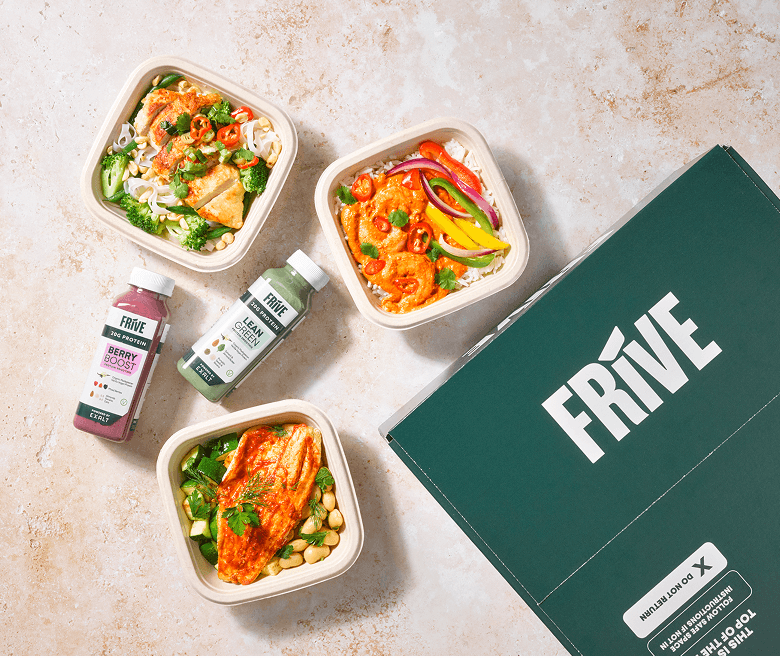
Frive steps into that exact gap. Think of it as the logical graduation from your old cooking subscription: it preserves your focus on premium, nutritious food while completely scrubbing the evening effort from your schedule. You can see how it works in a couple of minutes.
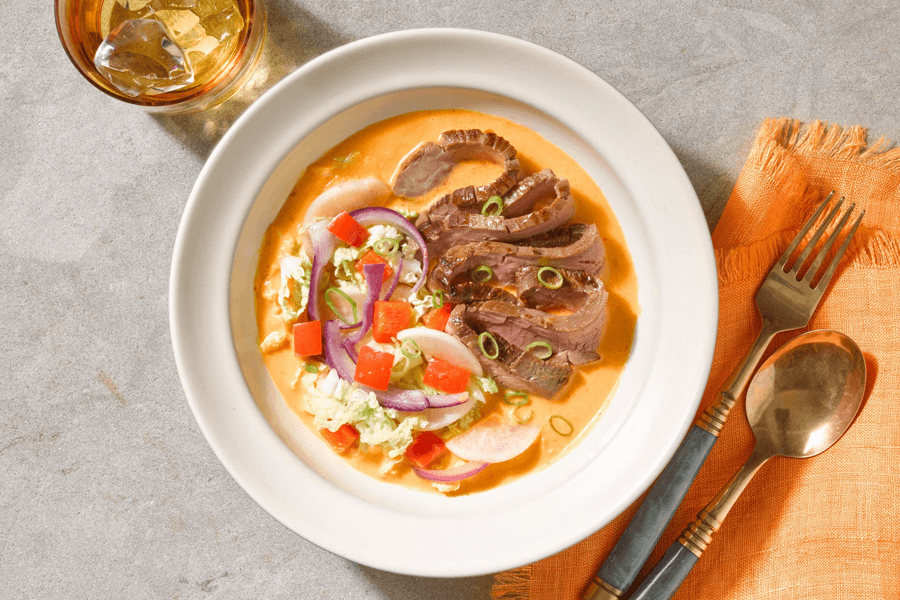
Tom Yum Beef Soup with Japanese Vegetables & Fragrant Herbs
Zero prep, better ingredients
We approach food with the same high standards you look for in a top-tier recipe box, but we do all the kitchen work before the delivery ever reaches your house. Here is how Frive transforms your evening routine:
Ready in three minutes: your dinner simply needs heating through, so you can walk through the front door and sit down to a hot, fresh meal in less time than it takes to chop a single onion.
Scratch-cooked quality: our professional chefs handle the culinary heavy lifting, preparing dishes in small batches using premium natural ingredients, so you never compromise on quality for the sake of speed.
An evolving menu: over 100 meals rotate through our selection every month, keeping the same sense of variety and excitement that drew you to meal kits in the first place.
Strict ingredient integrity: every recipe is made completely free from ultra-processed ingredients and hidden seed oils, so your body gets genuine, clean fuel without you having to decode complex labels.
To understand how mass-processed convenience options stack up against real nutrition, read our deep dive on ultra-processed foods, weight gain and hunger. And if you want the system-level picture, our healthy ready meals plans show how a full week comes together without a single chopping board.
Outgrowing the chopping board makes total sense when your schedule is already stretched to the limit. Stepping away from the kitchen counter lets you keep your high nutritional standards while bypassing the daily chore entirely.
If the chopping, monitoring and washing up have quietly become the worst part of your evening, you don’t have to keep doing them. Explore this week’s chef-crafted menu and reclaim your evenings. Your kitchen surfaces can finally stay clean.
Frequently asked questions
What is a good alternative to a recipe box if you don’t want to cook?
A pre-prepared, natural meal service is the closest fit. Unlike a recipe box, meals arrive fully cooked and just need heating through, so you get fresh food at home with no chopping, monitoring or washing up. Frive delivers chef-made dishes ready in around three minutes.
Why am I so tired of my recipe box?
Because a recipe box is a cooking commitment, not a convenience: it does your shopping but leaves the prep, cooking and clean-up to you. When a demanding week hits, that nightly effort is the first thing to feel like too much. The fatigue is a sign the format no longer fits your schedule, not a personal failing.
Are recipe boxes like HelloFresh and Gousto actually convenient?
They remove the grocery shop, but not the labour. You still chop, cook and clean up, and the “30 minute” meals often overrun once prep and washing up are counted. For many busy people that is moving the work around rather than removing it.
Is a ready-meal service better value than a meal kit?
It depends on what you count. A meal kit can look cheaper per portion, but a fair comparison includes your time, the food you waste when you can’t face cooking, and the takeaways you order instead. A ready-meal service that you actually eat every night can work out better value in practice.
How is Frive different from a recipe box?
A recipe box delivers raw ingredients and a recipe to follow. Frive delivers complete meals, cooked from scratch by chefs in small batches, that are ready to eat after a few minutes of heating. There is no shopping list, no recipe card and no pile of unused ingredients.
Do ready meals like Frive count as ultra-processed food?
No. Frive meals are made from 100% natural ingredients, with no ultra-processed ingredients, no seed oils and no artificial additives. That is the key difference between a chef-cooked fresh meal and a typical long-life supermarket ready meal.
Can I cancel my recipe box and switch easily?
Yes. Most meal-kit subscriptions can be paused or cancelled in the app before your next billing date, with no long contract. You can then move straight to a ready-meal service without any overlap, so there is no gap and no double cooking.