Picture the same person on the same day. At 9am they are disciplined: a sensible breakfast, a clear plan, the gym kit already by the door. By 7pm that same person is standing in front of an open fridge with no idea what to cook, thumb already drifting towards a delivery app. Nothing about their character changed in those ten hours. Something about their capacity did.
If your healthy intentions hold all morning and quietly fall apart by evening, you do not have a discipline problem. You have a sequencing problem. The hardest food decision of your day, what to eat for dinner, arrives at the precise moment your ability to make good decisions is most depleted. It is the same reason a sensible lunch can still leave you reaching for the 3pm biscuit: food choices and mental energy are tightly linked.
This article explains the mechanism behind that evening collapse, why the highest performers refuse to run on willpower, and how to design the daily food decision out of your life completely.
| Decision fatigue and your diet: at a glance | |
|---|---|
| The real problem | Your evening diet failures are not a willpower deficit. They are decision fatigue: the quality of your choices degrades as the day's decisions pile up. |
| The bad timing | The hardest food decision, dinner, lands when your decision budget is at its lowest, which is exactly why it collapses. |
| What high performers do | They remove trivial decisions on purpose (the famous same-outfit habit) to protect capacity for what matters. |
| Easier is not enough | Meal prep and recipe boxes only make the decision easier. They still consume mental energy and break under a demanding week. |
| The durable fix | Delete the decision, do not just simplify it. Automation is the only version that survives a genuinely brutal week. |
| Where Frive fits | A natural dinner that needs no planning, shopping, cooking or choosing makes the healthy option the default, with zero decisions attached. |
| “You do not have a willpower problem. You have a sequencing problem. Your best decisions and your worst ones come from the same person on the same day, just at different points of depletion.” |
Why your diet collapses at 7pm (and holds at 9am)
The morning version of you is not more virtuous than the evening version. It is simply better resourced. Every decision you make through the day, the difficult email, the hiring call, the meeting you talked down from a fight, draws from a shared pool of mental effort. By the evening that pool is low.
Cooking a balanced dinner from scratch is precisely the kind of multi-step, decision-heavy task that a depleted pool cannot fund. So your brain does the sensible thing and takes the path of least resistance. Ordering in is not a moral failure; it is the rational output of a tired system. And the cost is not only the meal. Poor food choices feed straight back into flagging afternoon and evening energy, which makes the next day's decisions harder still.
What decision fatigue actually is
Decision fatigue is the observation that the quality of your decisions tends to degrade as the number you make accumulates through the day. The idea grew out of the foundational research on ego depletion, which proposed that self-control draws on a limited shared resource. Later work showed something more pointed for our purposes: the simple act of making choices itself drains that resource. People who worked through a run of decisions later showed less stamina, gave up sooner and procrastinated more than people who had not. Choosing is tiring, even when nothing is physically hard.
There is a useful mental model here. Daniel Kahneman described two modes of thinking: a fast, automatic, low-effort mode, and a slow, deliberate, effortful one. Good food decisions need the slow mode. As you tire, you fall back on the fast mode, which strongly favours whatever is familiar, immediate and requires no thought. At 7pm, that is the takeaway, every time.
A note on honesty, because it matters for trusting the rest of this. The strong version of the willpower-as-fuel-tank model is genuinely contested. A large multi-lab replication found the classic laboratory effect was close to zero, and the often-quoted study of parole judges deciding worse before lunch has credible alternative explanations. So we will not overclaim the biology. What is not in dispute is the lived pattern: almost everyone makes worse choices when they are tired, rushed and stressed than when they are fresh. You do not need a contested lab effect to know your 7pm self is not your 9am self.
The hidden food decisions you never count
We badly underestimate how many separate choices are buried in a single home-cooked dinner. It feels like one task. It is not. Watch the sequence:
Planning: deciding what to cook, checking what is in the fridge, and cross-referencing it against your health goals.
Sourcing: choosing a shop, navigating the aisles, picking brands and finding substitutes when something is out of stock.
Execution: portioning, timing each component so it is ready together, then facing the clean-up.
That is more than a dozen distinct decisions before you sit down. Now stack breakfast, lunch, snacks and the drinks round on top of a full working day, and food quietly becomes one of the most decision-dense parts of your life, most of it invisible. For a busy professional who has already spent the day solving hard problems, that hidden load is often the exact tipping point where a good routine collapses into a default takeaway.
How high performers actually handle it
It is a comfortable myth that successful people simply have more grit. Look closely and most of them do the opposite of grinding: they remove trivial decisions from their day on purpose. The well-documented habit of wearing a near-identical outfit daily, or eating the same breakfast without thinking, is not eccentricity. It is resource management.
The logic is exact. Choosing a shirt or debating the coffee order draws from the same account as the decisions that actually move a career. Standardise the trivial, and you keep that account funded for what matters. The skill on display is not willpower. It is a refusal to spend willpower on things that do not deserve it.
Why food is the perfect thing to automate
Applied to your diet, this is almost too neat, because healthy eating is the ideal automation target. It is draining on three fronts at once:
High frequency: you face food several times a day, every day, so it is a constant tax on attention rather than a one-off call.
Genuinely repetitive: your body wants a broadly consistent supply of good fuel, so the input should be a fixed setting, not a fresh daily debate.
Badly timed: the need to choose peaks exactly when your capacity bottoms out, in the tired evening window.
Relying on self-control to win that fight, several times a day, while tired, is a losing strategy by design. Real consistency comes from making the good choice the automatic one, so it needs no thought at all.
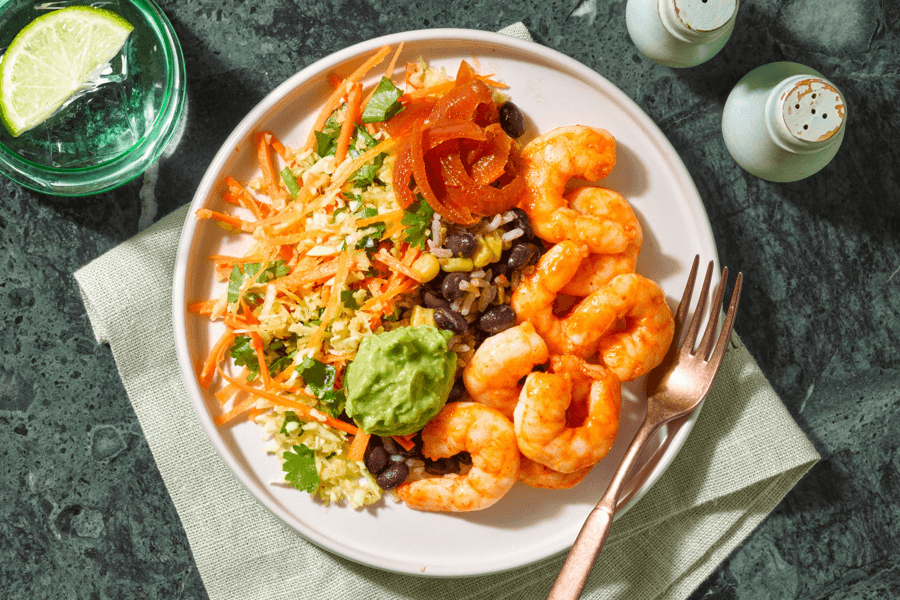
Smoky Chipotle Prawns With Black Bean Rice
The difference between easier and automated
This is where most popular advice quietly fails. It confuses making a decision easier with removing it. Sunday meal prep and recipe-box subscriptions are good at cutting physical effort, but they leave the decision-making fully intact, and they leave it at the worst possible time of day.
Opening a recipe box after a punishing day still means reading the instructions, prepping the components and managing the cooking. That works beautifully when your afternoon was calm. When it was a relentless run of fires, that small remaining friction is the exact crack your healthy habit falls through. True automation needs zero cognitive input. It is the difference between simplifying a task and deleting it from your day altogether.
| Approach | What it actually does | The cognitive reality |
|---|---|---|
| Sunday meal prep | Cook and portion meals in advance at the weekend. | Reduces effort, but still requires planning, shopping and the willpower to follow your own plan all week. |
| Recipe-box subscription | Ingredients and a recipe arrive ready to assemble. | Removes the shop, but keeps the deciding, prepping and cooking, on the night you have least left to give. |
| Total automation | The whole decision and task is removed from your day. | No planning, shopping, choosing or cooking. The only version that holds up on a genuinely brutal week. |
Automating dinner, for real
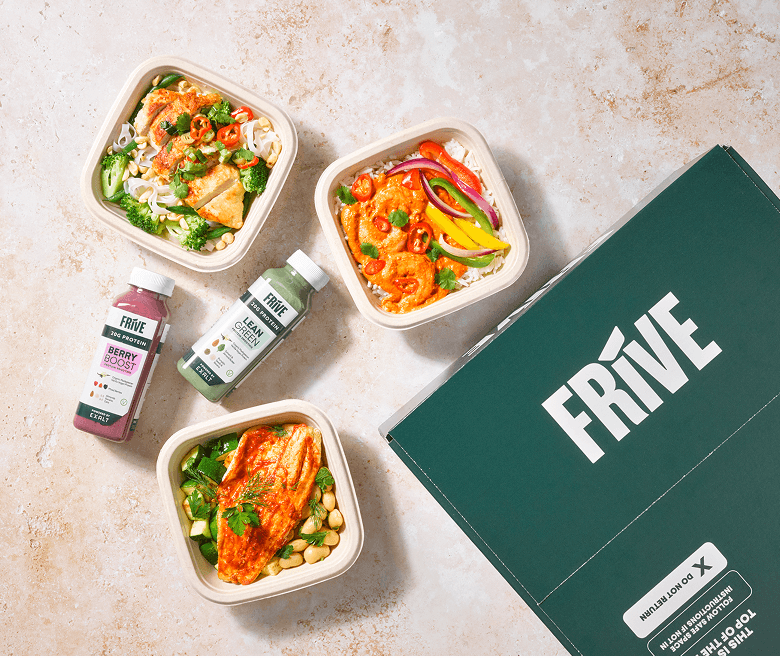
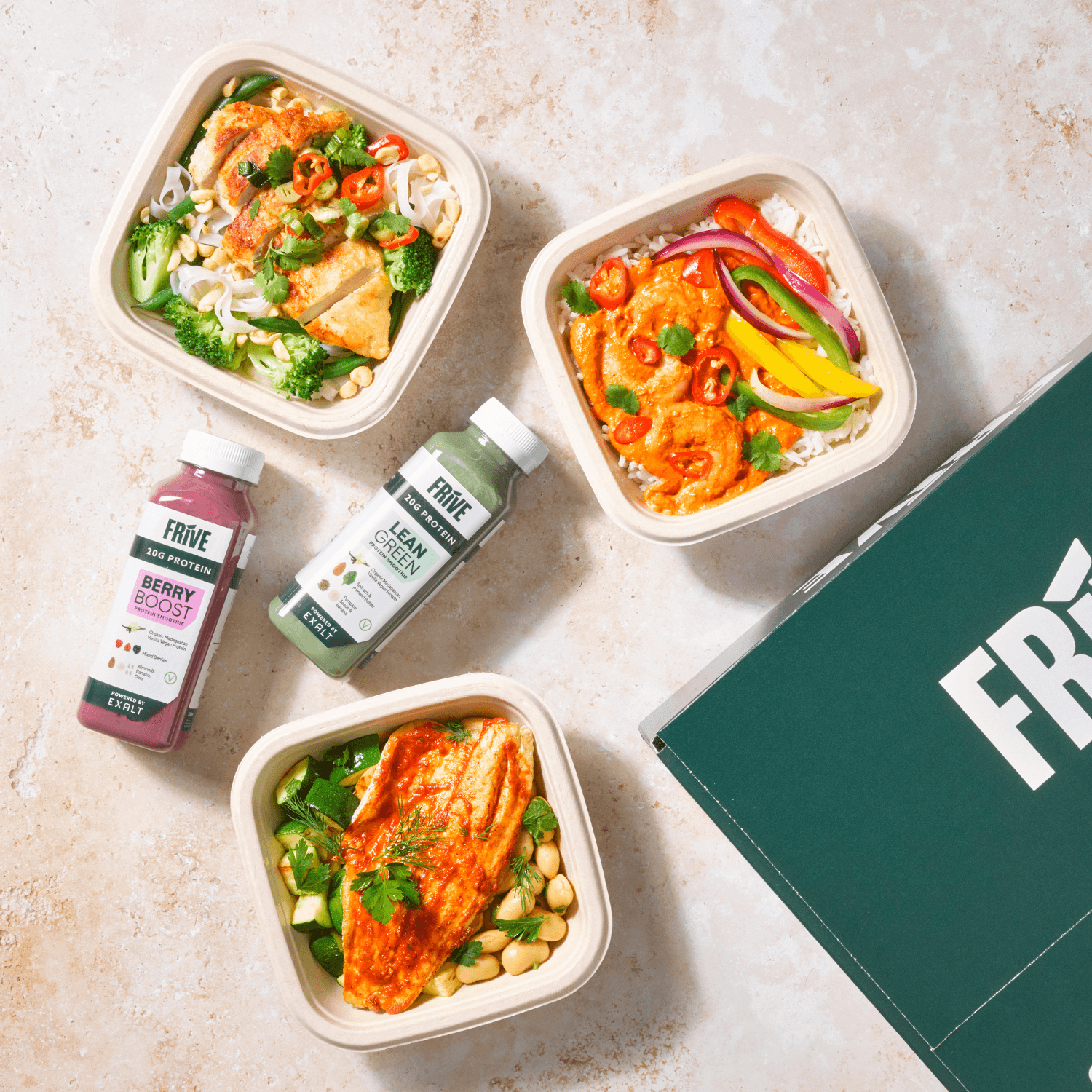
Overcoming choice overload needs a structural change to your day, not a nightly burst of willpower. This is the role a service like Frive is built for: not a convenient meal, but a way to delete an entire category of daily decisions. It is the system you would design if you sat down to engineer the evening food decision out of existence. Here is how that works in practice.
Each brand fact maps back to the mechanism, not to a sales pitch:
Ready in around three minutes: no cooking and no prep, so you completely bypass the kitchen when your battery is flat.
Built and approved by nutritionists, macro-balanced: the automatic default is also the nutritionally right choice, so removing the decision costs you nothing.
100+ meals on a rotating menu: deleting the decision does not mean eating the same thing every night.
No ultra-processed ingredients, no seed oils, no refined sugar: the convenience carries no health penalty, unlike the takeaway it replaces.
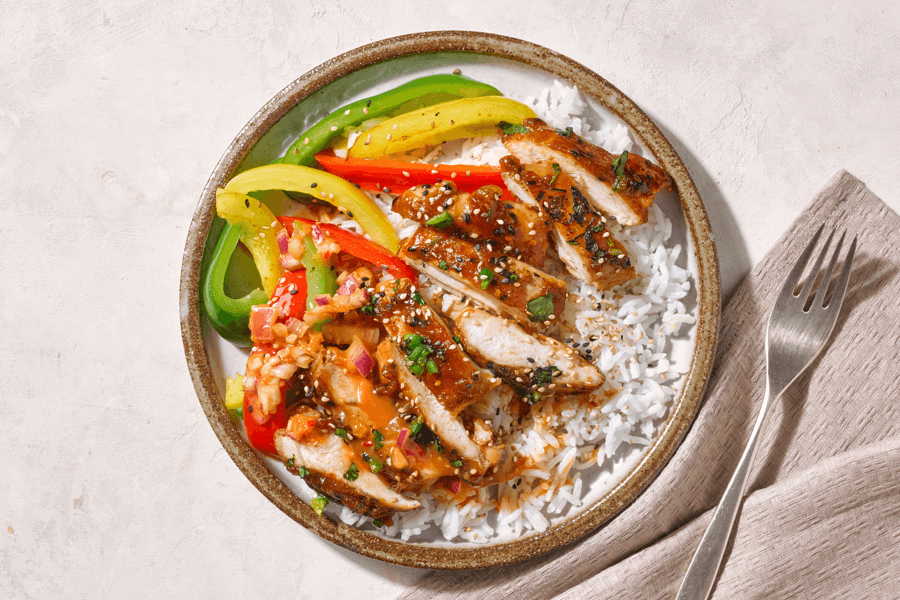
The time saving is real (Frive estimates up to seven hours a week back from shopping, cooking and clean-up), but for a high performer the bigger prize is the reclaimed decision capacity. You stop spending a slice of your finite daily judgement on what to eat, and keep it for the work that actually moves the needle. If your usual objection is that you simply have no time to cook, that is precisely the point: the system removes the need to.
Delegating the predictable parts of your diet is not an indulgence; it is an operating decision. Set up a default healthy plan and the healthy option simply becomes the one that requires no decision at all. Browse this week's menu and pick the plan that fits your schedule.
Your one-week automation checklist
1. Lock in a fixed default for your three heaviest workdays.
Why it works: Removing the choice from your most demanding days stops your nutrition collapsing exactly when your decision budget hits zero.
2. Decide your whole week's meals once, on Sunday morning.
Why it works: Choosing food when your mental energy is fully charged eliminates the vulnerable, impulsive choices made during a late-night slump.
3. Set a fixed, non-negotiable dinner time.
Why it works: Standardising when you eat removes the hidden micro-decision of constantly debating when to stop working.
4. Take the delivery apps off your phone's home screen.
Why it works: Adding a little friction to the convenience default stops a tired brain from taking the path of least resistance on autopilot.
5. Let a service handle the whole pipeline for you.
Why it works: Outsourcing the entire sequence deletes every food decision from your day, so your diet runs in the background instead of relying on you.
Frequently asked questions
What is decision fatigue?
Decision fatigue is the tendency for the quality of your decisions to decline as the number you make through the day adds up. After a long run of choices, people tend to default to whatever is easiest and most familiar, which is why healthy eating often falls apart in the evening rather than the morning.
How do I stop making bad food choices at night?
Stop relying on night-time willpower and decide in advance instead. Pre-choose your evening meals earlier in the day when your mind is fresh, add friction to convenience options by removing delivery apps from your home screen, and where possible remove the decision entirely with a fixed default or a meal delivery service.
Does meal planning fix decision fatigue, or just move the problem?
Meal planning helps, but it mostly moves the decision rather than removing it. Planning on Sunday is easier than deciding at 7pm because you choose when you have energy, yet you still have to shop, prep and cook later. Full automation, where the meal needs no decision at all, is the only version that reliably survives a demanding week.
Is outsourcing dinner lazy or smart?
It is the same logic high performers apply everywhere else: automate the repetitive and low-value so your judgement is saved for what matters. Outsourcing a daily, draining, low-stakes decision is a systems choice, not a character flaw, especially when the automated option is also the healthier one.
How many decisions do we really make in a day?
Nobody can count them precisely, and the popular round numbers you see online are not well supported. What is clear is that food is unusually decision-dense: a single home-cooked dinner alone hides more than a dozen separate choices, and you repeat versions of that process several times a day. That sheer frequency, not any single figure, is what makes food worth automating.
Can decision fatigue cause weight gain?
Indirectly, yes. When your decision budget is spent, you lean towards convenient, ultra-processed and takeaway options, which tend to be higher in calories and easier to overeat. The pattern is not about weak willpower; it is about the hardest food decisions landing when your capacity to make them well is lowest.
How do I automate healthy eating without eating the same thing every night?
Automation removes the decision, not the variety. A rotating menu of pre-prepared, nutritionist-balanced meals keeps your diet varied while still requiring no planning, shopping or cooking from you. You get consistency of nutrition without monotony of taste.